
Robert Cristagau
Side two does seven great songs with umpteen instruments in just over fifteen minutes, a perfectly amazing miracle of concision. But side one is less than hot. Two (why two?) just-wrong Johnny Mercer songs lead into a properly excessive intro to Ann Peebles’s “Breaking Up Somebody’s Home” that is destroyed inside of two minutes by an improperly excessive, funkless production. Bette’s overstatement works on “Surabaya Johnny” and “I Shall Be Released,” but I’ve heard better. Most important, why isn’t there one song by a contemporary composer here? Dylan doesn’t count–I’m talking about Randy Newman, Gilbert O’Sullivan, Joni Mitchell, maybe James Taylor or Cat Stevens, she’s always made me believe in miracles. As it stands, this record is perilously close to the ostrich nostalgia of her dumbest fans. B+
Joe Viglione: All Music Guide
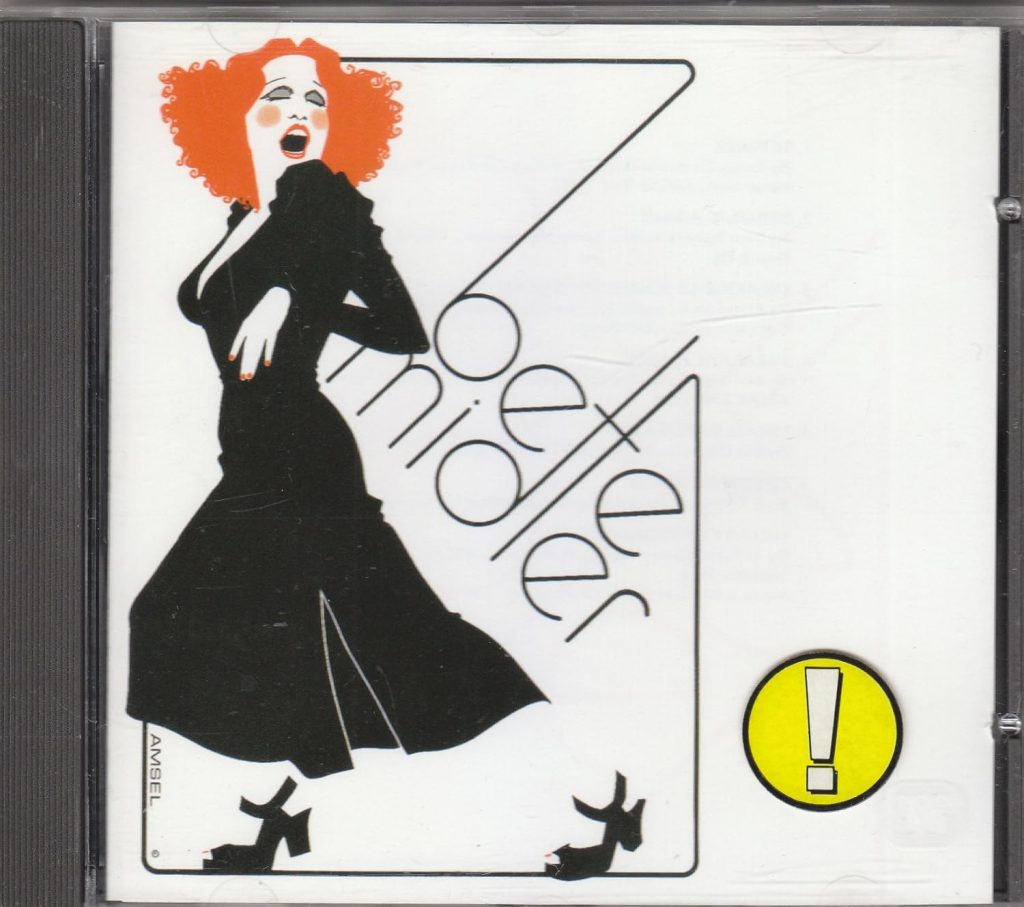
“An earthy mix of blues, R&B;, and ’40s boogie-woogie” is how Bill Carpenter describes Bette Midler’s second album, a strangely elaborate transition containing some of the elements which made The Divine Miss M so divine. The album features superb production from her former piano player, Barry Manilow, and the man who would help craft 1979’s disco effort, Thighs and Whispers, Arif Mardin. The result is a solid album without the Top 40 fascinations of “Do You Wanna Dance?,” Buzzy Linhart / Mark “Moogy” Klingman’s “Friends,” or “Boogie Woogie Bugle Boy.” Rather than focus on a hit the way Clive Davis helped Manilow go to number one with “Mandy” in 1974, this big cast concentrates on being artistic, and on that level, Bette Midler works. No, she isn’t Shirley Bassey or Eartha Kitt, but material from Hoagy Carmichael and Johnny Mercer, Kurt Weil, and Bertolt Brecht, along with a dash of Bob Dylan, really covers the gamut. Where Midler could excel is with the girl group stuff, touched upon on The Divine Miss M. The medley of “Uptown” and “Da Doo Run Run” is fun, but lacking the satisfying elements Phil Spector jammed into his 45s. Midler really needed to go for it here, an explosive remake of “He’s a Rebel” or “Da Doo Run Run” would have been appropriate for 1973, not something that sounds like it was recorded during a live performance at the Continental Baths. It’s literally a cast of thousands; Bernard “Pretty” Purdie, Steve Gadd, and Luther Rix are just some of the drummers and guitarists Cornell Dupree and Hugh McCracken are onboard, as are Kenny Ascher, Don Grolnick, and Barry Manilow on keys, just to name a few. The talent was all lined up, and the music is immaculate, but there is no concentration on returning to the singles charts. “I Shall Be Released” as recorded here is just perfect for an album with a whisper of gospel, but still holds something back. A choir of voices and a production like Melanie Safka’s “Lay Down” would have broken this wide open on radio. It wasn’t until Mardin produced “Married Men” six years later on the Thighs and Whispers album that Midler would return to contemporary radio, and like “Friends,” her hit from 1973, “Married Men” only lingered at the bottom rung of the Top 40 charts. Great vocals, great musicianship, but no focus for radio action. Rita Coolidge took Jackie Wilson’s “Higher & Higher” Top Three in 1977, and Bette Midler ends the album with a marvelous version of that four years before Coolidge. The trouble is, it’s all so artsy. It’s a beautiful record ignoring the need to match the success of her first two singles, and in a world driven by radio, where timing is everything, the question to this day remains — why? There’s an excellent version of Johnny Mercer’s “Drinking Again” which Rod Stewart had cut with the Jeff Beck Group; it’s a song that should have dominated ’70s radio which says, perhaps, the producers were being too careful for this record’s own good.
Jess Cagle: Entertainment Weekly
Her second album, which also went gold, established her as the 1970s’ premiere pop diva. She gives a nice, boozy flow to ”Drinking Again” and lets loose with a big-eyed rendition of ”In the Mood.” A
Jon Landau: Rolling Stone Magazine
Bette Midler asks the question, what were co-producers Barry Manilow and Arif Mardin thinking about while she was singing “I Shall Be Released”? It’s hard to believe they were listening to Bette for they are too knowledgeable and sophisticated to have approved of any singing so unmusical, so embarrassingly flat, so brazenly insensitive. But if they knew her performance was inadequate, then what was the explanation for Mardin and Lew Hahn’s mixing the vocal so prominently that even the most casual listener will have to notice its shortcomings? Perhaps they were having a joke at her expense. Or, more likely, perhaps she liked her work and no one had the nerve or desire to contradict her eminence. Whatever the reasons, Bette Midler’s recorded performance of “I Shall Be Released” is the single worst performance of a Bob Dylan song I have ever heard.
Unlike The Divine Miss M, Bette Midler contains the artifacts of a style without nuance, content or intelligence. The debut album also contained its share of pure posturing but was held together by a core of performances rendered with an engagingly intense naivete. “Delta Dawn,” “Friends,” “Hello In There,” and her exceptionally original reworking of “Do You Want to Dance” all demanded that she be taken seriously. They also provided a good balance to the rest of the album’s re-creation of her stage act, with its emphasis on oldies and Forties romps.
On Bette Midler, she has dispensed with the serious core of the last album-the new material by young songwriters and the sensitive reworking of contemporary standards-and has simply recorded new additions to, and some leftovers from, her concert act. Onstage, she doesn’t so much sing as she acts. But, in the studio this time around, she barely sings either.
Bette Midler has failed to absorb the first principle of recording: that the studio is not merely an extension of the stage, but an entirely separate arena for a different sort of creation. She could have surmised as much if she had realized that one of her most popular concert numbers, “Leader of the Pack,” was clearly the least effective cut on her debut LP. It did not warrant its current successors: a desecration of “Da Doo Ron Ron” and a horrendous “Higher And Higher,” which contains a series of nonmusical crescendos, devoid of rhythmic sense. Only “Uptown” begins to work and then because, as with “Do You Want to Dance,” she has thoroughly recast it and taken it as seriously as it deserves.
The campy re-creation of Andrews Sisters harmony is fun in concert and was good for a one-shot novelty recording, “Boogie Woogie Bugle Boy.” But the song’s commercial success didn’t warrant new recordings of “Lullaby Of Broadway” and “In The Mood.” She has neither the stylishness nor the voice for such comparatively difficult singing and it shows.
On uptempo material she may be able to bull her way through uncritical listeners with her sheer manic energy. But even her most devoted followers will inevitably be confused by the emptiness of her interpretations of things like the beautiful Johnny Mercer ballad “Skylark,” Kurt Weill’s mysteriously foreboding “Surabaya Johnny,” and the standard “Drinking Again.”
The album’s first side has the slow material, the second the uptempo cuts. But the hysterically shrill and often mindless approach to the lyrics is as much in evidence on the bizarrely unintelligible “I Shall Be Released” as on her “Higher And Higher.” Her inability as an interpreter of words is most apparent when she is trying hardest: “Twisted” is her most affected performance, and she makes the song seem a pointless piece of jazz-like nonsense.
Bette Midler clarified the nature of her artistic misconceptions about herself, for me, at a recent concert in Boston. She surely has the talent to become a Seventies extension of musical – comedy entertainment. The question is whether she wants to follow in the footsteps of Barbra Streisand at her best or Judy Garland at her worst. Right now, she has chosen the latter. That approach entails patronizing the audience for the sake of unqualified approval. The method is to invite listeners to become part of a select elite that communicates with each other by virtue of their common appreciation of the Divine Miss M’s imperial qualities. Bette Midler’s music is never an end in itself but always a means for obtaining applause. And in her lust for applause there is nothing so degrading that she won’t use it to get it. What else is one to make of her promise that she and her Harlettes are there to “shake our tits”?
Some have argued that Barbra Streisand’s greatness rests in her ability to make things we once took to be ugly (a brassy Jewish girl from Brooklyn) seem beautiful. But except in their physical aspect, people are only as ugly as they make themselves. And when a performer merely wallows in negative qualities as part of an act, it’s only to ask for (or, in Bette Midler’s case, demand) sympathy, or worse still, pity. To degrade oneself as a means of attracting and establishing rapport with an audience is not only to diminish oneself but to diminish all those who come to enjoy the performance.
Some of Bette Midler’s audience is laughing at her. Some offer a confused sort of approval simply because she works so hard to get it. But worst of all is the applause that comes from people that identify with her own hideous mocking of herself and her willingness to deny her own sexual identity.
I liked The Divine Miss M a great deal, although even then it was clear that her personality had divided between two sensibilities-pop interpreter and Seventies camp queen. There may be some excuse for the latter on a stage, but there isn’t much on a record and, unfortunately, that is what Bette Midler is all about.
In an earlier review, I compared Miss Midler’s potential to Barbra Streisand’s, much to the chagrin of her hard-core admirers. This time I’ll go a step further and suggest that she needs an autocratic musical director as much as her predecessor did. (In fact, she would probably benefit from a collaboration with Streisand’s last good one, Richard Perry, who would be, if nothing else, a substantial improvement over her “maestro,” Barry Manilow.) But as a musical comedy personality, with little innate awareness of her own potential and liabilities, she apparently needs someone-anyone-strong enough to pick material, musicians, sound and style for her.
Bette Midler proves beyond a doubt, she can’t do it with Arif Mardin and Barry Manilow. And she sure as hell can’t do it by herself.