Various Publications
BetteBack Dec 1973: Reviews Of Bette Midler Playing The Palace
By Various Authors
December 1973

Midler Bows at the Palace
December 4, 1973 – New York Post
By Jan Hodenfield
Bette Midler probably couldn’t be boring if she tried.
And that she doesn’t understand that – or at least believe it – was the problem when the vibrant singer-comedienne took the stage of the Palace last night for the opening of a long sold-out three-week run.
Skittering on stage like a manical kewpie doll in a green-blue-and-pink dress, tottering in ankle-strap platform shoes, she proclaimed herself the “last of the truly tacky women,” a “study in low rent” who’s been “through the muck and mire.” But in place of the cheap honesty that’s propelled her to fame, she opted for lavish theatrics.
No lyric was to be dispatched without extravagant gesture, no joke cracked without a dazzling smile or crafty rapture, no sally tossed off without passing through her nose, no pause marked without an elaborate “my gawwwwwd!” and no conclusions were to be reached by an audience of camp followers and scene makers without detailed instructions from the entertainer.
Which was a pity, as she has in past performance and on record proven herself a pop singer able, by raiding the past with care and command, to raise her craft to pop art.
But where on her first album, “The Divine Miss M,” she glides, slides and soars through “Am I Blue,” pushing it to the outer limits of poignancy, but not a quavering note further, as though it hadn’t been through the wringing hands of a bedraggled army of torch singers before her, at the Palace she chooses to be gayer than gay and lonelier than lonely.
Nor does she aim any higher with “Hello in There,” a near-athetic paean to American old age which she has in the past pared down to spare poetry but last night enriched with glittering, superiors intensity.
And when she tackles (and that’s the word) songs of intrinsic glitter – “Lullaby of Broadway,” “In the Mood,” “Boogie Woogie Bugle Boy” and onto schlock-rock classics “Leader of the Pack” and “Do-Ron Ron” – it’s too often like watching a channel swimmer in the last flailing laps.
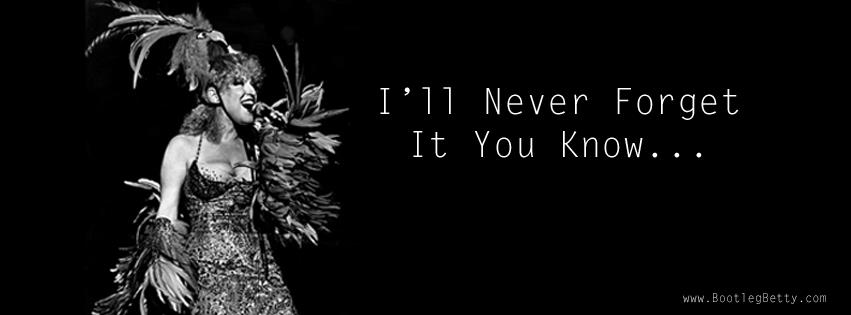
Still and yet. When she opens the second act by traipsing down an enormous Busby Berkleyish-silver lame ankle-strap shoe, resplendent in pink sequin sheath and tatty boa, arms going like hydraulic-powered egg beaters to the masterful beat provided by musical director Barry Manilow, her back-up group, the Harlettes, just as dazzling in pink maids’ uniforms that swoop open to reveal an American flag lining, Bette Midler makes a promise you want to believe in.
And when she learns that it’s possible to try too hard, she’ll probably fulfill it.
Bette Midler: PALACE, N.Y.
December 5, 1973 – Variety
By Verr.
Bette Midler boogied back to Broadway Monday night (3), opening a three-week SRO stand at the Palace, where $350,000 is already in the till from tickets scaled from $15 weekends, $12 weeknights, and that doesn’t include standing room on the day-of-performance at a walloping $10 per.
Kleig lights (despite the energy crisis), celebs, drag’ queens and the Broadway opening night establishment were out in force for the event, Midler’s first N.Y. appearance in almost a year. What they got was middling, just a glimpse of the potential of this talented brassy singer who’s now pushing too hard and too fast.
Less than fresh from an exhausting national tour, Midler’s voice was strained, unable to sustain higher registers and sometimes breaking mid-note. The act itself is tired with no fresh material, and Midler’s all-too-obvious first night jitters were not helped by a tough audience, most of whom have never shimmied in their towels at the Continental Baths, where this phenomenon began.
Trouble with Midler’s act, aside from the lack of balance and a disturbing note of a new, harsher vulgarity, lies in the inherent dangers of her relentless self-depreciation and her penchant for arrangements that build to frenzy without purpose. She still lacks the sustained confidence and / or guidance to just stand there and sing, but when she manages it, as she did briefly on opening, she is a knockout. Ironically, rehearsal footage aired on some of the local tv stations Monday night displayed a relaxed and controlled singer in top form. More of that feeling onstage would balance the current overemphasis on speed freak boogie-woogie and furious ’50s rock.
Again backed by the gifted Barry Manilow (who offered a sock solo second act opening of his own compositions), Midler needs only to care for her voice and exercise some self restraint, after all, nostalgia is trendy by definition and the boys in the balcony can be fickle. Developing a wider range and protecting that tough vulnerability that is her own should insure Midler the kind of lasting career her raw talent deserves.
The Palace stand is produced by Aaron Russo with Ron Delsener.
Gosh, it’s Little Orphan Annie! Just when we need her!
December 11, 1973 – New York Times
Unknown Author
The nation was in sore need of comic relief last week.
And, against a background of gloom-on-gloom, with the house lights dimmed across the land, it got it.
Bette Midler opened at The Palace.
Flashy, trashy, and with enough warmth and energy to get the whole country through the winter, The Divine Miss M wowed ’em.
And the audience that responded to her with cheers, with laughter, with joy – was one that actually did represent the whole country:
“Straight and gay; aboveground and underground; unisex and duo-sex; Middle American and radic-lib; chic and frumpy; escapees from apartments for singles and escapees from retirement homes – they all turned out for the one performer on today’s scene they could all share with equal enthusiasm.”
Newsweek’s Charles Michener probes into the Midler mystique (“an unmistakable vulnerability, a heart-stopping innocence . . . an intuition for what the public has been hungering for without yet realizing it”) and finds the enthusiasm well deserved. Bette Midler does have something for everybody.
Bette At The Palace
December 13, 1973 – The Village Voice
By Ira Mayer
IT IS NOT SO MUCH that Bette Midler’s appearance at the Palace Theatre has made her a Broadway star as it is that she has brought stardom back to Broadway. Tacky she is, but tacky with a splendid sense of grandeur. Why, even her nervousness on Opening Night, manifested in a missed note or a wrong tempo, befit the occasion, for this was an audience, mostly invited, composed of the Beautiful and Famous from rock and theatre worlds alike. For them, she would have to be at her tackiest, even more so than in Portland or Passaic. Needless to say, she succeeded marvelously.
The show is beautifully constructed, with the production numbers properly produced, the gaudiness properly spoofed and exploited. Miss M’s second act entrance, following a three-song set by her pianist / musical director Barry Manilow, makes just her playing the Palace in a way that has eluded all of the pop stars who have tried it in recent seasons.
A magnificent pink, red, and blue skyline backdrop drapes the rear of the stage as she makes the entrance, descending from a huge, high-heeled silver lame shoe. Miss M herself wears a pink lame gown, an outfit which could only be topped by the sequined and feathered numbers of some of those who had come to hear her. The song she sings, appropriately enough, is “Lullaby of Broadway.” Climaxing the scene, her three-voice back-up group, the Harlettes, enter in 1940s maid uniforms to join her for “Boogie Woogie Bugle Boy,” their costumes blossoming out into American flags. That, mind you, is but her entrance.
Throughout the evening her shticks, “dishes” as she calls them, once disjointed and rambling, are now built around her touring experiences and put downs shot at such popular personages as Dick Nixon, Dick Clark, and Linda Lovelace. The proper Broadway term for it, l believe, would be ribald. Miss M has her own terms: garbage, trash, sleaze. It works no matter what you call it.
The opening a week ago Tuesday was not Midler at her best, partly because as New Yorkers, we have seen the show develop through its more elementary stages. The things which once happened spontaneously are now formally incorporated into the show, though there is still plenty of room for improvisation. The portrayal of the Divine Miss M is more polished (refined it is not), with the result a program whose appeal will bring her to still newer and broader audiences.
Gross me out, Miss M
December 13, 1973 – The Village Voice
By Arthur Bell
La creme de la creme and la pits de la pits showed up for the Divine One’s opening at the Palace. Dyan Cannon in platinum. Vito Russo in Skunk. Ruth Truth in red lame. Channel No. 13 in popper-drenched spacesuit.
They came by Rolls, foot, BMT, and rickshaw. In singles (Edward Sherman) in couples (Earl Wilson with Dong Kingman), and in packs (the After Dark staff). Some had seen her at the Continental, some had come for a new taste treat. They crossed a picket line (the United Scenic Artists Local 829), squited at kleigs, highbrowed onlookers, divined friends in the lobby, cluttered the balcony, and practically angina pectorised in anticipation of HER.
Hula dancers preceded her, setting the tone – she’s supposed to have spent her childhood in Samoa or somewhere. Next came her nervous, funny musical director, blondined and sequined. Then her Harlettes, nodding at stage left, like cleaning women waiting for her majesty’s instructions.
She hippity-hopped, choo-chooed, clutched Ann Miller’s fan from “Easter Parade,” dropped it, dropped her eyes, waved her arms, ziggity-zagged in platforms, embraced the balcony. Smiled. Humble. Sweet. Do they love me, do they hate me, no, yes, don’t give a shit, give a shit, they’ve got to love me and I’m gonna make them love me but I’m gonna give them a hard time and test them.
So she gave them a hard time. She ran about like a Samoan caught stealing girdles on Eastern Parkway and sang and mocked. She gave them lip. She rode everything. Everything that they felt superior to, like anyplace outside New York, anyone undivine. Then she mocked the accepted. Women’s Wear Daily. The $15 ticket.
“Whose idea was it to play this dump?” Tempting the shakers. How far could they take it? She talked about herself in the third person, as if a first person didn’t exist. “Gross me out, Miss M.”
And she shlumped on a stool, legs crossed, “Swing Shift Maisie,” spewing sass and gall like Ann Sothern wouldn’t know from, there in the 40s she loves SO well. Sleazy. ”She’s gonna sing you a sleazy bar song.” Campy. “Oh, my Gawd.”
“Gawd, my Gawd.” The pits. Nasal. French. Nixon. Linda Lovelace. Gar-bage, quips, put-downs, energy, talent, yes, no, love, testing, testing, fuck off, stop, love.
For some, it worked. Others said, she blew it. Those who know her well, say she’s nervous, testy, self-destructive opening nights. Catch her the night after. Different show. The night after, she cursed out the first night audience. Divine.
This actually happened. Following the last Palace opening night curtain call, a certain 40-ish sometime movie star whom we all know and some of us love, walked into Joe Allen’s Restaurant accompanied by four divine escorts. They ordered dinner.
The movie star, throughout her meal, paid little attention to her dates, but focused her experienced eyes on the hunky black waiter who served them. When it came time for dessert, the waiter approached the table and asked the movie star “what would you like?”
The star grabbed his wrist and answered. “I wouldn’t like dessert.”
“How about coffee?” asked the waiter.
“Uh, huh,” blinked the star:
“How would you like it’?”
“I like my coffee the way I like my men.” responded the star.
“I’m sorry,” said the waiter, “we don’t serve gay coffee.”
Midler Fine at Palace
Unknown Date / New York Daily News
By Michael lachetta
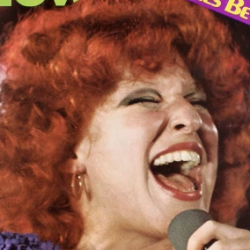
Busty, red-haired Bette Midler, “the Divine Miss M,” opened her three-week run at the Palace Monday night – only she wasn’t quite so divine. What she was, quite simply, was a not-quite-30-year-old cult figure before her time riding the nostalgia wave on an outrageous blend of camp and swing.
But, when the current is on, and that oh-so-clever patter is off, she is very special; for her voice goes deep and her voice goes throaty, her voice goes folksy and her voice goes bluesy and just about every which way you might choose a lyric to be caressed.
She was at her best with her hits; “Boogie Woogie Bugle Boy,” delivered Andrews Sisters-style, and “Do You Wanna Dance?” She did a modified striptease to “You’re Lifting Me Higher Than I’ve Ever Been Before.” Her “Delta Dawn” was a haunting mix of varied styles.
Each number showed how far she has come from the scared Jewish kid who made it out of the slums near Pearl Harbor in Hawaii to the Palace stage, where she is going to be the rage of Broadway. Her father was a painter out of Passaic, N. J., who went to Hawaii to follow a dream and wound up painting houses for the Navy to hustlw a buck. Bette (pronounced Bet) picked pineapples in a cannery until she got into drama classes at the University of Hawaii. That led to a bit role in the movie “Hawaii,” and enough money saved to split for Greenwich Village in New York. She typed, sold gloves in a department store, worked her way into the chorus of “Fiddler on the Roof” and into a solo singing stint at the Continental Bath, a gaily liberated health spa on the upper West Side.
“I didn’t have much material so I just started freaking out doing all my fantasies of people like the McGuire Sisters, Betty Boop and Helen Morgan,” she has said. She did her thing on Johnny Carson and David Frost and the record sales started coming.
So when she walked out on the Palace stage singing her opening, “There Is no One Here Beside Me,” the boys who worshiped Judy Garland, Bette Davis and Tallulah Bankhead started cheering.
Her show-stoppers came after she descended a stairway molded like a glass slipper silhouetted against a New York skyline backdrop. The latest show biz Cinderella was on her way.
Stage: Miss M. Divine
Unknown Date – New York Times
By Ian Dove
Despite Bette Midler’s Honolulu birthplace, New York has always regarded her as homegrown and hometown. Not for nothing does a club where she more or less began her current career as a singer have the piano inscribed with a brass plaque because Miss Midler first leaned there. And not for nothing did that segment of audience, much grown, welcome the singer to the Palace Theater, Broadway, on Monday. She is now called the Divine Miss M., has been duly consecrated by the likes of Johnny Carson and terms herself the “last of the truly tacky women.”
Bette Midler is encamped through December at the Palace, sold out most of the time all this appreciation is really justified.
Miss Midler told her audience that she had just completed an American tour –
250 cities in 11 minutes by Sherman tank and gas mask” – but initial nervousness apart, little of the tiresome round of one-night stands (three months actually) showed.
She jumped with ferocious pizzazz through a real “Warner Bros. Presents” version of “Lullaby of Broadway,” into Glenn Miller’s “In the Mood,” the Andrew Sisters’ “Boogie Woogie Bugle Boy” and into “Do You Wanna Dance,” leaping three decades of oldies-but-goodies in a single concert.
Interspersed were similar, but lower-keyed and slower paced songs, the touchy “Am I Blue?” and a couple of the better contemporary ballads, “‘Hello Again” and “Delta Dawn.”
The energy numbers – no crisis here – were performed by Miss Midler looking a cross between Sadie Thompson and Martha Raye, and backed by a female vocal trio, the Harlettes. It was mainly a familiar program, although Miss Midler has not been in Manhattan since last New Year’s Eve. What made it different was an emphasis Miss Midler put on some classy put down and invective.
She is apparently building up the comedy part of her concerts. Miss Midler also appeared to wing it on one number that, while not perfect, showed some courage as it was her opening night on Broadway.
But then Miss Midler did go into Broadway a chorus girl (some years back in “Fiddler on the Roof”). She may have emerged a star last night.
Opening the second half of the concert was Barry Manilow who worked throughout the evening as Miss Midler’s musical director and pianist. He showed, during his three songs, talent in his own right and was genuinely received by the audience. He has also been with Miss Midler since the very beginning and so, for him too, it was a return to familiar ground.
Bette’s Working for BIG Money . . .
Unknown Date – New York Post
By Earl Wilson
Bette Midler will haul down about $300,000 for three weeks of doing her “trash with flash” act at the Palace.
Las Vegas salaries have come to New York. That’s $100,000 a week. Six shows a week, $16,000 a show. Jimmy Nederlander, the personable proprietor of the Palace, said as we watched the unbelievable opening night lobby scene, “Bette Midler is the biggest grosser in the history of the Palace.”
“I was here in ’67 when Judy Garland came in and I think this is bigger,” I agreed.
WE WATCHED the remarkable people shoving in, some normals, some celebrities like Dyan Cannon, Peter Boyle and Julie Newmar . . . some bearded ladies, men in gowns, a bare-backed man who stood up and waved, one who had to be hauled offstage. But Judy Garland had cultists, too, people with a revival meeting fervor.
“You paid 15 DOLLARS!” shrieked the fierceIy energetic 28-year-old redhead, who said she was the only Jewish girl in a Samoan neighborhood in Hawaii and always liked the red light districts to walk in because they were interesting. “You could have bought 3 gallons of gas for that kind of money.”
SHE WAS WORRIED about the first-night stiffs in the front row. She mimicked them, “Dirty girl . . . I don’t get it . . . Gross . . . very gross.” She went after Nixon; told the well-known “Deep Throat” story to huge applause. Got several standing ovations. Had the greatest stage presence, warmth and personality of any new performer in years. She said she was very tired. “I’ve been standing in line all day trying to get tickets to the Winter Garden to see Liza Minnelli.”
“Went to great expense to get these Hawaiian girls here tonight,” she said. “Had to pay their fare all the way from Broadway and 50th St.”
“Listen,” she said once, “whose idea was it to play this dump?”
A great one, whosever it was. Still, Bette Midler, after that madhouse, went over to Improvisation with Peter Boyle and gloomed all over the place that those trussed-up first night stiffs weren’t her people and didn’t appreciate her. I trust the thought of $300,000 for the three weeks will help her accept her fate.
ows and catch up. Hit it, Irving!