
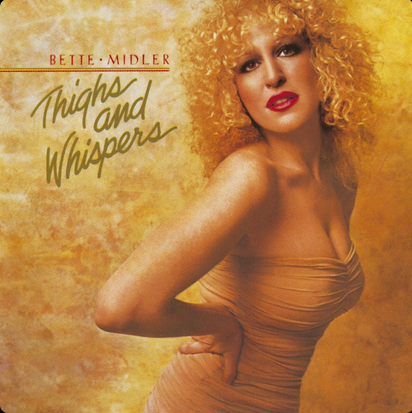
Dallas: Blueboy
It has been the custom of this column, in the two years I have been writing it, to spotlight albums that in some ways stand out from the hundreds each month that are released. As a sort of service to consumers, I’ve waded through some 100-140 albums that arrived monthly (mostly junk) to find the five or six that are worth their purchase price. This has not always been easy. Harder still was finding a way of saying about this music what hadn’t yet been said – good pop albums seem to be good for common reasons, likewise disco, jazz, r&b, etc. In two years, the music hasn’t changed all that much (or have I become musically jaded?), and I’m beginning to feel redundant each month talking about recycled music.
Presenting my problem to the editor, he asked if there wasn’t one particular album that I felt was exceptional for some unusual reason; perhaps a new artist had surfaced who was radically different, or an established artist had taken a dramatic turn. Maybe I could devote, for the first time, the entire column to such an album. I thanked him for solving my problem, as, yes, there is this one new record…
In the U.S. there are more hours of music being released each year than there are hours in the year; i.e., if one hypothetically did nothing but listen to records 24 hours a day, he could still not hear everything. Fact. It may or may not impress you depending on where or who you am, but as a record reviewer, it stumps me, so I find myself judging records, (correctly or incorrectly) by their covers, just to see which ones to play ! Now this merely attests to the importance packaging plays in our society, because I am sum I have passed over many valid albums (record companies take note!).
When I cast my eyes on the new Bette Midler album cover I was impressed-on the level of accepting the human being as art. It was the “look what she’s done with herself” reaction. Looking directly at us is a voluptuous blonde who is both highly sexual and vulnerable, and though she does not look like Marilyn Monroe, she does, in some strikingly contemporary way, embody that ambiguous quality that was Marilyn.
Opening the album quickly, my temperature rising, I found another photo on the inner sleeve that shattered all illusions created by the cover. It took me several minutes to realize what she’d done: let us know that she doesn’t take the sudden glamour too seriously, that the clown is still there poking fun at herself. (She’s already scoring points.) The album’s brilliant title is its own best review. Thighs and whispers is what it’s about, how it comes across, and where her voice has gone.
With two exceptions (unfortunately placed at the opening and closing) the album, produced by the legendary Arif Mardin, is a knock-out.
First comes “Big Noise From Winnetka,’ which I can only interpret as an act of bad judgment. There is nothing particularly wrong with it, but since it is just another 40-ish number, no different from the ones she includes on every album, at this stage of the game all that can be said is so what. The second mistake is “Married Men:’ a third-rate “disco” cut (in a class with Ethel Merman’s) that not only gives the (mistaken) impression that Miss Midler hasn’t the vaguest idea of what disco is, but also that she has no taste. Unfortunately, it was the album’s first, and unsuccessful, single release.
Sandwiched between these two is material that borders on genius. It is innovative, eclectic and groundbreaking. I cannot say whether the album will be a commercial success, given the misleading opening cut and the failure of the single. But as entertainment, as musical art, it is an achievement.
Her rendition of James Taylor’s “Millworker” is bath poignant and restrained. There is a disciplined emotionalism far more effective than in the unharnessed dramatics of records past. It’s followed by a spectacular performance that – approaches rock perfection. So subtly instinctive that it galvanizes without overpowering, her performance of “Cradle Days” is executed with a well-timed and impeccably harnessed energy that is ballsy and vulnerable and unforgettable. When she reads the line, “… I don’t remember too much about my Cradle Days / guess you could say I became a woman too fast…,” she reads it as an actress. What she conveys on record is a striking sense of cinema, just as Streisand’s early recordings conveyed her highly tuned sense of theatre. This is, perhaps, their only comparison, though I have read voluminous accounts relating the two. Streisand’s early claim that she was not a singer, but “an actress who sings:’ as chronicled in a review in The New York Times that stated: “Miss Streisand turns each song into a one-act play, with a beginning, a middle, and an end. She fuses her cohesive drama with a total characterization:
What Midler has done is turn each song into a movie, creating a living character in each song, and acting it out. “Cradle Days” happens to be one of the best things she has yet done.
Her comedy cut, “My Knight In Black Leather:’ about whom she says, “…you know, he smells just like a brand new car, cause everything he owns is leather!”, is a rousing number that builds (with Village People-type background voices) to a frenzy that’s laughable. Unlike her comedy cuts of past albums, this one succeeds not only as comedy, but as music as well.
Johnny Bristol’s “Hang On In There Baby:’ which opens side two, gets the royal treatment. Exceptional background vocals and sweeping string and horn arrangements offset a highly seductive performance contained in a whisper. Following an incredible sax solo by Eddie Daniels, Midler’s voice steps back to become just another instrument in the careful arrangement, to stunning effect…disco at its finest.
Now, if you want a genuine thrill, do what I’ve been doing to friends since the album’s arrival. Smoke a joint, put on your earphones, and put the needle directly to side two, cut two – forget sequence, forget anything you’ve read thus far. Just do it.
“Hurricane:’ the album’s high point, is a masterpiece, a sweeping South Seas Hollywood extravaganza for the ear, and although it cannot (should not) be classified as disco per se, it would be impossible to sit still to. A virtual embroidery of sound upon sound, “Hurricane” is possibly one of the most extraordinary (and erotic) numbers in many a year. It builds to a climax of syncopated harmonies and violins that swirl the listener into the vortex of the storm, creating a richly textured fabric of sound that does exactly what the lyrics (penned by Midler) profess:
” ··· you drove into town like the wind / hot on the heels of rain / and in your eyes all was calm / that’s why they call you Hurricane / you blow me away…you blow me away…/ Hurricane gonna kill me, honey you sure do thrill me / swallow me without a sound…”
“Hurricane” defies categorization, at the same time encompassing a broad spectrum of musical idioms. It is, I think, where music is going in the ’80s. Disco is not dying, as many insist, it is merely being incorporated into what our definition of contemporary music is. Fusion is the name of the game today. R&B, jazz, disco, rock – they are emerging as one driving force – eclectic music for an eclectic age. Thighs and Whispers, along with Herb Alpert’s, Rise is the first true music of the new decade.
Something else that strikes me as definitively ’80s, since we’ve touched on the subject, is the quality of Midler’s voice, or, more correctly, the “new” quality of Midler’s “new” voice. Given the raw material she started out with – an adequate voice that at best could carry a tune – her success has been based on delivery, never sound. She stood in admiration of the “instruments” of Streisand and Aretha Franklin, wishing, trying, often straining to capture some of the natural beauty possessed in those voices. Today, Midler’s voice, motivated by musical intuitiveness, is a finely honed instrument over which she has total command. It has the matte smoothness of a sugared almond, and a breathy sexiness that one remembers from The Great Blonde herself. Midler’s voice can still be tough, to be sure-as on “Cradle Days” and “Rain:’ the album’s remaining (and fine) cut – but never overpowers the underlying vulnerability. With this album Bette Midler has realized her vinyl persona. She is now able to, produce exquisite sounds that now, yes, accept comparison to Streisand and Aretha – and that’s exciting. It’s possible, with a lot of hard work and determination, to surpass one’s own limitations, and Midler has gone beyond hers. Just as we can go beyond ours. Isn’t that what the ’80s are about?
Stephen Holden: The Village Voice
“Midler’s latest studio album teams her with Arif Mardin, whose elegant pop-soul arrangements obviously scared her to pieces. Though for a change she stays on pitch most of the time, this hard-won precision requires a near-total sacrifice of personality. The big cut, ‘Big Noise From Winnetka,’ is an arranger’s showpiece. The worse, Johnny Bristol’s ‘Hang On In There Babe,’ has Midler sounding like a luded-out Donna Summer, her voice a frightening mew in a swamp of production. “
College Media Inc.
“It would seem that Midler should be able to make the transition to disco singing without difficulty, but when she tries to extend herself too far beyond her original cabaret style, she ends up sounding like anyone else, and not a particularly outstanding anyone else at that. The ballads are more suited to her voice, but then, only when she doesn’t try to reach into Streisand territory. Producer Arif Mardin should’ve known better than to try to make Midler sound like something she’s not. “
Jess Cagle: Entertainment Weekly
”Married Men”-with Luther Vandross on background vocals-became a Top 40 hit, but her rendition of James Taylor’s ”Millworker” may be Midler’s finest moment. A widowed mom sits at her factory sewing machine ”waiting for a daydream to take me through the morning.” Her subtle inflections convey the quiet courage that only comes from defeat. A
NY Daily News
Bette Midler is a woman traveling under false pretenses. Under that self-consciously raunchy exterior, there beats the heart of a romantic, a sentimental, a nostalgic dreamer. You can tell in the disparity between the crazy-clothed woman telling dirty jokes, whom she emphasizes on stage, and the contrastingly restrained – yes, even refined – woman who rides the vinyl grooves. The provocative cover photo of her new album promises a delivery of her trademark trash, but the album removed from the cover sends out track after track of a Nice Person you could take home to mother.
This is some of what you’ll find on “Thighs and Whispers” :
“Married Men,” released earlier as a disco single. (the Roches trio took on the same subject with a similar subject matter, so don’t be confused.) In this one she lapses into a bit of her neo-Sophie Tucker monologue and also lets her voice do some decibel expansion. Besides being a romantic, Midler has a natural penchant for rock.
A reworking of the Bob Cosby band’s “Big Noise From Winnetka,” which brings a nice new feeling for this 1940’s big band sound, although Lamar Alsop’s whistling interpolation is no contest with Bob Haggart’s original.
“Knight in Black Leather,” a satirical comment on the title of the Moody Blues’ “Nights in White Satin,” which also uses musical comments on that art-rock piece. “I was just a pilgrim in the hot pursuit of love, wondering from disco to disco,” she sings. This sounds as if it could be pure trash but, except for an obligatory camp spoken portion, Midler sounds as if she actually could be serious about the whole business, and this works for the song’s effectiveness rather than to its detriment.
“Cradle Days” gives her the opportunity to do some Motown wailing – and nicely too.
The bottom line is that this album disappointingly lacks something to snap the listeners to attention.
Robert Cristagau
The songs are pretty good, and when you listen up they get better, their apparent flatness undercut by little touches of drama, comedy, or musicianship. But the songs aren’t that good. And they don’t get that much better. C+
Joe Viglione: All Music Guide
The Divine Miss M’s sixth release on Atlantic, and the one right before The Rose, finds the singer reunited with producer Arif Mardin, who contributed to her self-titled second album. Despite Bette Midler being in fine voice for Thighs and Whispers, a play on the title Cries and Whispers, a 1972 offering from film director Ingmar Bergman, and outside of a terrific version of Johnny Bristol’s 1974 Top Ten solo hit “Hang on in There Baby,” this 1979 disc is stuck in the ’70s when an artist of Midler’s stature should have made a recording that was her ode to the decade of decadence. The disco beat on most of the album is an irritant years later, though, as stated, Motown producer Johnny Bristol’s “Hang on tn There Baby” survives the incessant drum/high hat sound. “Big Noise From Winnetka,” sadly, does not, a future anachronism Mardin avoided with former Midler backup singer Melissa Manchester when “You Should Hear How She Talks About You” added rock to the dance vibe three years later in 1982. “Millworker” and “Cradle Days” are more traditional Midler and for that reason they entertain, her strengths are formidable, and here she goes to those areas of power. Where Bette’s second album had co-production from Barry Manilow and the third, Songs for the New Depression, from Mark “Moogy” Klingman, Thighs and Whispers would have benefited with more than one vision. The girl group fascination which was a wonderful point of reference for Bette, reprised somewhat on 1977’s Live at Last and 1980’s Divine Madness, is missing in action here, though high points like the vocal performance on “Cradle Days” work very well. The disco comes back to haunt “My Knight in Black Leather,” a song that would have worked better if it had a bit of techno angst as well as more trendy S & M references. As a sappy dancefloor exercise this version should have been an outtake. And that Jerry Ragovoy co-wrote it is the real shocker — Midler using his “Stay With Me” to wonderful effect in her film The Rose. Bette’s own co-write “Hurricane” works as well as Elton John’s Victim of Love failed disco experiment — which is to say it doesn’t. But Mac Rebennack’s “Rain” is more than a delight, it’s a real diamond in the rough here. “Married Men” closes out the album, and it is disco that works, La Bette’s own version of “It’s Raining Men” with the flavor of illicit romance an integral part of that decade. Bette Midler is such a consistent and dynamic artist that even she is allowed one exercise in excess. Thighs and Whispers is an uneven album from the harlot starlet which still has its moments.
Stephen Holden: Rolling Stone Magazine
This last-ditch effort to present Bette Midler as a mainstream pop-disco singer succeeds only too well. Though Midler sings on pitch for once, she squelches her personality for the sake of musical propriety, and with her raucous chutzpah muted, becomes a very mundane vocalist given to affecting a cramped, throaty croon. “Big Noise from Winnetka,” a swing-era camp chestnut, is Thighs and Whispers’ highlight, thanks less to the Divine Miss M. than to Arif Mardin’s classy disco-swing production.
“Millworker,” though decently sung, misses the dramatic subtlety of James Taylor’s version, and it can’t hold a candle to Midler’s riskier dramatic monologue of John Prine’s “Hello in There” on her first album. With the exception of “Married Men,” an intelligent pop-disco tune that boasts the artist’s chestiest singing, the rest of the material is weak or inappropriate.
Thighs and Whispers is the most convincing proof yet that Bette Midler is a stage personality in the tradition of Ethel Merman and Liza Minnelli, entertainers whose talents can’t be captured in a recording studio either.
Peter Reilly: Stereo Review
Probably the only thing hotter than Bette Midler at the moment–and surely for quite a while in the foreseeable future–is that English muffin one of the crew was preparing the night the alarm bell rang at Three Mile Island. Certainly she sports an ineffable new aura as an Authentic Movie Superstar in her bravura dramatic performance as the gross, childishly sweet, incredibly screwed-up heroine of her just-released movie The Rose. And “Thighs and Whispers,” her wonderful new Atlantic album, just as certainly shows that she hasn’t forgotten any of her old tricks. Speaking as one of her old tricks, which is to say one of her admirers, I’m happy to report that she’s up to, and down to, more of the same ribald, hilarious, poignant kinds of carrying-on that made her a most unlikely cabaret star in the first place.
Even though the “bigger-than- Streisand, bigger-than-Streisand” buzz has now begun to sound like a roar, and even though her work in The Rose has revealed a volcanic dramatic actress fully able to keep an audience spellbound without singing a note, it’s nice to know that she hasn’t turned her back on all of us who treasured her back then as the most inventive, intelligent lampooniste of her generation. Far from having Gone Grand, Miss M. is gaudier than ever. Take, for instance, the album cover. You haven’t seen such a tumble of golden hair, expanse of tawny skin, smolder of amber eyes, and slather of hot-pink lip-gloss since Marilyn Monroe sashayed out to have her… um . . . picture took.
As for the repertoire–well, how does a little something like My Knight in Black Leather cuff you? It is one of those dizzy Midler spoofs of uptown lifestyles in which the dippy, woebegone heroine confesses that Oh, God, she just gets so turned on by this dude with the masterful touch. Porn? No. Just good, dirty, non-serious fun. Then there’s Hurricane, a genuine plastic lei if ever there was one; who else, in this year of 1980, could possibly get away with such lines as “You’re a hurricane/You blow me awayayay . . .” strung out against a chorus huffing and puffing asthmatically in the background? And Married Men, in which Miss M., sounding like the activities director in a coed bath house, wags an admonitory finger at her listeners as she tells them (“Now, girls!”) how two-faced married men can be, the chorus undulating through several repetitions of “They do it/They do it/They do it” the while.
Not that she doesn’t do some very fine straight-out singing here too, particularly in the disco-slanted Hang On In There Baby and the soul-brushed Cradle Days. The Midler voice is like the Midler figure–pint-size–and it is not nearly as vividly colored as she herself is. But it is enormously expressive and musical. Moreover, she is a natural, instinctive editor, and any Midler reading of a lyric can be depended on to emphasize just the word or the phrase that nails the meaning down absolutely.
It all comes gloriously together here on the Big Noise from Winnetka (would I kid you?) track. In seven minutes Midler dismantles that old pop classic before your ears, puts it back together again in an arrangement by Arif Mardin, building a Performance that will have you chuckling with pleasure by the time it finally careens to a stop. It is a superb job and alone worth the price of the album.
I came late to an appreciation of the particular kind of magic Bette Midler can lend to a song, put off at first by her Kween of Kamp image and what I thought was a contrived, patronizing kind of outrageousness. Now that I know her work better I realize that the outrageousness is quite real, that it has its origin in and is designed to protect a vulnerability that is just as real. And it is that vulnerability, I think, that ac- counts for her unique appeal, because it is never consciously displayed, never capitalized on (as it surely was with, say, Judy Garland), but only suggested. It lends a touching truth to almost everything she sings, no matter how raunchy, how gamey, how impertinent.
Even if she had never gotten beyond the kind of material she does here (and she does it close to perfection) on “Thighs and Whispers,” Bette Midler would deserve to be an important star. As it stands now, with The Rose securely tucked under her belt, she looks like serious competition for the reigning actress-singer of our era, a lady whose stainless-steel ways are beginning to pall. Was it Mary McCarthy who compared life to a roller towel, with all our successors wound up inside, just a short pull away
Bette Midler:
“People say it’s the best thing I’ve done in a long time and that’s gratifying. I really do love the ballads. For someone like me, they keep you alive. I think ‘Cradle Days’ is one of the best things I ever did. I love old tunes and disco and rock, but ballads really are the key to my soul. “