Telegraph
The films that made you cry the most
By Millie Smith
Jan. 20, 2026
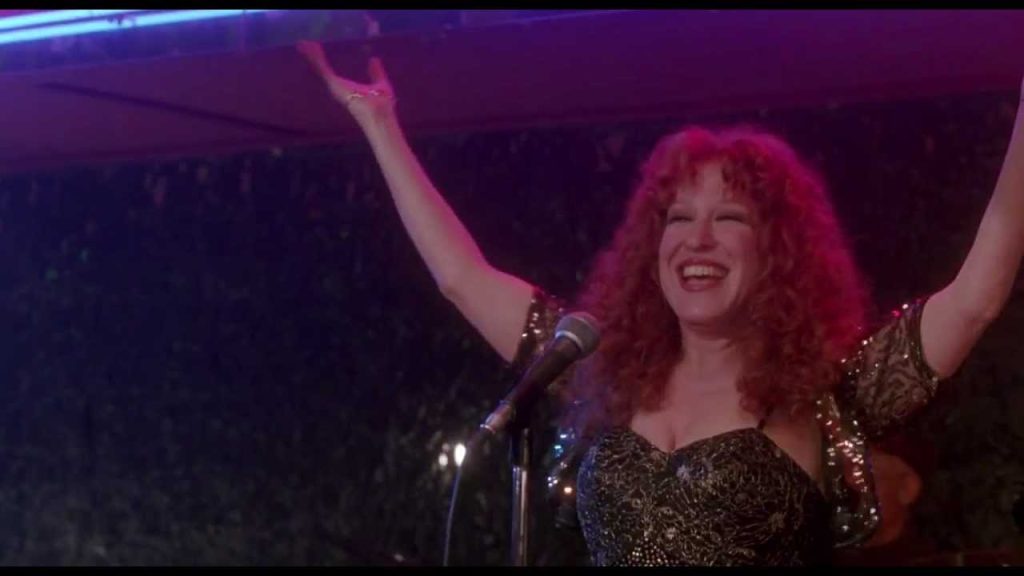
Reader Susan Berry describes a good film as one where “we emotionally identify with it, be it [with] laughter, tears, outrage or cheering on the hero or heroine”.
Moving films offer catharsis, classy acting and the chance for a good cry.
On Sunday, The Telegraph’s Culture Desk compiled a list of films that broke our writers’ hearts in response to the release of Hamnet, the most recent sob-fest to hit cinemas. Here, we share Telegraph readers’ recollections of the stories on screen that made them weep.
Schindler’s List
Stephen Spielberg’s epic drama about the Holocaust was brought up by readers many times.
Kitty Deveraux remembers “going to see it at the cinema with one of my closest friends from university days, who is usually very stoical. By the end, a hush had fallen over the room. I sat there in silence with tears running down my face while my steadfast friend audibly sobbed beside me.”
The moment that makes it for Tray Hunley is “the end where real people he saved place stones on his actual grave. When watching it in a cinema, I had to bury my face in my coat for a little while.”
Sarah O’Rafferty says that she can’t watch the film again, praising the soundtrack as “superb”.
Titanic
For some, it was James Cameron’s tale of the doomed ocean liner. Reader Omer Boudjema says: “Titanic was the first film that made me cry as a kid. Now as an adult in his 30s it doesn’t take much to get me going. Especially films with themes of family.”
For others, the 1997 film didn’t make the cut. James Potts shares: “Films hardly ever stir me to cry, in fact I was laughing my socks off when the ludicrous Jack slipped under the waters at the end of Titanic, much to the bemusement of other cinemagoers.”
The Railway Children
Despite his feelings about Titanic, Mr Potts does have a soft spot for The Railway Children. He says he chokes up “just thinking of that scene: ‘Daddy, my Daddy.’”
Also calling for the classic to be included is Paul Hutchence. He says: “when Jenny Agutter runs along the station platform to greet her father returning from imprisonment gets me every time.”
Reader M Prigwort is also a fan of that final scene. “It’s got to be The Railway Children when Bobbie is reunited with her father as the steam clears from the station platform.”
E.T.
Childhood classic E.T. is also a popular one.
G. Sherlock recounts that at 25, “when ET was ‘dying’ I was in bits.”
The moment that catches out Janice Lanning is “when the boys on their bikes start to fly with John Williams’ music soaring in the background.”
Donna Myerthall also wept “buckets at that last scene and I’ve watched it 100 times!”
Marley and Me
Dog lovers beware: Owen Wilson and Jennifer Aniston in sob-fest Marley and Me – Film Stills
James Tams argues: “It has to be Marley and Me. I’m welling up just thinking about it.”
Reader Sam Pauly “watched it on a plane and the stewardess came over to check I was OK.” Also in the air whilst watching the heart-breaking film was Lesley Claff, who shares: “It was an older plane with screens suspended above the aisles so I couldn’t even hide my sobs.”
De Donner simply “won’t watch it. It would be like self-torture. Someone bought me the book. I read the back and gave it straight to someone else.”
Brief Encounter
Brief Encounter features one of the most tragic break-ups of all time – 1945 Screen Archives
Another classic to tug on the heart strings was the romantic tragedy Brief Encounter.
For Mary Murphy it’s the final scene with Laura’s husband that captures the moment for her: “We assumed he was oblivious to things but he hugs her at the end and thanks her for coming back to him. With Rachmaninoff’s score soaring in the background. Wonderful stuff.”
Janet Dennis was moved by the moment Alex leaves: “The closing scenes where the chatterbox is interrupting Laura and Alex’s precious final moments together in the railway café, and then when Laura sees off Alex’s train, knowing she will never see him again, her inner turmoil is almost palpable and jumps out of the screen.”
“That stiff upper lip parting and the very last scene, Fred comforting Laura. A genuine tearjerker,” adds Chester Drawers.
It’s a Wonderful Life
The start and end of this Bildungsroman are the most powerful for Neil Struan Harper: “The opening has the prayers for George Bailey floating into the heavens. The closing is the famous Auld Lang Syne scene. Both mist me up every time; a remarkable achievement for an 80-year-old film.”
The final scene of the film has Simon Roberts blubbing every Christmas, “where all of George Bailey’s friends come together for him; ‘To my brother George… the richest man in town.’”
To Paul Terry, it’s the “ultimate Christmas movie”. He said it “always gets me at the uplifting end, no matter how many times I’ve watched it.”
Bambi
Gillian Key-Vice recalls that, as a small child, “when his mother is shot, I was devastated.”
(Mrs) Anthony Wells shares that since watching Bambi, she’s avoided “anything remotely sentimental. I refused point blank to accompany my children to Watership Down and anything involving children sends me out of the room pronto. There’s too much real heartbreak in the real world to use it for entertainment.”
The Killing Fields
Deborah Gorringe, a self-described “sobber at films”, has one film “that sticks in my mind after all these years. The Killing Fields. The protagonists had been through a harrowing journey and in the last few frames reached the edge of a plateau, looked down, and saw safety in the distance. Their relief was palpable. At this point John Lennon’s Imagine started up on the soundtrack. I could not leave the cinema for a good half hour.”
Ona Roll agrees, naming it the one film that “really made me cry as an adult”.
The Green Mile
Gully Foyle thought their “daughter would never stop crying after watching The Green Mile for the first time”.
Alison Hopkins describes the cutting moment “when John Coffey is going to be executed and he tells Tom Hanks how he’s ready to go, because of how cruel the world is. And then when he asks him not to put the hood on, because he’s scared of the dark. How Michael Clarke Duncan didn’t get an Oscar for that is beyond me.”
Beaches
M. S. shares how they came to watch some of these sentimental films from a young age. “In the early eighties, a video van started calling round our street. My mum thought my sister and I would love the videos like Bambi, Dot and the Kangaroo, Watership Down.
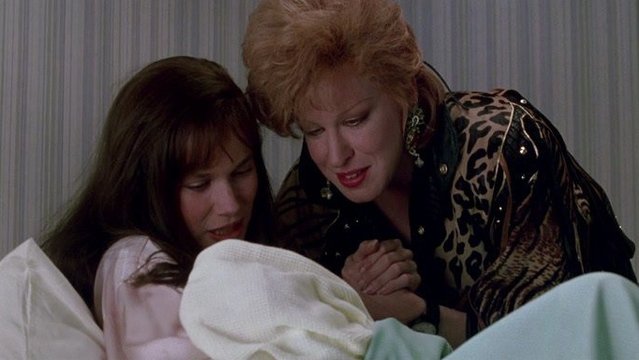
“She asked them not to come back on the fourth week, as in those days, with no internet, she didn’t know we’d end up sobbing messes from the sweet animal videos she chose.
“But Beaches and Life is Beautiful got me as an adult.”