Bootleg Betty On This Day In History: Bette Midler’s Movie ‘For The Boys’ Was Released, November 22, 1991 Nov. 22, 2025
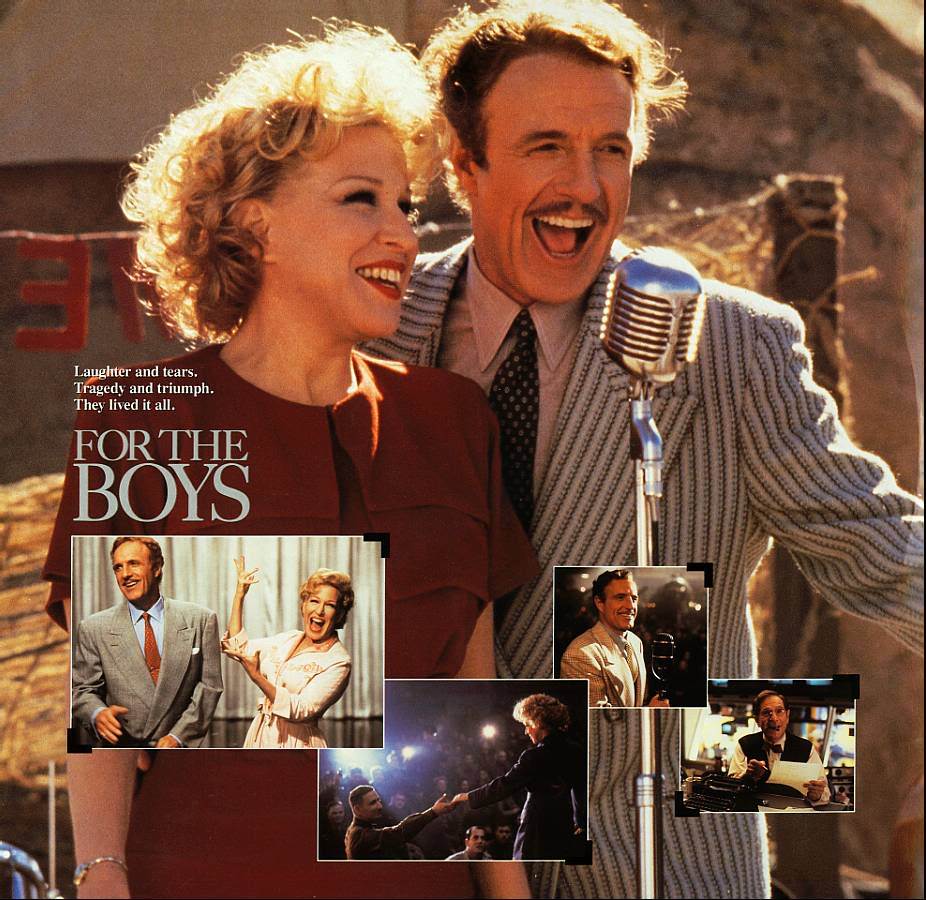
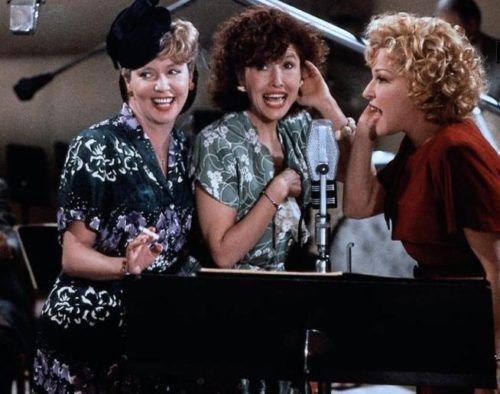
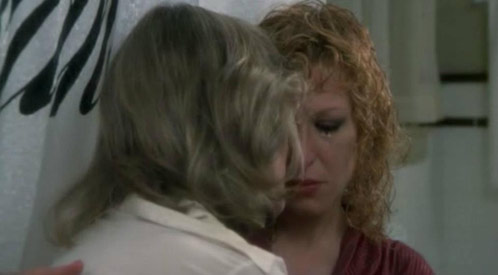
“For the Boys” (November 22, 1991) is a sweeping musical comedy-drama directed by Mark Rydell that chronicles the turbulent four-decade partnership between brassy up-and-coming entertainer Dixie Leonard (Bette Midler) and the suave, established showman Eddie Sparks (James Caan), who team up to perform for U.S. troops during World War II, the Korean War, and the Vietnam War. Framed as a 1990s flashback during Dixie’s receipt of a lifetime achievement award, the film traces their initially contentious relationship—marked by Eddie’s jealousy of her talent—through shared triumphs on makeshift stages, personal heartbreaks like the on-duty death of Dixie’s husband and the loss of their son in Vietnam, and a climactic reconciliation amid a Viet Cong attack on a base where they’re performing. Produced on a $40 million budget by 20th Century Fox with a screenplay by Marshall Brickman, Neal Jimenez, and Lindy Laub, the movie features a star-studded supporting cast including George Segal and marks the uncredited film debut of a young Vince Vaughn as an enthusiastic soldier in the audience.
Despite its ambitious scope and Midler’s powerhouse vocals on a soundtrack of era-spanning covers like “Stuff Like That There” and originals such as Diane Warren’s “Every Road Leads Back to You,” the film was a box office disappointment, grossing just $23 million worldwide and earning mixed reviews that praised Midler’s tour-de-force performance but criticized the sentimental scripting as overly maudlin.
Midler, drawing from real-life USO legends, earned a Golden Globe win for Best Actress in a Musical or Comedy and an Academy Award nomination for her transformative role, which required her to age from a vibrant 20-something to a reflective octogenarian.
Behind the scenes, production hit snags when U.S. Marines from Camp Pendleton, slated as extras, were redeployed for Operation Desert Storm, forcing the team to recruit civilians with fresh haircuts instead.
Adding to the drama, real-life comic Martha Raye filed a lawsuit post-release, accusing the film of plagiarizing her own storied USO career—complete with decades of entertaining troops—but the case was dismissed by a judge who found no substantial evidence.
James Caan, fresh off his “Misery” triumph, later vented in interviews that collaborating with Midler was a “complete nightmare,” clashing over creative differences, while the Eddie Sparks character is widely believed to be loosely inspired by Bob Hope’s iconic wartime persona.
The story even inspired a 2011 stage musical adaptation at the Marriott Theatre in Illinois, proving its enduring appeal beyond the screen.