Bootleg Betty
The Bette Midler song Samedi et Vendredi…Meaning?
By Mister D
May 7, 2026
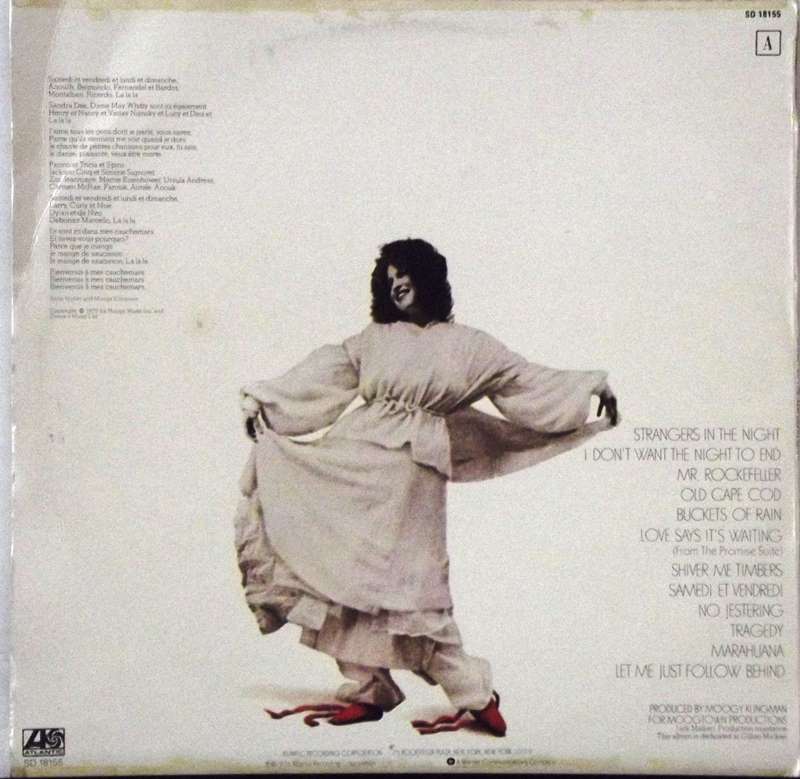
“Samedi et Vendredi” (Saturday and Friday) is the French-language section of Bette Midler’s track “Shiver Me Timbers / Samedi et Vendredi” from her 1976 album Songs for the New Depression.
Why It’s Backwards:
Bette flips the days on purpose — a little cabaret chaos to signal that the whole French monologue lives in dream logic, not calendar logic. In her subconscious, even the weekend refuses to behave.
Vibe:
French fever dream • Diva disorientation • Weekend out of order
It’s presented as a medley: The first part is a cover of Tom Waits’ “Shiver Me Timbers” (with some lyric variations), a dreamy, seafaring song about leaving home, following the call of the sea/wind, and embracing solitude/adventure (with nautical references like Captain Ahab and “shiver me timbers”).
It transitions into “Samedi et Vendredi”, an original piece co-credited to Bette Midler and Moogy Klingman. Bette sings it entirely in French.
Meaning and Style
“Samedi et Vendredi” is a humorous, surreal, and playful list song—a lighthearted, cabaret-style parody of Alice Cooper’s 1975 hit “Welcome to My Nightmare.” It evokes a dreamlike (or nightmarish) parade of celebrities and figures who “visit” the singer in her sleep. The title lists days of the week (Saturday and Friday, plus Monday and Sunday in the lyrics), creating a whimsical, everyday-to-absurd feel.
The song name-drops a eclectic mix of actors, musicians, dancers, politicians, and cultural icons (some living, some deceased at the time), blending high and low culture in a fun, tongue-in-cheek way. It ends by repeating “Bienvenus à mes cauchemars” (“Welcome to my nightmares”), tying into the Alice Cooper reference. The sausage-eating line adds absurd humor. Overall, it’s showbiz flair rather than deep philosophy—fitting Bette’s theatrical persona.
Key Lyrics and Translation (French Section)
Here’s the core French part with its English translation (approximate, as it’s poetic/sung):
Samedi et vendredi et lundi et dimanche.
Saturday and Friday and Monday and Sunday.
Anouilh, Belmondo, Fernandel et Bardot, Montalban, Ricardo… (etc.)
Lists figures like Jean Anouilh (playwright), Jean-Paul Belmondo, Fernandel, Brigitte Bardot, Ricardo Montalbán…
Sandra Dee, Dame May Whitty… Henry et Nancy et Vaslav Nijinsky et Lucy et Desi…
…Sandra Dee, Dame May Whitty, Henry and Nancy (possibly Kissinger or Fonda context), Vaslav Nijinsky, Lucille Ball and Desi Arnaz…
J’aime tous les gens dont je parle, vous savez. Parce qu’ils viennent me voir quand je dors. Je chante de petites chansons pour eux… Je danse plaisante, veux être morte.
I love all the people I’m talking about, you know. Because they come visit me when I sleep. I sing little songs for them… I dance to please, want to be dead.
Later verses add Pacino, Jackson Five, Simone Signoret, Zizi Jeanmaire, Mamie Eisenhower, Ursula Andress, etc., ending with Larry, Curly, et Moe (Three Stooges), Dylan et DeNiro, Marcello (Mastroianni), and the sausage bit.
Ils sont ici dans mes cauchemars… Parce que je mange. Je mange de saucisson… Bienvenus à mes cauchemars.
They are here in my nightmares… And do you know why? Because I eat. I eat sausage… Welcome to my nightmares. (Repeated.)
The full track blends wistful wandering with this giddy dream sequence, showcasing Bette’s versatility (and her debut as a songwriter on the album).
It’s a fun, lesser-known deep cut that highlights her love for eclectic references and French flair. You can find the full track on streaming platforms or her albums.