Bootleg Betty
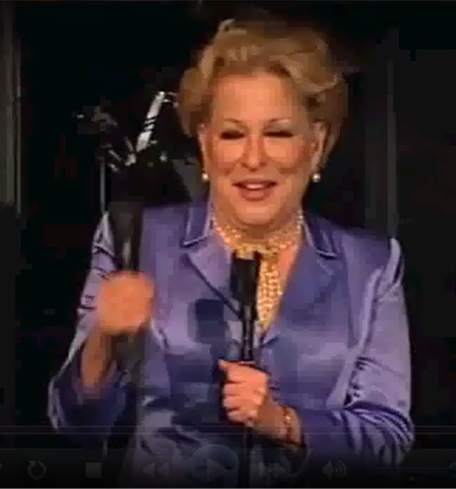
Video: Bette Midler Performs At Paul Simon’s CHB Benefit in 2011
By Mister D
June 2, 2026
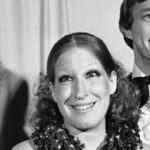
2011: Bette Midler and Paul Simon in their Current Happy Times!
Paul Simon co-founded the Children’s Health Fund in 1987 with pediatrician Irwin Redlener. CHF provides mobile medical clinics and healthcare services to underserved, low-income, and homeless children and families across the U.S., addressing barriers like poverty, transportation, and access. By 2011, it had supported over two million health visits.
Key Details of the 2011 Gala Performers: Paul Simon (a frequent supporter) and Bette Midler performed together and individually. They notably duetted on Simon’s classic “The Boxer.” Videos of their performances (including “The Boxer” and other songs) are available on YouTube and Bootleg Betty
Honorees: The Starr Foundation (and its chair, Maurice R. Greenberg) received the Founders’ Award for long-term support of CHF programs. American Express received the Corporate Award for 20+ years of partnership.
Purpose: To raise funds and awareness for CHF’s mission of delivering comprehensive pediatric care via mobile clinics and fixed sites, especially in underserved areas. It highlighted ongoing needs, with more than one in five U.S. children then living below the poverty line.
The gala exemplified celebrity philanthropy, blending high-profile performances with advocacy for children’s health. It built on Paul Simon’s decades of involvement with the organization. Bootleg Betty (a Bette Midler fan site) has recaps and links to performance footage.
This was a warm, star-powered fundraiser that reinforced CHF’s impact rather than a large public concert.
Did Paul Simon and Bette Midler resolve their riff in the mid-70s?
Yes, the mid-1970s riff (primarily over the 1975 “Gone at Last” recording) was eventually resolved, though it took time—likely by the mid-1980s—and they became friendly enough to perform together warmly decades later.
What Happened in the Mid-1970sPaul Simon invited Bette Midler (with whom he had become friendly and reportedly dated casually) to duet on “Gone at Last” for his Still Crazy After All These Years album. They recorded a version with a more Latin/street feel.
bootlegbetty.com
Tensions arose over arrangements, label negotiations (Atlantic vs. Columbia), and creative direction. Simon ultimately replaced her with Phoebe Snow for a gospel-style track, which became the hit single. Bette felt blindsided—she heard the final version on the radio without prior notice—and expressed resentment/hostility in a candid 1975 interview, describing public scenes (including a drunken confrontation in the Hamptons) and saying she embarrassed both of them. Simon downplayed it as label haggling, not personal, but they had no plans to work together at the time.
This created a notable (if not tabloid-level) rift in the mid-70s music scene. Bette even referenced it indirectly during her 1975 duet with Bob Dylan on “Buckets of Rain.”
Resolution: There isn’t a single public “make-up moment” documented in detail, but reports indicate they patched things up around 1984 (e.g., during or around the “We Are the World” sessions). By the 2010s, they were on good terms and described as “long-time friends.”
In 2011, they reunited for the Children’s Health Fund benefit gala (which Paul co-founded), performing individually and duetting on “The Boxer” (plus other moments like “Bei Mir Bist Du Schoen”). The event was warm and collaborative, with no lingering tension evident.
In short: The 1975 issue was real and caused bad feelings for a while, but it was resolved years later. Their 2011 performances show the riff was long behind them. Fan sites like Bootleg Betty have audio of the original Midler-Simon demo for comparison.
The 1975 “Atlantic Records conflict” (more accurately a label negotiation deadlock involving Atlantic and Columbia) centered on the duet recording of Paul Simon’s “Gone at Last” for his album Still Crazy After All These Years. It led to a temporary personal and professional rift between Simon and Bette Midler.
Background and Setup
Paul Simon (on Columbia Records) invited Bette Midler (on Atlantic Records, managed by Aaron Russo at the time) to duet on the upbeat, optimistic song “Gone at Last,” which he had written. They had become friendly (reports suggest they dated casually), and Midler agreed. Sessions occurred in 1974–early 1975, including versions with different arrangements: one with a Latin/street feel (using Muscle Shoals musicians) and involvement from the Jessy Dixon Singers. A rehearsal/demo exists and has circulated among fans.
The Core Conflict: Label Negotiations and Creative Differences. Label issues: Midler’s Atlantic deal clashed with Simon’s Columbia affiliation. Negotiations over rights, credits, royalties, and release details became “very ugly,” according to Midler. Ahmet Ertegun (Atlantic) and Columbia executives couldn’t agree, creating tension at sessions.
Simon’s perspective: He described it as excessive “wrangling and haggling” that wasn’t worth it. He wasn’t fully satisfied with the Midler version’s direction and shifted to a gospel approach better suited to Phoebe Snow (whom he met via producer Phil Ramone). The final single (released in August 1975) featured Snow and the Jessy Dixon Singers and reached #23 on the Billboard Hot 100.
Midler’s perspective: She felt blindsided. Advance publicity had built expectations, but she heard the finished Phoebe Snow version on the radio without prior notice from Simon. She described it as hurtful, noting the track “bore no remote resemblance” to what she recorded.
Manager Aaron Russo added fuel, claiming Simon got “greedy” on the deal split and that personal dynamics (including jealousy over a rumored affair) played a role. Simon maintained it was strictly business.
Fallout and Public/ Private Drama Midler expressed resentment in a candid November 1975 Crawdaddy interview, admitting she made “a couple of scenes” and embarrassed both of them. A notable incident occurred in the Hamptons: drunk and hurt, she confronted Simon publicly, yelling at him in a kitchen after downing multiple gin and tonics. She hadn’t seen him in over a year at that point.
Bob Dylan subtly referenced it during their 1975 duet on “Buckets of Rain” (for Midler’s Songs for the New Depression). As it fades, Dylan says something like “I think Paul Simon should have done this one,” prompting Midler to vent that Simon “took my voice out” and was “maaaad.”
Phil Ramone later called the Midler version a “locked trunk” unlikely to be released.
Resolution and Legacy: The rift was not permanent. They reconciled around 1984 (e.g., during “We Are the World” sessions) and performed warmly together at the 2011 Children’s Health Fund benefit, duetting on “The Boxer” and more. By then, they were described as long-time friends.
The episode highlights 1970s music industry realities—label politics, creative control, and personal egos intersecting in high-profile collaborations. The unreleased Midler-Simon tracks remain a “what if” for fans, with bootleg demos available online. Simon’s album won Album of the Year Grammy in 1976, and “Gone at Last” became a solid hit in its gospel form.
Sources: PRNewswire, Bootleg Betty, The Guardian, Rolling Stone, Paul Simon Info, Crawdaddy
Paul Simon’s Version With Bette Midler (Demo):
Bette Midler’s version in Clams Without Paul Simon