Podscripts
The New Yorker Radio Hour – Bette Midler and the Screenwriter Paul Rudnick on “Coastal Elites”
By Staff
June 22, 2026
Episode Date: September 4, 2020
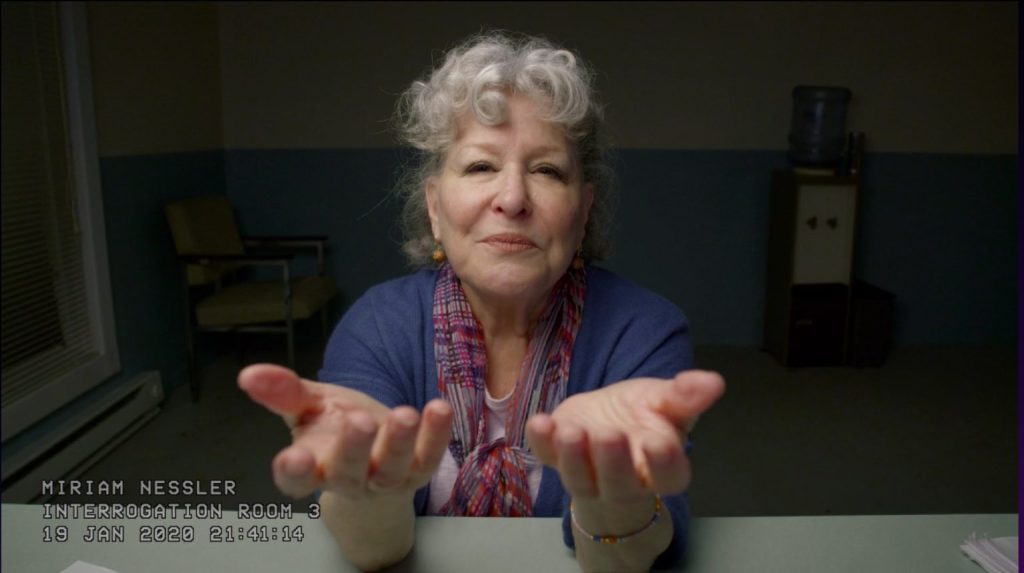
This segment contains adult language. In the new film “Coastal Elites,” Bette Midler plays a New Yorker of a certain type: a retired teacher who lives on the Upper West Side, reads the New York Times with Talmudic attention, and is driven more than half mad by Donald Trump. So much so that one day she picks a fight in a coffee shop with a guy wearing a red MAGA hat, and her monologue takes place when she’s in police custody. The role isn’t too much of a stretch: she tells David Remnick about a long-ago dinner at the Trumps’ apartment that she recalls as a nightmare, and, just days after this interview, Midler tweeted some ill-advised comments about Melania Trump’s accent that she had to apologize for. Paul Rudnick wrote “Coastal Elites” as a series of monologues to be performed at the Public Theatre, but seeing no avenue to perform it during the pandemic, he reconceived of it as a film for HBO, starring big names like Kaitlyn Dever, Dan Levy, Sarah Paulson, and Issa Rae. And while he’s sad about the state of live theatre, Rudnick has no regrets about taking the show to television: “You actually got closer than you would if it had been staged live in the theatre,” he says. “You have the best possible seat in the house for a Bette Midler performance.” New Yorker Radio Hour listeners, we want to hear from you. We have a few questions about the show and how you listen to it. The survey takes about twenty minutes, and your feedback will help us make our podcast better. Take the survey here.
Starting point is 00:00:00
This episode of our podcast contains quite a bit of adult language from Bet Midler. This is The New Yorker Radio Hour, a co-production of WNYC Studios and The New Yorker. Welcome to The New Yorker Radio Hour. I’m David Remnick. Yes, officer, I know what I did, and I know why that man pressed charges. Oh, my God. I can’t believe I need. In the new film, Coastal Elites, Bet Midler plays a New Yorker of a certain type, A retired teacher who lives on the Upper West Side, reads the New York Times with Talmudic attention, and is driven insane by Donald Trump.
Starting point is 00:00:40
So much so that one day she picks a fight in a coffee shop with a guy who’s wearing a red MAGA hat. I snapped. I lost it. I went full on worldwide wrestling, Federation Navy SEAL Jason Bourne. Go ahead. I grab that hat. I’m going to throw it on the brow, and he grabs my arm, and he’s twisting it. He says, that’s my hat, bitch. I said, not today, asshole. I hate my arm away, but I keep that and I run.
Starting point is 00:01:04
That’s Bet Midler performing in Paul Rudnick’s coastal elites. In real life, Midler herself has gotten into some Trump-related trouble. After we spoke, she tweeted some ill-advised comments about Melania Trump’s accent, which she later apologized for. Paul Rudnick wrote coastal elites as a series of monologues to be performed on stage, but with the pandemic, it was reconceived as a film for HBO. I talked recently with Paul Rudnick and Ben. Midler.
Starting point is 00:01:32
Bet, I spent, I don’t mind telling you, a small fortune, but never regretted it, to sit in the second row to watch you do Hello, Dolly. I have always been a woman who arranges things for the pleasure and the profit it derives. I have always been a woman who arranges things like furniture, daffodils, and lives. And one of the things I was thinking about after those performances is the tremendous energy you must get from the audience that it goes back and forth. And here you’re filming practically by yourself.
Starting point is 00:02:14
Oh no, I was alone in that room. Right. So what is that experience like? It must be radically different. It was fabulous. Because you didn’t have any pants on or something? No, no, no. I was completely dressed in my little.
Starting point is 00:02:27
a little costume all the way down to my shoes, even though I was, you know, I was cut off at the chest by the table in the, in the, in the, in the, in the in the, in the, in the, in the, in the, in the, in the, of concentration. It was so easy to concentrate because you didn’t have to, you didn’t have to turn and listen to anybody else. You were just looking in one spot and trying to convince someone that, of your, of your, of your, of your, of your, of your, of your, of your, of your, of your, was, was, was, impeccable. I mean, I had, it was the easiest, one of the easiest gigs I’ve ever had because I didn’t have to share the stage. You don’t have to share the stage and nobody’s crinkling, nobody’s crinkling candy wrappers in the third row or taking a cell phone shot. Exactly. And I have to say, we had two days. We shot one day, like Friday, and then
Starting point is 00:03:18
Saturday we came back and shot again. And I really did not get my, get it until like the last take Saturday because it’s very slippery. Because when you’re shooting remotely, it’s very distilled. You’re not in a rehearsal room. There aren’t distractions. There aren’t hundreds of crew members. You have like the best possible seat in the house for a Bet Midler performance. So it was very exciting. And for this piece, because it’s so intimate, that felt exactly right. You actually got closer than you would if it had been staged live in the theater. And you thought, oh my God, this is just, this is the way to work. So it was unexpected, but kind of a weird gift. Paul, I read a part of coastal elites.
Starting point is 00:04:02
It must be about a year ago, which now seems, of course, like 20 years ago. How do you write a piece that tries to catch up with the world where the world is just tumbling downhill faster and faster? Well, I think the piece you read was actually the piece that Bet performs beyond superbly because it was, this stuff was just pouring out of me. It was sort of after four years of Trump, the anxiety level everywhere and in everyone I knew had not dissipated at all. So it just became ridiculous not to write about this stuff. And what was exciting was that as the year went on, and originally these pieces were going to be staged live at the public theater with Jay Roach directing, and the pandemic shut that down.
Starting point is 00:04:49
And then when I thought, okay, this is not happening. But then the HBO and our production team came up with the idea of shooting it remotely and putting, you know, every possible COVID protocol in place. And I also got to rewrite so I could keep up. So we could include material on the pandemic and on Black Lives Matter and how it would impact these characters’ lives. And so that’s very rare to be able to write that immediately. Is it rough to write a comedy in real time when the tragic dimension is so. immense. Yes, of course.
Starting point is 00:05:25
And it’s something that I learned many years ago when I wrote a play called Jeffrey that was also a movie, which was a romantic comedy of all things said in the era of the AIDS crisis, the peak of the crisis, because I thought disease and suffering are never funny, but people are. And I thought that’s, especially when you’re dealing with a disease that has no cure and very little treatment, a sense of humor may be all you have left. and especially when you’re dealing with New Yorkers, which is what I like to do, that you’ve got people for whom humor is just part of their first language. It’s how they cope. And it’s a glory. So it wasn’t something I added on top of the material. It seemed very organic. Now, I got to tell you, Paul, you’re now finished because I’m so excited to speak to Bet Midler that I may or may not come back to you. Sweet of you. Oh, don’t do that. Don’t do that. I love to hear him talk. He’s so passionate about this.
Starting point is 00:06:20
material and he and he’s uh he’s you know i’ve been following this piece of material for a long long time and he’s so passionate he has all the answers he really does have all the answers well you play a character named miriam nestler who’s a retired public school teacher in new york and she finds herself in police custody after a fight with a guy who’s wearing a maga hat how much did you identify with miriam nestler oh i tremendously except i don’t live on the upper west side i um i um I identified with her. You know, I have a, I have librarians in my family, and we’re all kind of civic-minded, and we’re very proud of what we call our culture.
Starting point is 00:07:00
But I identified with her very, very strongly, and I think she’s hilarious because she gives these little digs, and then she’s just kidding, just kidding. But the truth is that she’s not kidding. You know, this is, this means the whole world to her, and I think the fact that she’s gone into physical battle as a warrior against this mental, aberration is really, it’s not just admirable. It’s saintly. You know, she compares herself at the end of the piece to Joan of Arc. And she says, in my way, in my small way, I am, I too am a Joan of Arc because I was unafraid. I marched into battle to save what needs to be saved. I think she’s kind of fabulous.
Starting point is 00:07:40
I love her. Now, how do you feel when you see a Maga hat on the… I can’t look at them. I can’t look at them. I find it distressing because, well, it’s like the masks. Why would anybody not wear a mask if you are going to protect your next-door neighbor or your your own family. It’s like a gap in their consciousness. It makes no sense. Please, I’m starting to get, I’m worked up. Do you ever think about how they see you? Do they see people who work? I don’t give a fuck. I don’t give a fuck. I’m sorry. I’m sorry. I don’t care how they see me. Occasionally, in the old days, I used to. In the old days, I used to, when we first started tweeting, I used to get a little, I used to get trolled and I used to think, oh, this isn’t very nice.
Starting point is 00:08:19
I don’t feel good doing this. And then I thought to myself, well, maybe I shouldn’t be so harsh on other people. But then when the other people turned out to be so insane, it’s almost like, well, you just have to say something. You can’t just let this slide by. This isn’t behavior. This is abnormal, you know?
Starting point is 00:08:38
At least pretend. Pretend what? Pretend what? Pretend to be a human being. You know, some of them, it’s almost as if they have a shell, you know, let’s not go there. This is a dead end. Let’s move on.
Starting point is 00:08:53
Paul, you look fabulous. I’m so happy to see you. What is your favorite bit of the monologue that we hear from Miriam Nessler? Well, she, the character is very much a tribute to the women of my family, to my mom and her sisters, especially. There was an absolute worship of education
Starting point is 00:09:09
and information that I so appreciated. And it was a wonderful upbringing in that sense that there was a reverence for culture, for theater, for museums, for reading, that these were the sacraments of their form of deeply reformed Judaism. And that’s something I so admire about this woman. And she was also funny because she’s insane. You know, there’s also the constant battle which Betch captures so superbly
Starting point is 00:09:36
between wanting to understand the rest of the world, wanting there to be hope, wanting there to be beauty and agreement between people, and yet constantly battling with the dark side, with the fact that the rest of the world doesn’t always see things that way. So I’m at Starbucks, and I stand up, and I walk over, and I say to the guy.
Starting point is 00:10:00
So, the hat. Why are you wearing it? And he looks me up and down, and he smirks. And I know I shouldn’t be judging, but show me one person who voted for that man, who doesn’t smirk. And he says, I’m wearing it because it drives you fucking nuts. And I think to myself, well, he’s not wrong.
Starting point is 00:10:33
And then I say, but why do you want to drive me fucking nuts? And I say it clearly. I asked the question, so the, you repulsive piece of racist shit, is silent. And when I heard that delivered that with such a… of pinpoint delicacy where you got what the polar opposite this character was sort of ping-ponging between. And it was just perfection. It was, yes, that’s what we’re all going through, is a desire to not shut down, to remain hopeful in the face of such tidal ignorance. I love the piece about her husband. And I love the crumbs that Paul drops along the way about who he was.
Starting point is 00:11:21
with her, that he was a gym teacher, that he taught gym in public school, and that they used to spend all day Sunday reading the New York Times. And they called it a juet, and eating locks and raisin. We had a big fight about raisin bagels. Who would ever eat a raisin bagels? We have this huge fight, Paul and I. And I said, in everything bagel, never, never a raisin bagel. Well, so raisin bagels. It was a… Paul, I have to side with bed here. Raisin bagel is not a bagel. It’s cake. Wait. But Paul is like, Paul is very interesting. You know, I read once that Thomas Edison only ate sweets. So I tried that for a while.
Starting point is 00:11:58
Because, I mean, if Thomas, if it was good enough for Thomas Edison, it was certainly good enough for me. Well, Paul is like Thomas Edison. He really likes his sweets. In many ways. What? In many ways. Yes, look at all the things you’ve invented and the characters you’ve invented.
Starting point is 00:12:12
I think in many ways, the pieces collectively are about the way Trump has driven people crazy. And it’s probably true, Paul. I’m wrong, maybe I’m wrong, bet. The people who are going to watch it on HBO, just as they would have seen it at the public theater had COVID not intervened, are pretty like-minded. My guess is that. And so what do you think it’ll do for that audience as opposed to the audience that in some ways you’re never going to reach? The likelihood is. I think that the, you know, preaching to the choir, I think the people who are aware will tune into it.
Starting point is 00:12:52
But I hope that other people will come out of curiosity and stay to be, maybe have their consciousness shift even a little bit. I do have to say, I think this pandemic has shifted a lot of people. I really do.
Starting point is 00:13:07
I think the handling, the utter lack of compassion and humanity and the complete disarray of a government, well, we saw this in Katrina. Let’s not fool ourselves. If we could remember back that far, I mean, that was a shit show too, you know, but nothing changed. We thought things changed,
Starting point is 00:13:25
but apparently it only got worse as these agencies got hollowed out, right? So you’ve actually feuded with Donald Trump on Twitter. He once called you, and you don’t mind if I say this, he once called you a washed, what did he call you? Washed up psycho. There you go. And what was the experience like of trading insults online? Oh, he’s revolting. He has, you know, he’ll do anything. He’ll do anything for his ratings. He’ll do anything to keep his face. He doesn’t care. He’s, you know, who was it that said?
Starting point is 00:13:55
Without publicity, something terrible happens. And so the other person says, what? And he says, nothing. He’s such a whore. He’s such a publicity whore. He doesn’t care if it’s bad publicity. Did you ever run into him in his life before politics? I went to his house.
Starting point is 00:14:10
I had dinner with him. Check this out. The office called and said, it was Andre Leontali. birthday’s birthday. The fashion editor who was at vogue for so many years. Yeah. And what I and my my husband and I come. And of course I adore Andrea Leontali. Trump, not so much because he’s ridiculous. You know, he was just a buffoon. So I went and we went to the tower and it was just what you think. It’s glitter. He had a, he had a strange little fountain in the middle of
Starting point is 00:14:36
the living room, you know, with a dolphin. You know, those those dolphins, those sea creatures spouting water. I’m like, what the fuck is this doing in the middle of the room? Anyway, so Andre was there, this was a guest list, Andre Leontali, my husband, me, Melani and Donald. That was the birthday party. Sounds like heaven. I kept saying, is anybody else coming? Is anyone else coming?
Starting point is 00:14:59
Should we start? Should we start? I want to hear everything about this dinner. He showed me a Rockefeller Center. He showed me Radio City. Like I never saw Radio City before. Isn’t this a fabulous view? I’m saying cement, mortar?
Starting point is 00:15:13
No, it’s all right. It’s lit up. Yeah, it’s nice. I mean, it’s not like green. people, you know, we, you know, if you sit on the park, you say, wow, that now that’s a view. Now, this was cement. This was towers. I’m not into towers.
Starting point is 00:15:27
What did you talk about at dinner with Donald Trump? I have no memory. I have absolutely no memory, no memory. But I adore Andre, so listen, this is what I figured out. It took me 15, close to 20 years to figure out, what was I doing there? What were we doing there? And finally, it dawned on me. It was he had his Melania and he had must.
Starting point is 00:15:47
have promised her she’d get on the cover of Vogue. And he was an editor. He was an editor at large at the time. So maybe he delivered me to André. Andre could have called me up. I would have gone anywhere with him. I adore him. You know, I love his work. I love his backstory. I love everything about him. So he didn’t know that, but I told him that night. Never heard from him again. Anyway, but I still love him. I don’t care. So that was my, and it was so bizarre, and it took me a long time to realize that’s, oh, I was like a deliverable. I was like a bait. I was a bait and switch. You know, it was, it’s just transactional and appalling. But it still must register as a deep sadness to both of you to know that there are all
Starting point is 00:16:35
these theaters that are dark and there’s, we’re not going to be back in them any time soon, I don’t think. I cannot tell you how, how distressing. it is. It’s truly distressing because it’s not just the landlords. I mean, of course, it’s not the landlords. It’s not just the actors. It’s everybody who is connected to it, you know, the costumers who are struggling, the costume houses. There are 50 costume houses in New York City, and they hire hundreds of people all over the world to embroider, to bead, their pattern makers, their stitchers, I mean, fitters, I mean, hundreds of people are out of work and they have no hope. They have nothing coming in, and they, I mean, it’s just awful.
Starting point is 00:17:19
And then there’s all the people in the Times Square area. A lot of those are mom and pop businesses, and they are just, they just all have to close their doors. So it’s, you know, the stage hands and the musicians. And it’s just, it’s overwhelming. What is the talk in the theater world about when this activity, this huge aspect of New York life will be revived? They have not shared anything with me. I call from time to time, and I think that I think they’re trying to figure it out. But, I mean, they’ve been trying to figure it out since March.
Starting point is 00:17:54
And I can’t really say that they haven’t told me that they’re making any headway. No, there have been all sorts of attempts. Some of them actually glorious to do online theater, to do Zoom readings, to do Zoom presentations. But beyond that, there is a hope that I think sometime March or April that there will be, a sense of return, that if there are therapeutics, if there is a possible vaccine, that it will be possible. I think a lot of this is pure golden optimism, which I’d love to share. Both of you, to some extent, this is your, this is all of our second plague in some, in some way. But your career started to take off by performing at Continental Baths and had a big gay following still do.
Starting point is 00:18:41
I hope so. Paul, you’ve written about AIDS. quite a number of times, and you’ve approached it both in a satirical way and in a very serious way at the same time. And now we’re living through COVID. How does the AIDS period at all relate to, not that it’s over, but how does the height of the AIDS period relate to what we’re experiencing now, the tragedy that we’re experiencing now in any way? I mean, I would say that the primary similarity involves the government response or lack of response. That especially in those early months when Trump called it a democratic hoax, when he refused to have anything to do with it, there’s also a sense of marginalizing the sick that because COVID has attacked, especially communities of color, the elderly,
Starting point is 00:19:29
that they don’t count, that those lives are expendable. So there’s a real similarity there. On the other hand, there are vast differences because AIDS was something that was attacking such, especially in the early days, such a specific community that was already considered wildly expendable, and it was, in its own sense, even scarier because it was far more fatal, and because it was so unknown. I think also partially because of the AIDS crisis, there was a certain familiarity, especially in the bridge of Dr. Fauci, that he is someone who eventually behaved beautifully during the AIDS crisis
Starting point is 00:20:05
and became friends with Larry Kramer, which is almost impossible. but, and he’s become a beacon of decency and truth now, too. So there is a sense, I think, that he learned, there was a learning curve for him and the rest of us then about, okay, this is how you cope with this. Bit, would you like to do coastal elites as originally planned in the theater? I think this is the best. I think it was, in a funny way, it was serendipity.
Starting point is 00:20:31
It was serendipitous that this technology, the Zoom technology, was available at this time during this pandemic, that he had a piece that was, it was all solo monologues anyway. It works perfectly within this framework. It just, it was as if there was no thought, it was almost as if it was written for this time, really, truly. And I will tell you that at my stage of life,
Starting point is 00:20:57
eight shows a week is like, oh, please. Bet Midler, Paul Rudnick, thank you so much. Thank you. Good to talk to you. Bye. Bet Midler is one of the stars of Paul Rudnick’s coastal elites, along with Caitlin Dever, Dan Levy, Sarah Paulson, and Issa Ray. It’s out on HBO this month, but if you can’t wait a few days, you can read a lot of terrific work by Paul Rudnick at New Yorker.com
.
Starting point is 00:21:28
This is The New Yorker Radio Hour, and I’m David Rennick. Thanks for joining us. The New Yorker Radio Hour is a co-production of WNYC Studios and The New Yorker. Our theme music was composed and performed by Merrill Garbus of Tune Arts. with additional music by Alexis Quadrado. This episode was produced by Alex Barron, Emily Boutin, Ave Cario, Riannon Corby, Calilea, David Krasnow, Caroline Lester, Gauphin and Putubuele, Louis Mitchell, Michelle Moses, and Stephen Valentino, with help from Alison McAdam, Morgan Flannery, Mung Faye Chen, and Emily Mann.
Starting point is 00:22:05
The New Yorker Radio Hour is supported in part by the Cherina Endowment Fund.