BloomBerg
Does Disney Really Need to Make a ‘Hocus Pocus 3’?
By Jason Bailey
Oct 24, 2025
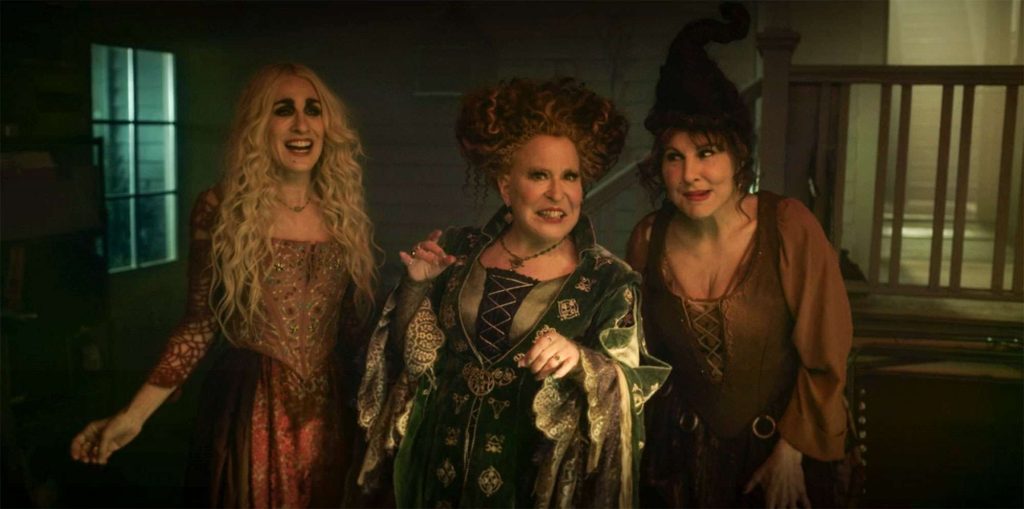
*Bette Midler appeared on Watch What Happens Live with an update on Hocus Pocus 3, saying “they sent a script, and a lot of it was brilliant” and that they are trying to figure out logistical things.
*The Hocus Pocus franchise is an example of the creative doldrums of contemporary mainstream moviemaking, where sequels, prequels, and spin-offs are hyped for years, then disappear from the pop culture conversation shortly after release.
*The article suggests that studios, including Disney, should stop being so beholden to existing intellectual property and that movies that exist only to cash in on nostalgia become disposable entertainment and are forgotten quickly.
Just in time for the spooky season, Bette Midler appeared on Watch What Happens Live with an update on Hocus Pocus 3. “They sent a script, and a lot of it was brilliant,” she said. “So I got very excited, and now we’re trying to figure out what it is and where it’s going to be and how much it’s going to cost and all those logistical things.”
From those few seconds of industry double-speak and non-specific information, trade publications such as Variety and Deadline spun full reports about the status of Hocus Pocus 3. The moment — and the Hocus Pocus franchise itself — offers a perfect snapshot of the creative doldrums of contemporary mainstream moviemaking: a cycle of anticipation and amnesia that rewards unoriginality.
Within that loop, sequels, prequels and spin-offs are hyped for years, painstakingly documented through development and production, only to disappear from the pop culture conversation shortly after they’re released.
That was certainly the case with Hocus Pocus 2, which arrived 30 years after the original. During the long wait, the idea of the sequel was the subject of fan theories and entertainment headlines (not unlike the ones we’re seeing now), which built up breathless expectations.
That’s the anticipation part.
But there was little reason to predict such fervor when the original film was released in the summer of 1993. Hocus Pocus was a throwaway from the Walt Disney Co., released at a time when live-action family films were losing priority amid the studio’s animated resurgence (it came out between 1992’s Aladdin and 1994’s The Lion King). Audiences were initially apathetic — it opened in fourth place and was out of the top 10 by week three — and critics were downright hostile.
Luckily for the film, it also came out on videotape in an era when you could make a long-term moneymaker out of just about anything that parents could rent and plop their children in front of. As those kids grew up, Hocus Pocus’ reputation improved, primarily because of their nostalgia toward it (and not so much by any active reappraisals of the very bad film itself). Lovers of the film posted memes about it, dressed up as its characters for Halloween, and the clamoring for a follow-up began; “How’s about Hocus Pocus 2 ?” became a perennial interview question for everyone involved.
When it finally arrived, it went straight to Disney+ — a head-scratching move to some critics, and perhaps a quiet vote of no confidence from the studio.
Around here is where the amnesia part of the cycle rears its head.
While there were some shruggingly positive notices, the negative ones were particularly vicious — and more importantly, even the franchise’s fans were disappointed. Some might be quick to note that Hocus Pocus 2 became a record-breaking hit on Disney+, but box-office or streaming numbers tell only part of the story. The real test of success is long-term affection, conversation and rewatches — that’s what keeps a film alive in the public imagination.
Hocus Pocus 2 fell short there, which should prompt Disney to consider whether the public really wants a Hocus Pocus 3.
The honest answer to that question may be drowned out by the industry’s instinct to chase hype and recreate the anticipation part of the cycle, while conveniently forgetting how much of a non-event the last one turned out to be.
It’s a case of outsized nostalgia — a tendency to inflate fond memories of the past into justification for unnecessary sequels — and if any studio should recognize the risks of that impulse, it’s Disney. This month, the company watched Tron: Ares — a second sequel to a film that, like Hocus Pocus, wasn’t a big hit to begin with but steadily grew a cult following — flop at the box office.
Another illustrative example is Warner Bros.’ Blade Runner. It came out the same summer as the original Tron in 1982 and also tanked with audiences. Like Tron, its reputation grew enough to get a greenlight for its own expensive, belated follow-up, which also flopped.
It raises an important question: If a cult classic is, by definition, a movie that found a devoted following after initially failing to connect with a wide audience, then why do studios expect a sequel to succeed where the original failed? And it’s not just sequels to flops that aren’t landing with viewers — witness the surprisingly low grosses for such seemingly sure things as the most recent entries in the Indiana Jones and Matrix series.
All of this illustrates why Hollywood should stop being so beholden to existing intellectual property.
But these protracted reanimations of once-loved movies and shows are seemingly unavoidable. The trend has become particularly inescapable in the streaming era. Netflix Inc.’s strategy — new seasons of Arrested Development and Gilmore Girls, along with sequels to Happy Gilmore and Beverly Hills Cop — come to mind. So do Spectrum, with its Mad About You revival, and Amazon.com Inc.’s Prime Video, with the sequel to Coming to America. Yet, as others have pointed out, none of these much-anticipated projects lived up to the hype of their release, much less the reputation of their originals.
Audiences are rarely as predictable as executives (or even creative people) would like to think. Hocus Pocus 3, like Hocus Pocus 2, may pique viewers’ curiosity enough for a stream, or even to buy a ticket, should Disney choose to go the theatrical route.
But when movies exist only to cash in on nostalgia — asking viewers merely to remember something they once liked, without challenging them, engaging them or presenting anything fresh or original — those films become disposable entertainment. They’re forgotten as quickly as they’re consumed.



Yes, I think we do need a Hocus Pocus 3. [BTW, I’m not getting all the hate this year on Hocus Pocus, but that’s another thread/post]. Although unconfirmed, the IMDB has Omri Katz (Max), already assigned to HP3, and with articles saying that pretty much everyone from the original, including Thora Birch expressing in interest to be in HP3, I think it would generate a lot more interest than HP2, if they developed a script that brought back the original players. Along with Bette, Sarah and Kathy being in, I could envision Omri Katz and Vinessa Shaw being married with kids of their own that bring back someone lighting that black flame candle again. Sadly, there was a fair amount of disappointment that HP2 did not include much of the original cast, and I have a feeling there is an interest in course-correcting that mistake. I get the impression that’s the holdup to this sequel. Essentially, everyone needs to be back on board (I believe even Doug Jones is a yes, if there’s a way to fit him in too, as are the two bully/surfer dudes). If Disney can pull that off, in my humble opinion, that would generate a lot more interest and probably outperform HP2. That could even lead to a box office release, although the streaming numbers for the first two were, are, and still are quite impressive! I wasn’t thrilled with how HP2 ended, and the direction it was going with the newer cast. There may be plenty of time for them down the road, but for now, I would embrace a shift that brings back Omri, Vinessa, Thora, Doug, and the black cat, along with the Sanderson Sisters, as it appears that is what the fans are screaming for!
You just made me excited for a Hocus Pocus 3! lol