HITS
The Axis of Allies
By Smith Galtney
June 9, 2026
From Bette Midler, Cyndi Lauper and Madonna to modern-day divas Lady Gaga, Robyn and Jessie Ware, straight-identified pop stars have forged loving allegiances with the LGBTQ+ community. “They’ve always been there for me,” says Cher. “Always.”
Anyone who opened Grindr on April 24 immediately noticed something… peculiar. Among all the usual bare torsos, flexed biceps and Zoolander-esque selfies was a curvy, zebra-striped figure bathed in fluorescent pink light and striking a pose. Her profile name? Madonna.
One might have assumed it was just a fan paying their own tribute to the 67-year-old pop goddess: Grindr is loaded with phony profiles and Madonna-mania was in the air. The initial push for Confessions II, the long-awaited sequel to 2005’s Confessions on a Dance Floor, was well underway: The first single, “I Feel Free,” had dropped, and Madge made a cameo during Sabrina Carpenter’s Coachella set. But once you tapped on the thumbnail—and really, who could not—it was clear this was the real deal.
“Hey, Grindr,” she said in her raspy, Dita dominatrix purr. “It’s muh-thah.” The profile featured Confessions II’s cover and a pre-order link. “I made an exclusive vinyl of my new album just for you. I could have dropped it anywhere, but I wanted to go where the hottest action was, so… I got on the grid.”
Even by today’s market-saturation standards, hawking new product inside what’s essentially a queer online sex club is a risky move, one many pop divas could flub spectacularly. But for a woman who’s spent the last forty years putting her neck on the line for LGBTQ+ rights and who set every standard for modern allyship and who’s never shied from speaking frankly about sex, it felt perfectly appropriate.
Even her placement high on the grid, so Madonna was always close by, no matter where you went, implied something deeper than a mere promotional trick. “It’s such a symbol of what she’s been to our community this whole time,” says Matthew Rettenmund, pop-culture scholar and author of Encyclopedia Madonnica. “She’s always been right there.”
That all this love and positivity would accompany the next installment in Madonna’s recurring return to her disco roots is no coincidence. If an ally is defined as a largely straight-identified artist who engages in a direct, ongoing, creative and political discussion with the LGBTQ+ community, those conversations are almost always most joyous when held on the dance floor. We’re happy to indulge an introspective detour, an American Life and Madame X every so often. But club manifestos like Erotica, Music, Confessions and now Confessions II? These are the eternal keys to our big queer hearts.
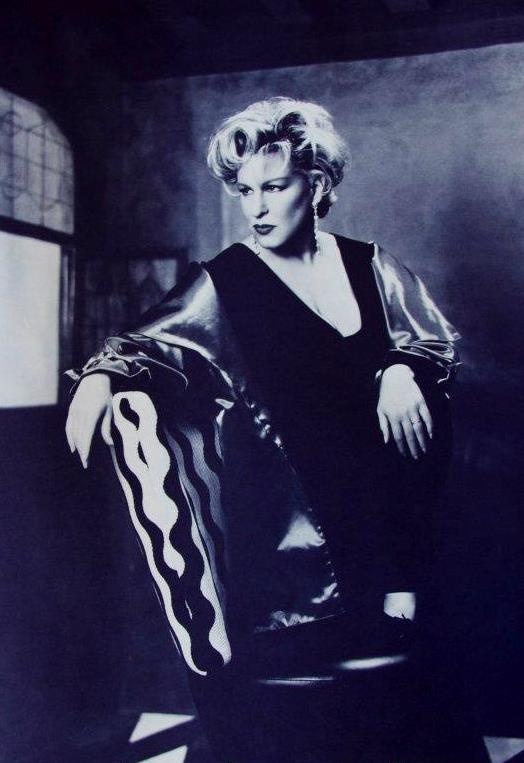
Before disco culture solidified in the mid-’70s and established the dance floor as ground control for queer/ally correspondence, love among gay fans and their icons was a deeply coded affair. In 1960, Barbra Streisand sang her first-ever gigs at the Lion, a gay club in Greenwich Village. Five years later, Judy Garland was asked what she thought of her “homosexual” fans; her reply was, for the time, courageous: “I couldn’t care less, I sing for people!” It wasn’t until Bette Midler emerged in the early ’70s that gay people found a performer who wasn’t afraid to lay it all on the line.
As a ribald chanteuse who elevated cabaret to sleazy new highs (and irresistible lows), Midler caused a national stir as the star attraction at the Continental Baths—a gay NYC bathhouse where men wore towels and had sex before her act, after it and likely anytime in between. Midler had no use for subtlety, not even on primetime. “They loved me and I loved them!” she told Barbara Walters in 1975, adding how she and the gays go way back. “As long as I’ve been in the theater, they’ve always made me laugh, and I’ve always accepted them. So, to me this was no big deal, to go and play the tubs. It was a sexy, ego-building experience. For all of us!”
Equally affirming, disco helped teach post-Stonewall queers how to express themselves and enjoy their bodies in unbridled ways. When Donna Summer simulated multiple orgasms through all 17 minutes of “Love to Love You Baby,” her breakthrough 1975 hit, the straight press dismissed it: “A novelty dance number,” wrote Rolling Stone. But for gay men who approached sex as both recreational sport and vocation, Summer moaned their truth in Morse code.
Onstage, code and decorum were checked at the door. Grace Jones cut her performance teeth at gay clubs like 12 West. After singing her hit “I Need a Man,” she’d shout, much to the boys’ delight, “I don’t know about you, but I need a fucking man!” Likewise, Loleatta Holloway—the perpetually sampled powerhouse behind disco classics like “Love Sensation” and “Hit and Run”—fell back on her gospel lineage to deliver legendary stage banter about wayward lovers that was fiery and outrageous in equal measure. “You see, if you let them know that they’re gettin’ you down, honey, they’re gonna kick you!” she’d sermonize. “Don’t bend over, you’ll get the shock of your life!”
One night in 1979, Nile Rodgers went to a club in Hell’s Kitchen called GG’s Barnum Room. In a restroom, he noticed several Diana Ross impersonators lined up at the urinals and wondered what it’d be like to have Diana celebrate her status among gay men in a song. The ebullient result, “I’m Coming Out,” went Top 10 in 1980, despite—or, maybe, because of—its lyric about living out-loud and proud. The new decade felt promising.
But as what became known as AIDS surfaced in the early ’80s and deaths rose rapidly among hard-partying gay men, a change of tune was clearly needed. At the Saint, a popular East Village disco that lost so many patrons the initially unnamed illness was locally dubbed “Saint’s disease,” songs like Miquel Brown’s 1983 floor-filler “So Many Men, So Little Time” played every weekend, for months on end, as if nothing had changed. The disco diva proxy of unquenchable gay conquest was not only outdated, but sometimes, especially in this case, irresponsible.
It was Dionne Warwick who sounded the first call for allied activism. In 1985, she gathered her friends Stevie Wonder, Gladys Knight and Elton John to record “That’s What Friends Are For,” a song written by Burt Bacharach and Carole Bayer Sager. In 1986, months after Rock Hudson’s death brought AIDS further into the national discussion, the song topped Billboard’s Hot 100 for four weeks on its way to raise over $3 million for amfAR, the Foundation for AIDS Research. Unlike most charity singles of the ’80s, “Friends” aged with dignity, and can still cause tears among many who lived through this era and managed to survive.
Madonna established a how-to on LGBTQ+ allyship that pop stars still emulate. She distributed safe-sex information at her shows and in her albums. She recorded PSAs and hosted fundraising danceathons. Doubling down on visibility and representation, she situated queer dancers front and center for her Blond Ambition tour and Truth or Dare documentary.
As Madonna’s career escalated in the mid-’80s, her circle of friends who helped build it was being gutted. Between the loss of her best friend (Martin Burgoyne, at age 23) and the diagnosis of her mentor (Christopher Flynn, who died in 1990), the international pop sensation put her success to good use. Even while being derided as a “Material Girl,” she established a how-to on LGBTQ+ allyship that pop stars still emulate. Madonna distributed safe-sex information at her shows and in her albums. She recorded PSAs and hosted fundraising danceathons. Doubling down on visibility and representation, she situated queer dancers front and center for her Blond Ambition tour and Truth or Dare documentary. In interviews, Madonna gleefully flirted with women (“Have you ever kissed a girl?”), turned the tables on buttoned-up male anchors (“Are you frightened of a woman who’s not afraid to look at her genitals in the mirror?”) and clearly enjoyed every second.
By 1992, with the one-two wallop of Erotica, an album culled straight from the gay underground, and Sex, her infamous photo book that pictured several explicit scenes in notorious clubs like the Gaiety, Madonna had shown a whole generation not only how to navigate the plague, but also how to be gay, period. She’d earned her rightful square in the hookup grid of our collective consciousness.
As remix culture took hold in the ’90s, divas stormed the disco again. Whitney, Mariah, Aretha, Patti LaBelle, even Dolly Parton and the Divine Miss Midler all scored ubiquitous club hits thanks to house DJ-producers like David Morales, Frankie Knuckles, and Robert Clivillés and David Cole, the era-defining duo behind C+C Music Factory. This time, however, there was less bump-and-grind and a lot more awareness. The latter culminated with Janet Jackson’s “Together Again,” a wistful yet luminous disco gem about lost friends and family that spent two weeks at #1 in 1997.
But allyship is a two-way street, and while it became de rigueur for pop queens to align their values with the queer community, we remained loyal to our longtime allies. The mid-’90s were lean times in the U.S. mainstream for Cher, especially after her huge late-’80s comeback. But when DJ Junior Vasquez’s mix of her 1996 single “One by One” became a gay club staple, she decided to record a whole disco album, her first since 1979’s Take Me Home. The result, 1998’s Believe, became a global blockbuster: Its title track is not only Cher’s biggest single, but also one of the best-selling tracks from anyone. “My gay following has kept me alive when no one else came to see me,” she told CBS News in 2024. “I’ve had really bad times and they’ve always been there for me. Always.”
Cyndi Lauper experienced a similar rejuvenation. After her heyday as an MTV phenom played out, she found a new home in the New York underground, collaborating with Vasquez and featuring downtown drag celebrities in the video for a “Girls Just Wanna Have Fun” remix. When new technologies put her in closer touch with fans, she found a new calling. “I was getting messages from people who were disenfranchised and felt suicidal, and then they heard ‘True Colors’ and it kind of saved their lives,” she told Billboard in 2017. “And it wasn’t just one email; it became every other one. When I saw the magnitude of it, I called my sister and said, ‘We have to do something.’”
In 2008, Lauper started the True Colors Fund, an organization that works with homeless LGBTQ+ youth. She also became a Tony Award winner, thanks to her songs for Kinky Boots, the smash 2012 musical about shoes and drag and fabulousness that’s now etched in the Broadway lexicon.
In the 21st century, establishing oneself as an LGBTQ+ ally has become almost a prerequisite if a pop musician hopes to maintain a lasting career. There have been some bold moves (Lil Kim appearing on the cover of OUT, Garth Brooks headlining the Equality Rocks concert in D.C.), controversies and atonement (Donna Summer and the antigay slurs she denied through her death in 2012) and a few miscalculations along the way. When Lady Gaga and Taylor Swift first made their biggest bids for allyship—with 2011’s “Born This Way” and 2019’s “You Need to Calm Down,” respectively—some commentators reacted with skepticism. Both superstars remain in good queer standing, but if our allies come on a little too strong, gay fans can play hard to get. “We just want to know that we’re not being fooled and that you’re actually in our corner,” says Rettenmund. “It has to be an organic part of your talent and expression or it’ll come off hollow.”
When the work itself does the talking, allyship feels effortless. Both Kylie Minogue and Robyn are forever their own selves, rebel hearts and showbiz vets surviving on exquisite taste and superior grooves. The queer-rooted, ballroom beats of Beyoncé’s Renaissance say “Thank you, I love you” better than any stump speech. It’s gratifying that Sabrina Carpenter has said, “I don’t think pop would exist if it wasn’t for the queer community,” but her collaboration with Madonna on “Bring Your Love” is even cooler. Actions, as always, speak louder.
“This isn’t a transactional relationship,” says Jessie Ware. “If they’re going to look after me, I’m going to look after them.”
A fine example of contemporary allyship is Jessie Ware. After debuting with the sophisticated pop of 2012’s Devotion, her music gradually took on a bawdier, more dance-friendly glow—thanks in no small part to her queer fanbase. “They are constantly in my mind whenever I’m writing or thinking of how a show’s going to be,” Ware tells HITS. “And they’ve given me complete confidence in myself. Just to up my performance: bigger voice, fabulous costumes, take on an alter ego.”
A highlight of her new album, Superbloom (Interscope)—the likely third act in a trilogy that started with 2020’s What’s Your Pleasure? and 2023’s That! Feels Good!—is “Don’t You Know Who I Am,” a disco extravaganza sung in the voice of Shirley Bloom, a caftan-wearing fictional character Ware created for the song. “She’s somewhere between Brigitte Bardot and Blanche DuBois,” Ware explains. The gloriously over-the-top chorus, in which Shirley Bloom goes full-blown Shirley Bassey, was egged on by Scissor Sisters frontman Jake Shears. “He was doing Cabaret at the time, and when he arrived, Liza Minnelli just suddenly seeped into the studio.”
Ware is the generous type: One moment she’s partnering with actor Jonathan Bailey for “Just Like Us,” a campaign that encourages parents to better understand their LGBTQ+ children. Then she’s casting the hunky James Norton as a shirtless cowboy in the video for “Ride.” She doesn’t take her ally status for granted. “This isn’t a transactional relationship,” Ware says. “If they’re going to look after me, I’m going to look after them.”


