ScreenRant
10 Greatest Witch Movies Of All Time, Ranked
By Sarah Polonsky
Sept 1, 2026
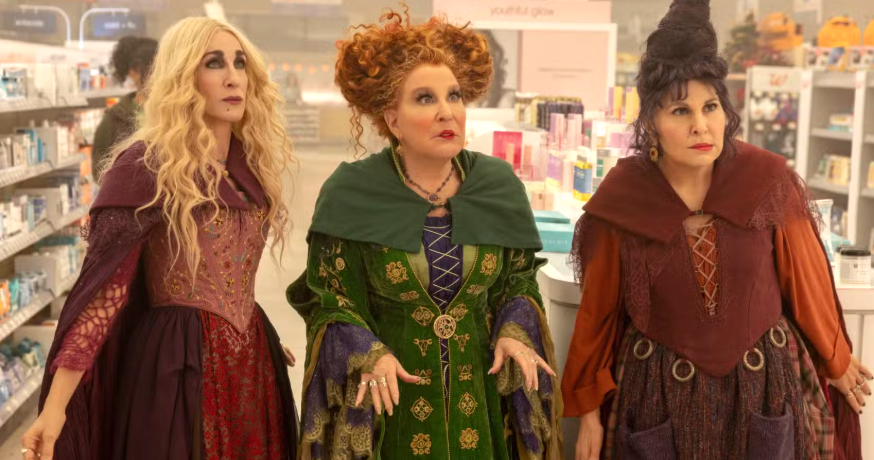
Witches have occupied a strange and irresistible corner of movie history for generations.
Bette Midler popularized witchy cinema with a witty, magnetic presence.
Moreover, depending on the film, they can be horrifying creatures behind beautiful faces.
Women discover powers they never knew they possessed, or outsiders who find freedom through magic.
The best witch movies understand that the fascination goes much deeper than pointy hats and broomsticks.
That also makes ranking them surprisingly difficult.
Moreover, horror has produced some of cinema’s most frightening witches.
Additionally, fantasy and comedy create characters audiences want to spend time with.
The timing also feels particularly appropriate.
Moreover, nearly 30 years after Sandra Bullock and Nicole Kidman first played the Owens sisters, Practical Magic 2 returns September.
Additionally, The original’s unlikely transformation from a poorly reviewed 1990s release to beloved cult classic shows the movie’s staying power.
Finally, Similarly, there is continued affection for underrated witch movies that appeal to Practical Magic fans.
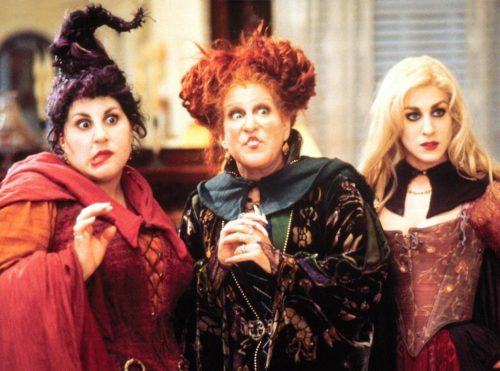
10Hocus Pocus (1993) Few movies have enjoyed a second life quite like Hocus Pocus. The Disney comedy was hardly treated as an instant classic when it arrived in 1993. Moreover, years of television broadcasts and Halloween rewatches gradually turned the Sanderson sisters into seasonal icons.
Bette Midler leads the charge as Winifred, with Sarah Jessica Parker and Kathy Najimy playing her sisters.
The movie is silly by design.
However, it never fully removes the danger from witches who plan to steal the life force of children.
Its cult status eventually became so enormous that Disney revived the Sanderson sisters almost 30 years later.
Hocus Pocus 3 has continued moving through development.
9I Married A Witch (1942) long before romantic comedies regularly mixed supernatural elements with modern relationships.
Additionally, Veronica Lake plays Jennifer, a witch who returns after being burned at the stake.
She torments the descendant of the Puritan who killed her.
Naturally, her revenge becomes considerably more complicated when she falls for him.
However, Lake’s performance gives the movie its mischievous appeal.
René Clair keeps the supernatural premise light without making Jennifer’s powers feel incidental.
More than 80 years later, I Married a Witch remains one of the foundational examples.
It remains a foundational example of the glamorous screen witch.
8The Witches (1990)
There is a good chance The Witches terrified an entire generation.
Moreover, they were young and unaware they watched a Nicolas Roeg movie.
It remains one of the era’s most terrifying children’s movies.
Then there is Anjelica Huston. Her Grand High Witch is magnificent even before she removes her human disguise, commanding a room full of witches with the authority of someone who expects absolute obedience. The Jim Henson Creature Shop transformation remains wonderfully revolting, and Huston’s performance is a major reason the 1990 film still eclipses its later remake.
7
The Craft (1996)
The Craft understood something crucial about teenage witch stories: magic is most appealing when life feels completely out of your control. Robin Tunney’s Sarah arrives at a new school and becomes involved with Nancy, Bonnie, and Rochelle, whose interest in witchcraft quickly becomes far more powerful than any of them expected.
Fairuza Balk’s Nancy Downs is the movie’s unforgettable presence. Nancy begins as a teenager furious at the life she has been given, making her eventual abuse of power more interesting than a simple descent into villainy. The clothes and soundtrack made The Craft a ’90s time capsule, but its understanding of adolescent anger is why it endured.
6
Kiki’s Delivery Service (1989)
Hayao Miyazaki takes witchcraft somewhere much gentler with Kiki’s Delivery Service. Kiki is a 13-year-old witch who leaves home as part of her traditional training and settles in a seaside town, where she creates a delivery service using her ability to fly.
The magic is almost beside the point. Kiki’s real struggle is discovering who she is once her independence stops feeling exciting and starts becoming difficult. Her eventual loss of confidence even affects her powers. Miyazaki uses a young witch and her wonderfully sarcastic cat Jiji to tell one of Studio Ghibli’s warmest coming-of-age stories, and Kiki’s story is continuing in an official English-language sequel.
5
Wicked (2024)
The Wicked Witch of the West may be one of cinema’s most recognizable villains, but Wicked asks audiences to reconsider how she became one. Cynthia Erivo’s Elphaba is born with green skin and extraordinary magical abilities, only to find herself increasingly at odds with the society around her.
Jon M. Chu’s adaptation works because Elphaba is never treated as a future villain waiting to happen. Her friendship with Ariana Grande’s Glinda gives the story its emotional center, while Erivo makes Elphaba’s anger feel inseparable from the prejudice she has endured. Wicked successfully translated the beloved stage musical to the screen without losing sight of the witch at the center of it.
4
Practical Magic (1998)
Practical Magic was not universally embraced when it opened in 1998. Time has been considerably kinder. Sandra Bullock and Nicole Kidman play Sally and Gillian Owens, sisters descended from a family of witches whose romantic lives are haunted by a curse that can turn love into tragedy.
The movie moves between romance and much darker supernatural material with an oddness that ultimately became part of its appeal. Its greatest strength, however, is the Owens family itself. Stockard Channing and Dianne Wiest make the eccentric aunts just as memorable as the sisters, while the house and midnight margaritas have become inseparable from the film’s enduring identity.
3
The Witches Of Eastwick (1987)
the-witches-of-eastwick
The Witches of Eastwick
Jack Nicholson in The Witches of Eastwick Vertical
Cher, Michelle Pfeiffer, and Susan Sarandon are perfectly matched as women whose dissatisfaction with their lives awakens something supernatural.
Moreover, Jack Nicholson arrives as Daryl Van Horne, the mysterious newcomer who understands their desires better than they do.
Nicholson is gloriously excessive, but George Miller never forgets who the story actually belongs to.
Alexandra, Jane, and Sukie gradually realize that the power awakening inside them does not need to depend on the man.
However, he encouraged it.
The result is funny, strange, overtly sexual, and unlike almost any other studio fantasy of its era.
2
Suspiria (1977)
Dario Argento makes witchcraft feel less like a collection of spells and more like an atmosphere that has infected an entire building. Jessica Harper plays Suzy Bannion, an American dancer who arrives at a prestigious German academy and quickly realizes that something deeply wrong is happening behind its doors.
The revelation that the academy is controlled by a coven gives Suspiria its supernatural foundation, but the film’s power comes from the way Argento creates dread long before Suzy understands what she is facing. Its aggressive visual style and Goblin score turn the movie into a nightmare that operates according to its own logic. Decades later, Argento had plenty to say about Luca Guadagnino’s radically different Suspiria remake.
1
The Witch (2015)
Robert Eggers strips away almost every comforting image associated with movie witches in The Witch. Set in 1630s New England, the story follows a deeply religious family living in isolation after being banished from their settlement. When their infant son disappears, suspicion begins consuming the household.
Anya Taylor-Joy’s Thomasin becomes the focus of her family’s fear even as supernatural forces close in around them. Eggers uses period beliefs about witchcraft seriously rather than treating them as quaint superstition, one reason The Witch still holds up so well more than a decade after its release.
The ending is what ultimately puts The Witch at #1. Thomasin’s encounter with Black Phillip turns everything she has been taught to fear into an invitation to escape the life that has trapped her. It is disturbing and strangely exhilarating at the same time, ending with one of the most unforgettable images of witchcraft in modern cinema.