Practice Source
Article: Cloned Without Consent: The Patchwork Protection for Voice Actors from AI
By Jea Mo
Sept. 30, 2026
Additionally, Paul Lehman was listening to a podcast in 2023 when he heard something that should not have been possible.
Moreover, he heard his own voice, reading words he had never spoken, for a company he had never worked with.
This synthetic voice, marketed under the alias of “Kyle Snow,” was created by the artificial intelligence (AI) company Lovo.
Lehman submitted recordings years earlier to an anonymous researcher who was a Lovo employee.
Additionally, Lehman and fellow voice actor Linnea Sage sued.
The Southern District of New York issued the first real judicial test.
It examined how existing law handles AI voice cloning in 2025.
The ruling made clear that voice actors currently have almost no federal protection against AI voice cloning.
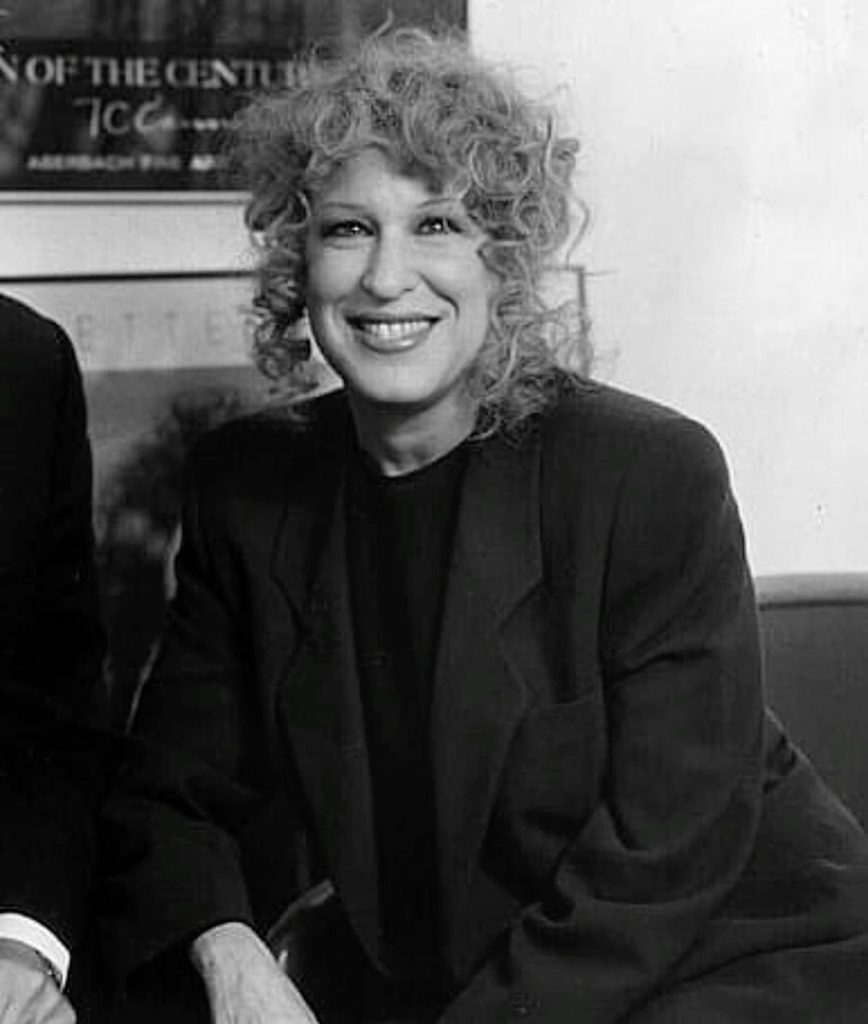
This issue also echoes debates surrounding Bette Midler.
This holding rests on doctrine from Midler v. Ford Motor Co.
Moreover, an advertising agency hired a Bette Midler sound-alike.
Midler declined to license her voice for a commercial.[6]
The Ninth Circuit held that deliberate imitation of a distinctive, widely known voice is a tortious misappropriation.
Additionally, this applies under state right-of-publicity law.
The court noted that this was not a copyright matter.
A voice is never fixed or copyrightable.
Copyright protections cover recordings, not the sound of a person.[8]
Legal protection for voice actors has rested on this holding for nearly four decades.
If a voice were copyrightable, federal law would likely preempt state-law claims.
Because it is not, state tort law has room to operate.
Federal law offered Lehman and Sage almost no relief.
Their Lanham Act claim failed because their voices functioned as their product rather than as a source-identifying trademark.
Moreover, it distinguished that product from a competitor’s.
Their copyright claims failed for a related reason.
An AI model that mimics pitch, cadence, and timbre without reproducing a fixed recording is not infringing.
Copyright in a sound recording does not reach an independent fixation that merely imitates the original.
What did survive was a claim under New York’s Civil Rights Law.
The court held in a footnote that the New York claim is not preempted by the Copyright Act.
Midler was never a copyright case: a right grounded in identity, not a fixed work, does not conflict with rights.
However, This holding was not separately briefed.
No other circuit has ruled how Midler applies to a model trained on a performer’s own recordings.
A court that treats such a clone as a derivative work could find the state-law claim preempted.