Collider
The 20 Best Movie Soundtrack Songs of All Time, Ranked
By Michael Block
July 21, 2026
A great movie has the ability to transport you to a place beyond our present. Sometimes it’s to places beyond our wildest imaginations. A great movie should make you feel something. Maybe it’s a powerful monologue or a visceral image. Or, perhaps the perfect song at the perfect moment. It’s these songs that, when you hear them outside the film, transport you back. It’s a mark of something special.
Throughout Hollywood history, we have been inundated by some of the greatest songs from movie soundtracks. Thematically perfect or perfectly situated within a moment, these songs have stuck with us for generations. There are certainly countless songs that could join this list, but these 20 represent a wide spectrum of styles, eras, and film genres. Though your favorite may have missed the list, let’s celebrate these other monumental hits.
20. “Take My Breath Away” by Berlin
‘Top Gun’ (1986)
Very few pop songs operate as a recurring musical theme in a film. Oftentimes, you hear them once at the top of the movie, during the closing credits, or within the film itself. Then there was “Take My Breath Away” by Berlin. Not only did you hear it within the film, but it then served as the romantic anchor for the story. It was such a powerful song that producers actually went back and reshot a steamy bedroom scene in silhouette between Maverick (Tom Cruise) and Charlie (Kelly McGillis) just to provide a visual worthy of the song’s emotional weight. The iconic 1986 film Top Gun, Lieutenant Pete “Maverick” Mitchell (Cruise), a reckless, cocky Navy fighter pilot who attends the elite TOPGUN school. He must compete to be the best, overcome personal tragedy, and learn the value of teamwork in a celebration of military aviation. Top Gun was a high-octane action film, and the song provided a much-needed emotional balance.
“Take My Breath Away” is a dreamy synthesizer-driven track with aching vocals by Terri Nunn, providing an anthem that went well beyond the film. It helped represent the decade. There’s a calming sense of intimacy innate to the track. The song has a weightlessness to it that counterbalances some of the bigger, more bombastic tracks from the film, including “Danger Zone.” Nunn’s breathy, restrained delivery evokes a deep yearning that, when the song is underscored, four times, in fact, it alerts the audience to the importance of the intimacy. The track transcended the film to become a massive cultural phenomenon. Written by Giorgio Moroder and Tom Whitlock, it went on to win both the Academy Award for Best Original Song and the Golden Globe Award for Best Original Song in 1986. From a pop perspective, “Take My Breath Away” helped propel the Top Gun soundtrack to sell over 9 million copies, firmly cementing the film’s legacy in the MTV-era history.
19. “Let the River Run” by Carly Simon
‘Working Girl’ (1988)
If you were to pinpoint a singular decade of the best soundtrack songs, it very well might be the 1980s. Many filmmakers sought out surefire hits to help define their films; “Let the River Run” by Carly Simon not only set the tone for Working Girl, it was a pure anthem. The film, directed by Mike Nichols, tells the story of Tess McGill (Melanie Griffith), a sharp Staten Island secretary, who takes revenge on her conniving boss, Katharine Parker (Sigourney Weaver), by impersonating her. After pitching a major corporate merger to an investment broker using her boss’s stolen ideas, she falls in love with Jack Trainer (Harrison Ford), saves the deal, and exposes her boss’s fraud. “Let the River Run” opens the film as a triumphant anchor, with the song playing over the opening credits while the Staten Island Ferry approaches the Manhattan skyline.
The opening sequence, with its accompanying song, serves as an integral opus. It sets a heroic, bustling tone that frames New York City as a place of endless possibility for our protagonist. If Tess had a Walkman, she would be playing the song on her way into the office, determined to tackle the day with confidence. The lyrics are an anthem for empowerment. It champions the film’s feminist themes. Working Girl is truly about a dreamer who sets out to “wake the nation.” The song comes two more times, including a choral version that is equally empowering. The track won the Oscar, Golden Globe, and Grammy for Best Original Song. It was the first time in history that a single artist wrote, composed, and performed a song that won all three awards. Simon has had a plethora of hits and other movie songs, but “Let the River Run” is the most definitive.
18. “9 to 5” by Dolly Parton
‘9 to 5’ (1980)
It all begins with the shuffling of the nails for an iconic track to be born. When Dolly Parton is a part of your project, it’s inevitable that she’d contribute music to it. In the case of 9 to 5, the title not only reflected the film, but it also stood proudly on its own as a pop country crossover. In the classic workplace comedy, three female office workers, Judy Bernly (Jane Fonda), Violet Newstead (Lily Tomlin), and Doralee Rhodes (Parton), who plot revenge against their sexist, egotistical, lying, hypocritical bigot boss, Franklin Hart (Dabney Coleman). “9 to 5” pairs perfectly with the film an upbeat, irresistible melody with deeply relatable, working-class lyrics. The moment it plays alongside the street’s bustle, the mood is set.
The song captures the daily grind of horrible bosses, lack of appreciation, and being “just a step on the boss man’s ladder”. Yet, pouring a “cup of ambition” and taking care of business give workers a sense of dignity and ownership, as the trio so triumphantly do. Dealing with serious themes, the tune provides a fusion of a joyful, toe-tapping rhythm with empowering sentiments, just like the film. The anthem reflects what were once radical themes— systemic office reforms like flexible hours, job sharing, and on-site daycare. Thanks to the film and the song, these revolutionary ideas became the norm. It also helped prove that female-led films had massive commercial appeal. “9 to 5” remains a steadfast Parton hit that’s synonymous with the film.
17. “Diamonds Are Forever” by Shirley Bassey
‘Diamonds Are Forever’ (1971)
Now, before the James Bond loyalists come for this list, this slot could have gone a plethora of ways, as many Bond anthems are great. We could have gone to the modern era, but those songs ran because of the classics. Then there are a handful of great artists who sang the tracks in the heyday, but no one did it quite like Shirley Bassey, the only artist to have multiple Bond songs. As infamous as “Goldfinger” is, her biggest and best is “Diamonds Are Forever.” In the film Diamonds Are Forever, James Bond (Sean Connery) goes undercover as a diamond smuggler to uncover a ring controlled by his nemesis, Ernst Stavro Blofeld (Charles Gray). He discovers Blofeld is stockpiling the gems in Las Vegas to build a space-based laser weapon, which he plans to use to blackmail the world’s nuclear superpowers. The titular track explores themes of emotional detachment, materialism, and cynical romanticism.
“Diamonds Are Forever” remains the standout Bond single thanks to powerhouse vocals, John Barry’s dramatic orchestration, and Don Black’s sly, sultry lyrics. The song perfectly balances seductive innuendo with the sleek, high-stakes glamour of the 007 franchise. The song evokes a sexy jazz feel that’s perfectly dangerous and seductive. The central theme with the lyric “Diamonds are forever, but men are mere mortals who are not worth going to your grave for” offers a cold, material, and unapologetically atmospheric edge. While the song may be big, brassy, and dramatic, with Bassey at the helm of the risqué, sexual innuendos, it’s pure camp, matching the shift in the direction of the franchise. The song has left a lasting legacy, as artists like Sabrina Carpenter have reimagined it as a new metaphor. It’s a transcendent song that links the necessity of a theme song to the franchise.
16′. “Wind Beneath My Wings” by Bette Midler
‘Beaches’ (1988)
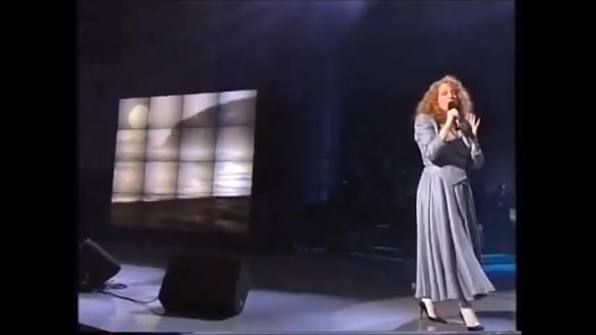
Very few power ballads pack such an emotional gut punch as “Wind Beneath My Wings.” Especially in the context of the film Beaches. The 1988 film follows the decades-long, tumultuous friendship between brassy Bronx performer C.C. Bloom (Bette Midler) and wealthy San Francisco lawyer Hillary Whitney (Barbara Hershey). Despite clashing personalities and jealousies, they remain deeply bonded through life, love, and tragedy, culminating in a poignant final summer at the beach as Hillary faces a terminal illness. Directed by Garry Marshall, Beaches is a tearjerker, made more emotional when you hear the star belt out the infamous track. While the ballad serves as the primary musical theme for CC and Hillary’s lifelong friendship, it is used purposefully rather than being played repeatedly.
The song is played during the montage in the final act as the two main characters spend meaningful time together. It’s when you completely empty your tissue box. The song serves as the emotional anchor that reframes their relationship by acknowledging that Hillary was the one who enabled CC to shine, acting as the “wind” beneath her wings so she could “fly higher than an eagle.” The song has been a touchstone for emotional support between friends, family, and everyone in between. When it comes back for the closing credits, you’re left with a lasting impression, tears still flowing. Though the song had been previously written and was not for the film, it won Grammy Awards for both Record of the Year and Song of the Year in 1990.
15. “Rainbow Connection” by Jim Henson
‘The Muppet Movie’ (1979)
“Why are there so many songs about rainbows and what’s on the other side?” Very few songs begin so simply and profoundly. And it comes from one of the most iconic characters: Kermit the Frog. In The Muppet Movie, Kermit leaves his Florida swamp for Hollywood after a talent agent spots his potential. Along the way, he meets other aspiring performers, including Fozzie Bear, Miss Piggy, and Gonzo. Together, they are chased by Doc Hopper (Charles Durning), a ruthless restaurateur wanting Kermit as a mascot for his fried frog legs. “Rainbow Connection” serves as the ultimate “I want” song. The song emotionally establishes Kermit as an optimistic dreamer, driving his motivation to leave the swamp and seek a larger purpose in Hollywood.
Co-written by Paul Williams and Kenneth Ascher, “Rainbow Connection” effortlessly encapsulates the movie’s overarching message: the power of believing in yourself, following your dreams, and embracing a creative, welcoming community. It’s why the song has resonated with so many individuals across generations. “Rainbow Connection” is a masterpiece of lyricism, brilliantly evoking childlike wonder with profound philosophical depth. The song uses a stripped-down musical arrangement, relying heavily on a sweet, comforting banjo and gentle, sweeping strings that enhance its emotional intimacy. It earned The Muppets their first Academy Award nomination for Best Original Song and has since been covered by everyone from Willie Nelson and Kacey Musgraves to Gwen Stefani.
14. “The Man That Got Away” by Judy Garland
‘A Star Is Born’ (1954)
It takes a very special individual to be deemed the voice of a generation, but when it comes to Hollywood actresses, that honor is deservingly bestowed upon Judy Garland. In one of two entries on this list comes the Garland classic “The Man That Got Away” from A Star Is Born. In the second iteration of the film, a fading alcoholic movie star, Norman Maine (James Mason), discovers and promotes a talented young singer, Esther Blodgett (Garland). As Esther’s career skyrockets under the stage name “Vicki Lester” and they fall in love, Norman’s self-destruction and career downfall drive a wedge between their lives. The song arrives early in the film when Norman tracks down Esther at an after-hours jazz club. He stands out of sight in the shadows and watches her sing informally with her musicians. As a storytelling device, it showcases the raw talent of a star that’s born.
The song, with music by Harold Arlen and lyrics by Ira Gershwin, serves as a micro-adaptation that mirrors the impending tragedy of the lovers’ relationship and officially establishes music as a driving force in the franchise’s narrative. It operates as a narrative turning point while providing one of the most infamous sequences in Hollywood history. Director George Cukor pushed for an agonizingly complex setup to achieve perfection, shooting it in numerous takes, and ultimately relying on an iconic, single-take sequence that ends with Garland singing directly to the camera. The song became Garland’s monumental career comeback that cemented her connection with her raw, vulnerable power. The visceral pain of heartbreak through a striking mix of moody, conversational lyrics and dramatic, swinging jazz melodies became a truly defining moment.
13. “Beauty and the Beast” by Celine Dion and Peabo Bryson
‘Beauty and the Beast’ (1991)
This list could be filled with Disney tracks after Disney tracks. For fairness, we’re limiting it to one classic annd one from the Disney Animation Renaissance. The latter honor goes to “Beauty and the Beast” from Beauty and the Beast. In the film, a selfish prince (Robby Benson) is cursed by an enchantress into a hideous monster. To break the spell before an enchanted rose wilts, he must learn to love and be loved. He imprisons the inventor’s daughter, Belle (Paige O’Hara), who eventually teaches him compassion, ultimately transforming him and his servants back. But for that moment to arise, it needed a “tale as old as time.” In the story, Mrs. Potts (Angela Lansbury) sings the central love theme as the titular duo shares their iconic ballroom dance.
Beauty and the Beast is one of the greatest romantic fantasy films of all time, live action or animated. It’s this scene and this song that are pointed to. Written by Howard Ashman and Alan Menken, the lyrics explicitly describe how the couple learns to overlook differences and change one another for the better through a thoroughly timeless myth of inner beauty. The song won the Academy Award for Best Original Song and helped make the movie the first animated film in history to be nominated for Best Picture. During this period in Disney animation history, the film’s pinnacle songs would receive a pop single release. The titular track was given to Celine Dion and Peabo Bryson, who made it a radio hit, earning chart success and Grammy wins and nominations in the process. Had it not been written and composed in the manner it had, it could have been just another cartoon song. Instead, it’s one of the most beloved Disney classics.
12. “Flashdance…What a Feeling” by Irene Cara
‘Flashdance’ (1983)
What a feeling indeed! The titular track from Flashdance is strategically placed twice in the film, and both times it evokes the spirit of the story. The ‘80s classic tells the story of Alex Owens (Jennifer Beals), an 18-year-old working-class woman in Pittsburgh who spends her days as a steel mill welder and her nights dancing at a local club. Alex pursues her dream of becoming a professional ballerina while navigating a romantic relationship with her boss, Nick Hurley (Michael Nouri). Serving as a soaring anthem for the protagonist, “Flashdance…What a Feeling” represents the liberating feeling of being in control of one’s destiny. In turn, it operates as an anthemic theme of, against all odds, chasing one’s dreams. The film and song blew up so much that they became a pop culture phenomenon, launching fashion trends like leg warmers and leotards to replicate the moment.
A song for a genuine heroine, co-writer and singer Irene Cara ensured the lyrics came from Alex’s perspective, so when it plays at the beginning of the film, you’re engulfed in Alex’s journey immediately. When it returns during Alex’s famous, climactic dance audition in front of the repertory dance company board, it serves as the perfect bookend. It’s not only evocative of the film, but it also defines the era. The film used the song to set the pace for its fast-cut, music video-style sequences, which changed how Hollywood marketed youth-oriented movies in the 1980s. The song became a massive success on its own, topping the Billboard Hot 100 for six weeks. It was universally celebrated, ultimately winning the 1984 Academy Award for Best Original Song and the Grammy Award for Best Female Pop Vocal Performance.
11. “Stayin’ Alive” by Bee Gees
‘Saturday Night Fever’ (1977)
There are some film soundtracks dedicated to a single artist. For Saturday Night Fever, that honor belongs to the Bee Gees. If there’s one song from the film that perfectly encapsulates the spirit of the story, it’s none other than “Stayin’ Alive.” In the 1977 classic, Tony Manero (John Travolta) is a restless 19-year-old Italian-American in working-class Brooklyn. By day, he is trapped in a dead-end job at a paint store; on weekends, he escapes to a local disco where he reigns as the undisputed “king of the dance floor.” Beneath the iconic Bee Gees soundtrack and vibrant disco lights, the film is a coming-of-age urban tragedy. Played over the opening credits, “Stayin’ Alive” captures Tony as he struts through the streets of Brooklyn. And at that moment, a classic scene was born. The importance of the song and the scene stems from masking working-class hardship and urban struggle with swagger, survival, and disco escapism.
Despite being a dance anthem, the lyrics deal with the gritty reality of trying to stay afloat. It operates as an emotional undercurrent as to the importance of dance to the protagonist. The Bee Gees specifically designed the vocal harmonies and driving bassline to propel the groove. Not only did it energize the film, but it reshaped the disco genre on the real-life dance floors. The song comes in again during the venue’s loudspeaker when Tony and Stephanie (Karen Lynn Gorney) are officially announced as the winners of the 2001 Odyssey disco dance competition. Its inclusion serves as Tony’s triumph tune. The pulse of the song has moved beyond the film, becoming the CPR song, as its tempo perfectly aligns with the life-saving rhythm required. It’s an undeniable masterpiece.
10. “Mrs. Robinson” by Simon and Garfunkel
‘The Graduate’ (1967)
It might surprise some, but Simon and Garfunkel wrote “Mrs. Robinson” prior to The Graduate, but it was not completed in time for the film. And yet they are serendipitous. The Mike Nichols classic tells the story of Benjamin Braddock (Dustin Hoffman), an aimless recent college graduate who returns to his California home, only to be seduced by an older married woman, Mrs. Robinson (Anne Bancroft). The story spirals when he rebels against societal expectations and falls in love with Mrs. Robinson’s daughter, Elaine (Katherine Ross). While the movie portrays Mrs. Robinson as a deeply desperate, manipulative, and often pitiable character, the song’s infectious, almost satirical upbeat rhythm paints her as a larger-than-life cultural icon.
“Mrs. Robinson” operates as a brilliant lyrical juxtaposition of cultural nostalgia with sharp critiques of suburban alienation. Its infectious, harmony-driven acoustic arrangement and seamless tie-in to the film proved that, even incomplete at the time, sticking the famous “dee-dee-dees” were important musical devices for the narrative. The rhythmic breaks played a part in the film’s most iconic montage sequences. The song is deceptively simple, and yet extraordinarily evocative. The simplicity perfectly mirrors the sense of aimless alienation and shifting values that Benjamin experiences. Whether through instrumental, interlude, or vocal humming, the iteration that appears in The Graduate forever tied the duo to the film.
9. “Diamonds Are a Girl’s Best Friend” by Marilyn Monroe
‘Gentlemen Prefer Blondes’ (1953)
“Diamonds Are a Girl’s Best Friend” operates on an abundance of levels. It’s a crucial song in the film Gentlemen Prefer Blondes. It also remains Marilyn Monroe’s crowning musical achievement. The classic musical comedy follows two best friends and showgirls, the diamond-loving, clever blonde Lorelei (Monroe) and the sassy, romance-hunting brunette Dorothy (Jane Russell). When Lorelei takes a cruise to Paris funded by her wealthy fiancé, his disapproving father hires a private detective to spy on her. The film playfully satirizes society’s view of women who value financial security. Lorelei famously argues that a man’s wealth is paramount, hence “Diamonds Are a Girl’s Best Friend.” The film pokes fun at gender roles by portraying the women as self-reliant and highly intelligent, often outsmarting the men who try to control them.
The first time the song is performed in the film, it features Monroe in her famous strapless pink satin gown that becomes as synonymous with the star as the white dress blowing up from the grate. The song serves as a sharp yet pragmatic defense of why women of the era rely on wealth and financial security rather than just love. Beyond the story, the sequence launched Monroe into global superstardom, securing her as a timeless Hollywood legend. It’s the inspiration for Madonna’s music video for “Material Girl.” In the film, the song returns, this time with Russell’s Dorothy singing it, wearing a blonde wig to mimic Lorelei. She performs the shorter iteration, intentionally exaggerating it. Though the stage version of the song is vastly different, as Carol Channing brings a completely different essence to the song, it’s the pinnacle performance for Monroe.
8. “Lose Yourself” by Eminem
‘8 Mile’ (2002)
For the longest time, the Academy Awards had a certain style and sound when it came to their Best Song nominees. Then Eminem’s “Lose Yourself” recalibrated it forever. The premiere track from 8 Mile became a game-changer for rap music in the mainstream and Hollywood film. The 2002 biographical film set in 1995 Detroit follows a struggling young white rapper named Jimmy “B-Rabbit” Smith Jr. (Eminem) He navigates poverty, a toxic home life, and self-doubt, fighting to earn respect in a hip-hop scene largely dominated by Black artists. An underdog story about a man finding his voice, “Lose Yourself” embodies the film’s morals while serving as its ultimate thematic audio summary. In the film, the theme is presented as a work in progress, mirroring Jimmy’s growth as an artist. It comes to full fruition at the end during the triumphant finale, leaving a lasting impression.
The film’s mode is established by “Lose Yourself,” as Jimmy hears the song while riding the city bus. With headphones in, he hears the instrumental guitar riff and drum beat, writing the lyrics on a scrap of paper. In reality, it mirrors the film. Written on set between takes, the song encapsulates the raw hunger, pressure, and courage required to seize a life-changing opportunity. As the lyrics say, “The opportunity comes once in a lifetime.” Beyond its importance in the film’s narrative, the track made history in 2003 as the first hip-hop track to win the Academy Award for Best Original Song. Its victory is thanks to the immaculate storytelling, relentless instruments, and its crossover appeal. “Lose Yourself” may not be your cup of tea, but there’s simply no denying the historical significance of the track.
7. “As Time Goes By” by Dooley Wilson
‘Casablanca’ (1942)
There are quite a few films that define the Golden Age of Hollywood. One such film is Casablanca. From iconic quotes to a daring story, Casablanca remains a near-perfect film. And it’s all elevated thanks to its beautiful musical theme, “As Time Goes By.” In Casablanca, cynical nightclub owner Rick Blaine’s (Humphrey Bogart) life is upended when his former love, Ilsa Lund (Ingrid Bergman), arrives seeking exit visas with her husband, Victor Laszlo (Paul Henreid), a prominent resistance leader. Rick ultimately chooses to sacrifice his own happiness, helping them escape the Nazis. A timeless love story, “As Time Goes By,” encapsulates the pure heart of the story. Attached to one of the most misquoted lines in cinema history, regardless of how we get there, when Sam (Dooley Wilson) plays it, movie magic is made. We all have a song with a partner that means everything to us. That’s what “As Time Goes By” is to Ilsa and Rick. It’s ingrained in their relationship. Through good times, together times, bad times, and apart times, that song remains the connection that binds them together.
The emotional resonance is why the Herman Hupfeld-penned song has earned such legendary status. It’s simple, conversational lyrics capture the comforting, universal truth that love will always endure regardless of change. “You must remember this, a kiss is still a kiss, a sigh is just a sigh, the fundamental things apply, as time goes by.” A lyric like that reminds listeners that even amidst global chaos or personal heartbreak, the simple things in life and love still remain the most important. The theme plays about 15 times in the film, but the definitive version swells as Rick says his final goodbyes and walks away into the fog. There may be many iconic moments from the film, but that is one beautiful lasting impression. The jazz standard has been covered countless times, but it will always remain a special part of Casablanca’s identity.
6. “I Will Always Love You” by Whitney Houston
‘The Bodyguard’ (1992)
It’s quite impressive when a song can transcend genres because the words resonate so powerfully. What began as a country song evolved into a power pop ballad that proved a track can go well beyond a soundtrack. “I Will Always Love You” was bigger than The Bodyguard. It was Whitney Houston. In her triumphant film appearance, The Bodyguard tells the story about Frank Farmer (Kevin Costner), a former Secret Service agent hired to protect Rachel Marron (Houston), a famous pop superstar, from an obsessive stalker. Initially clashing over strict security rules, they eventually fall in love while evading the killer. The Bodyguard soundtrack boasted some of Houston’s biggest career hits, but it was “I Will Always Love You,” a song originally written and performed by Dolly Parton, that emerged as the very best.
Though the film includes many in-film performances of Houston as Rachel, this track comes at the end, sublimely, when Rachel and Frank have their emotional airport goodbye. Right when Rachel orders the plane to stop, she runs out to kiss him as the full-throttled, powerhouse version swells. It moves into the credits, and the audience is completely taken by the emotional song. The song brilliantly subverts the traditional breakup trope. Rather than anger, the song offers a graceful, mature resignation. It’s a graceful closure to unconditional love, wishing the very best for the other person. The song starts quietly, slowly building tension, then rises into powerful vocal crescendos that match the profound lyrics. While the song is rooted in country storytelling, it was perfectly universal, translating itself for a pop song. Though The Bodyguard may not be as brilliant as many others on this list, Houston and her music have cemented it as an important film beyond the screen.
5. “When You Wish Upon a Star” by Cliff Edwards
‘Pinocchio’ (1940)
There are many songs that define the Walt Disney Company, but perhaps the one that stands atop the list is “When You Wish Upon a Star.” There’s a reason why the melody is paired with the iconic castle image before every Disney film. That moment was earned thanks to its inclusion in the 1940 animated classic Pinocchio. The film follows a lonely woodcarver named Geppetto who creates a wooden puppet named Pinocchio. Geppetto wishes upon a star for Pinocchio to become a real boy, which the Blue Fairy grants him. To prove he’s a real boy, Pinocchio must prove himself brave, truthful, and unselfish, and always with his conscience, Jiminy Cricket, by his side. A wonderful film filled with heart, hope, and family, Pinocchio’s biggest tune provides an “I want” song that taps into our great desire for something beyond our dreams.
Composed by Leigh Harline, the melody is designed to build suspense and wonder. Written by Ned Washington, the lyrics tap into the fundamental human need for hope and escapism. Its lyrics transcend the film. It’s become a universal theme for dreamers, young and old. The song appears twice in the film, first sung at the opening, with Cliff Edwards as Jiminy Cricket, setting the tone of the story. A full vocal version is reprised at the very end of the film, operating as a bookend celebration in which Pinocchio officially transforms from a wooden puppet into a real boy. There are hints of the tune through the orchestral score whenever the Blue Fairy appears or Geppetto returns to wishing upon the evening star. By keeping the theme throughout, it showcased the musical power of the melody and the feeling it evokes. “When You Wish Upon a Star” won the 1940 Academy Award for Best Original Song. As the official theme song for Disney, it has been covered over the decades, becoming a staple of pop culture.
4. “Singin’ in the Rain” by Gene Kelly
‘Singin’ in the Rain’ (1952)
Black-and-white silent films made way for talkies in Technicolor. That meant the rise of movie musicals. One of the very best was Singin’ in the Rain. The toe-tapping film about Hollywood brought pure joy to those who watched, all thanks to the vibrant production numbers. None is more synonymous with the film than the title track. The 1952 romantic comedy documented the transition from silent films to the talkies in the late 1920s. The story follows famous silent film stars, Don Lockwood (Gene Kelly) and Cosmo Brown (Donald O’Connor), struggling to adapt to sound, and a chorus girl, Kathy Seldon (Debbie Reynolds), is hired to secretly sing and speak in place of a harsh-voiced leading lady, Lina Lamont (Jean Hagen). Complications arise when Don falls in love with Kathy, as the vain and manipulative Lina tries to sabotage their relationship and steal the credit. Known for its dazzling choreography and iconic musical numbers, “Singin’ in the Rain” emerged as the ultimate celebration of the magic of moviemaking.
The song, written by Arthur Freed and Nacio Herb Brown, was originally used in The Hollywood Revue of 1929, but it was popularized through the 1952 film. The song is introduced right away during the title sequence as the three main stars wear bright yellow raincoats and sing together while walking toward the camera. The iconic version of the song comes when Kelly’s Lockwood sings and dances alone in the streets after kissing Kathy goodnight. If there were to be a debate of the greatest scenes in cinema history, this one might be up there. The memorable puddle-splashing scene is filled with bright delight. It flawlessly blends an upbeat, infectious melody with a carefree lyric that captures the euphoria of being in love. At the time it was written, it served as an antidote to the Great Depression. When placed in this film, it became a relatable expression of joy. The visual companionship has inspired us all to have our Gene Kelly moment.
3. “Moon River” by Aubrey Hepburn
‘Breakfast at Tiffany’s’ (1961)
When you hear a song so melancholic and soothing, it can bring out an instant calm. That’s what “Moon River” does. Almost like a lullaby, the Henry Mancini and Johnny Mercer song helps you truly appreciate the small moments in life. Performed by its protagonist as she sits on her fire escape, the scene became one of the most beloved in cinema history because the song made the moment so sublime. The Blake Edwards film, based on Truman Capote’s novella, Breakfast at Tiffany’s follows Holly Golightly (Audrey Hepburn), an eccentric, free-spirited New York socialite. When a struggling writer, Paul Varjak (George Peppard), moves into her apartment building, their unlikely friendship uncovers the deep loneliness, trauma, and search for belonging beneath her glamorous Manhattan lifestyle. A story of love, romance, and the masks we wear while we hide our deep insecurities, Breakfast at Tiffany’s crowning anthem reminds us all to appreciate the little things in life.
“Moon River” nearly hit the cutting room floor at the request of a Paramount executive, but it was Hepburn who declared it remain. And it was the best decision. Mancini composed the entire film’s score around the song. The melody is constantly adapted to fit different emotional beats, from romantic and melancholic to fast-paced jazz. But it’s the vocal version, with Holly strumming her guitar on her fire escape, that proved the brilliant subtlety of how a song can evoke a mood. In just 58 words, “Moon River” captures a universal sense of youthful wanderlust and romanticism. It was tailored and made to fit Hepburn’s intimacy, becoming a defining moment of her career. The song was awarded the Academy Award and Grammy for Record of the Year and Song of the Year. Later, Mancini’s recording was inducted into the Grammy Hall of Fame in 1999. The song has been covered as the track is an American standard, but none are as beautiful as the film version.
2. “My Heart Will Go On” by Celine Dion
‘Titanic’ (1997)
Once upon a time, it might have seemed impossible to think that one of the greatest tragedies could lead to one of the most romantic films of all time. Then, to tack on one of the greatest love songs ever, it was unthinkable. And yet, James Cameron made it a reality. Celine Dion has many iconic songs in her catalog, but none are as big as “My Heart Will Go On.” In the epic historical romance disaster film Titanic, the tragic romance of penniless third-class artist Jack Dawson (Leonardo DiCaprio) and 17-year-old aristocrat Rose DeWitt Bukater (Kate Winslet), who fall on the ill-fated “Ship of Dreams,” is told as a modern day treasure hunt chronicles the disaster of the past. A monumental blockbuster, “My Heart Will Go On” became just as big as the film itself, topping the charts, and racking up awards.
Throughout the film, James Horner weaves the distinct melody, known as “Rose’s Theme,” into the orchestral score to represent the love story. Variations of the melody are played on the whistle, flute, and full orchestra throughout, including the infamous “I’m king of the world” scene, when Jack sketches Rose in her stateroom, and when the ship goes down and Jack and Rose share their final moments together in the water. But it’s when the credits come and Dion comes in with her powerhouse vocals, the ultimate credit song was made. The song is about eternal love. Like a soaring romance, the song builds and builds, until Dion unleashes her massive, triumphant climax. The iconic key change is what dreams are made of. By going from E major to A major, it elevated Dion’s vocals in order to deliver an unforgettable emotional triumph. The film may have ended in tragedy, but the song is a promise to never let go.
1 “Over the Rainbow” by Judy Garland
‘The Wizard of Oz’ (1939)
There is simply no greater song from a movie than “Somewhere Over the Rainbow.” For 87 years, the Judy Garland song has faced great competition for the moniker, but no song will ever dethrone the ultimate dreamer’s anthem. The song, written by Harold Arlen and Yip Harburg effortlessly captures the universal theme of human longing for hope and a better place. There is no place like home, but the journey to get there is worth it in the end. Based on L. Frank Baum’s classic novel, The Wizard of Oz tells the story of Dorothy Gale (Garland) and her little dog Toto as they are swept away by a tornado from their Kansas farm to the magical Land of Oz. After her house inadvertently crushes the Wicked Witch of the East, Dorothy embarks on the Yellow Brick Road to ask the Wizard (Frank Morgan) for a way home. Along the way, she is joined by a Scarecrow (Ray Bolger) wanting a brain, a Tin Man (Jack Haley) longing for a heart, and a Cowardly Lion (Bert Lahr) seeking courage. The ultimate fantasy classic, the film is made because of the music. And the music is beloved because of Garland’s performance.
A song that has been passed down for generations, just like the film, “Over the Rainbow” is written for a girl caught yearning for both home and adventure. And yet, it was as if it was made for everyone who ever heard it. The first time the melody plays is during the opening credits as a sweeping instrumental song. While many may associate the song with the Technicolor world, the most famous version of the song plays roughly five minutes into the film when Dorothy sings the ballad out loud on the farm after a conflict with Miss Gulch (Margaret Hamilton). Though the song is sung in sepia tone, it opens up the adventure she’s about to embark on. If you break down the song, the musical leap happens within the first two notes of the melody as it spans a full octave, meant to represent a bridge between Kansas and Oz. “Over the Rainbow” taps into a sense of optimism that dreams can and will come true. The song has become a cultural anthem. It’s resonated with many communities over time, becoming an anthem for those who never lose hope. The song has an enduring legacy that will simply continue as the film is celebrated for generations to come.