
New York Daily News
‘Stepford Wives’ club
BY JOE NEUMAIER
Saturday, June 5th, 2004
The remake of the 1975 thriller “The Stepford Wives,” which opens Friday, is a quick-witted dark comedy, but the actresses who play the spouses-turned-robots think it may still spark controversy.
“I think the idea of seeking perfection in people – and feeling they need to be perfect – is everywhere,” says Nicole Kidman. “And the imbalance between that idea and actual reality creeps into everything in the culture.”
“I have a feeling in my bones that for all its comedy and lightness, this movie’s going to start a debate,” says Glenn Close. “Having been in ‘Fatal Attraction’ – which supposedly exposed what was going on between the sexes – I said to [‘Stepford’ director] Frank Oz, ‘People are going to have opinions, and see it with some sort of agenda.’
“‘Fatal Attraction’ opened a can of worms, and this may be another version of that.”
“There’s such a backlash against feminism going on now,” says Bette Midler. “It seems like a conspiracy. The bottom line is about money: Get women back in their boxes and buying some products.”
Yet, for Kidman, 36, the film was a chance to take a break from making dramas like “The Human Stain,” “Cold Mountain” and “Dogville.”
“This isn’t the film I would have chosen if I’d wanted to make a big political statement!” she says with a laugh. “I supposedly made a statement with ‘Dogville,’ and I was like, ‘No, [‘Dogville’ director] Lars Von Trier did.’ As actors, we don’t write the script, but we often have to explain it.”
The new “Stepford Wives” follows the premise of the first version: Joanna Eberhardt (Kidman) moves from Manhattan with her husband Walter (Matthew Broderick) and their family to the idyllic Connecticut town of Stepford. She soon discovers it is populated by husbands who replace their wives with buxom, empty-headed automatons.
BACKLASH
Whereas the original Joanna (played by Katharine Ross) is fearful her sassy, independent streak will result in her being replaced, Kidman’s Joanna, a TV executive, actually earns more than her spouse. Instead of targeting devious husbands, the new film satirizes overachieving, workaholic wives.
Midler, 58, says the remake “throws a lot of ideas on the table.” She, Kidman, Close and the singer Faith Hill – who makes her film debut as a Stepford wife – related to many of them.
“When women started going into the [workplace], they had to be a hundred times better than the men they were competing against,” says Close, 57. “That’s where that image of the striving, strident, ambitious woman may have come from.”
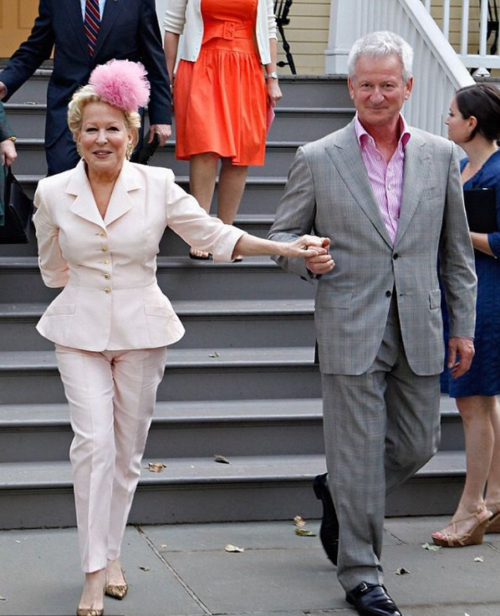
“There may be a stand taken against women who are more successful than their men, but I don’t think that’s so important ultimately,” says Midler. “I don’t feel it in my own life, because my husband [artist Martin Von Hasselberg] is at home, and he’s okay with it. We have a pretty great life. There must be tensions if people talk about it, but I don’t feel it myself.”
“I don’t believe actually that you can have it all,” says Kidman, who was married to Tom Cruise from 1992 to 2001.
“I worked intermittently in my twenties, and I loved it,” Kidman says, “but [she and Cruise] wouldn’t want to be separated for more than two weeks. I didn’t want to sit in hotel rooms on the phone, saying, ‘Gosh, I wish we were together!’
“And I wanted a baby from a very early age. [She and Cruise adopted two children.] I think it’s an illusion to think you can have everything and it’ll all be fine. I’m not saying you have to make choices, but it’s hard.”
The film also addresses the clash between conforming and self-definition. Hill – whose character, perhaps symbolically, blows a fuse during a barn dance scene – has long been bedeviled by the issue of whether she’s a country or pop singer.
“[The music world] has always had trouble with me,” says Hill, 36. “Because I don’t make my choices based on what people think of me. I’m an individual, I don’t know any other way to be. Whether it’s the popular choice or not, that’s just what I am.”
“I’ve had 30 years of choosing mostly work over life,” says Close, a single mom of a 16-year-old daughter. “The last couple of years, if I read a movie script I liked, it was hard to not jump in. But I also feel that, at this point, if I met somebody cool, I’d want to change my life.”
Midler, who spent her early days singing in Greenwich village bathhouses, says that even as a successful actress, she’s still an outsider.
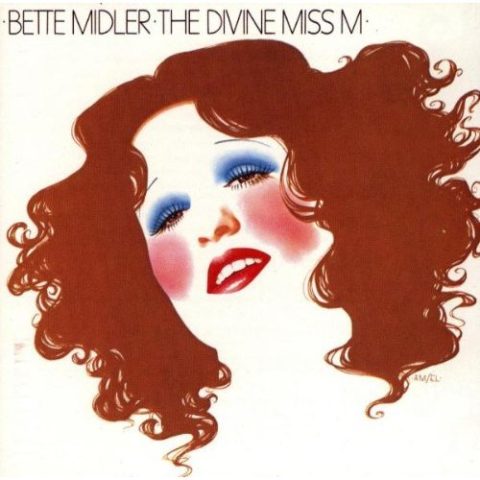
“When I started in show business, I made up my [“Divine Miss M”] persona, but I’m not really that person at all. And when I started making movies in 1979, the first character I played, in ‘The Rose,’ was who everyone thought I was. Hollywood is still convinced of that.”
When it comes to fitting in, Midler says, “You’re damned if you do and damned if you don’t. You have to just keep your eye on the prize, seize your opportunities, and get the hell out when the party’s over.”
“I think when you’re in a position to do roles and the timing is right, you can’t say no,” says Kidman, who’s made 10 films in the last four years. “To be honest, I don’t plan a lot. It’s a lot of spontaneous reactions to things, then saying to myself, ‘Well, I suppose this will all work out in the end.’
“I don’t like to get too analytical about it. I’m having a very blessed life. But, hey, there are lots of times when it’s not there at all, or when there are things besides work that are more interesting. The unpredictability of life is what’s so wonderful. It’s more of an ebb-and-flow, and going with the flow of your life.”
TOUGH SHOOT
Kidman certainly went with the flow making “Stepford Wives,” which had a tough shoot last year in New York and Connecticut. The production went over schedule, causing her to drop out of the thriller “Mr. & Mrs. Smith,” with Brad Pitt. Then Midler and co-star Christopher Walken reportedly had trouble with Oz (“The Score,” “In & Out”), who called in sick several days. Finally, Kidman, Broderick, and others did more reshoots this spring.
“It was a hard film to make,” admits Kidman. “It was tricky to get through. I don’t think that part has been overblown. But we all got along. The actors were tight.” “We were surprised when things came out [in the press],” says Midler. “It’s all about getting things right.”
And making movies – even difficult ones – inspires them.
“When I spent five months as Cruella De Vil in ‘101 Dalmations’ without my family, that was hard,” says Close. “But I feel strongly now that it’s about who I choose to spend my working time with, and if I’ll learn something.”
“Or maybe it’ll be devastating,” interjects Kidman, “but boy, you’ll come out of it with something else imprinted on you that will somehow make your life a little richer.”
Stepford this, Stepford that
When it was released in 1975, the movie of Ira Levin’s bestselling satire “The Stepford Wives” had the same “thriller-as-parable” vibe as films like “Rosemary’s Baby,” “Westworld” and “Rollerball.”
But “Stepford” was something extra: a perfect jumping-off point for ’70s-era feminists who saw the film as a metaphor for the the struggles facing that era’s women’s liberation movement.
It’s still a hot potato: Last year, author Naomi Wolf used the film as the basis for an opinion piece in London’s Daily Telegraph of London.
Though not a box-office success, the original movie, directed by Bryan Forbes, made an impression in pop culture and spawned several TV-movie sequels: 1980’s “Revenge of the Stepford Wives,” 1987’s “The Stepford Children’ and 1996’s “The Stepford Husbands.”
Its notion of perfect synthetic beings has been echoed in sc-fi films like “Blade Runner” (1982) and “A.I.” (2001), and comedies like “Mannequin” and “Making Mr. Right”(both 1987).
As the term “Stepford wives” wormed its way into everyday speech, it became a catch-all for the always-content and the blindly obedient: Straight-A students were deemed “Stepford kids,” Republicans denounced so-called “Stepford Democrats,” an unquestioning White House Press Corps was made up of “Stepford reporters.”
Even U.S. currency was Stepford-ized in a 1997 article in the Christian Science Monitor that noted, “Our coins have the indifference of the Stepford Wives.” In recent years, critics of antidepressant drugs like Prozac and Zoloft repeatedly bring up “Stepford Wives” to caution against overuse. And, showing that the political appeal of the phrase hasn’t run out of steam, in a profile of Teresa Heinz Kerry, Time magazine stated that, “Not even Hillary Clinton strayed so far from the dutiful, adoring Stepford spouse as Teresa.”
Levin has said that reading about domestic robots and the animatrons at Disneyland while going through a divorce were his inspiration for the story. In an interview two years ago, he said he was pleased with his creation.
“Every time I hear someone use the term, I get a kick out of it,” he said. “I feel like I’ve contributed to the language.”