
Business Today
New York’s $400 million climate bet: How a million trees are cooling a city from extreme heat
By Staff
July 27, 2026
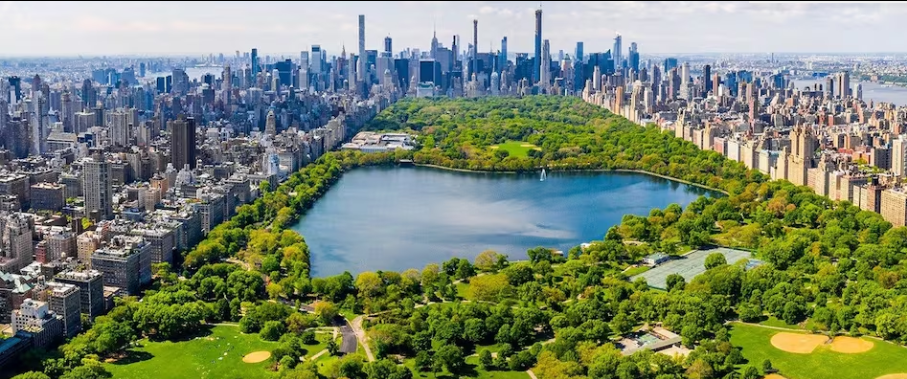
New York’s $400 million climate bet: How a million trees are cooling a city the city from extreme heat
Rather than stopping after one million trees, New York has shifted its focus toward preserving mature trees while expanding canopy coverage even further. City leaders have set an ambitious goal of increasing tree canopy to around 30% by 2040.
New York’s $400 million climate bet: How a million trees are cooling a city the city from extreme heat
As climate change fuels longer and more intense heatwaves, the project’s impact is becoming increasingly visible.
As cities across the world grapple with record-breaking temperatures, New York’s bold environmental experiment is drawing fresh attention. Between 2007 and 2015, the city planted one million trees across its five boroughs under the MillionTreesNYC initiative — a nearly $400 million campaign aimed at making one of the world’s most densely populated cities cooler, greener and more resilient.
More than a decade later, as climate change fuels longer and more intense heatwaves, the project’s impact is becoming increasingly visible.
Mature tree canopies now shade streets that once baked under relentless summer sun, helping combat the urban heat island effect while improving air quality and public health. The campaign has also become a model for cities looking for nature-based solutions to rising temperatures.
More than just planting trees
The initiative wasn’t simply about increasing greenery. It sought to transform New York’s urban landscape by planting trees in parks, along streets, in schools, public housing complexes and underserved neighbourhoods that historically had little shade.
The effort was driven by a partnership between New York City Parks and the New York Restoration Project, founded by singer and environmental activist Bette Midler. The goal of planting one million trees was achieved ahead of schedule in 2015.
Why trees matter in a warming world
Cities are significantly hotter than surrounding rural areas because asphalt, concrete and buildings absorb and retain heat — a phenomenon known as the urban heat island effect.
Trees help counter this in two important ways:
Their canopies block direct sunlight from reaching roads and buildings.
Through evapotranspiration, trees release moisture into the air, naturally lowering surrounding temperatures.
According to New York City officials, expanding tree canopy reduces cooling costs, filters pollutants from the air, captures stormwater and provides major public health benefits. The city’s urban forest now delivers an estimated $120 million in environmental and economic benefits every year.
A question of climate justice
One of the biggest lessons from the project has been that not all neighborhoods experience heat equally.
Studies have shown that lower-income communities and neighborhoods with fewer trees often record much higher summer temperatures and experience greater health risks during heatwaves. Recognizing this, New York’s recent urban forestry strategy prioritizes planting in heat-vulnerable areas to reduce inequality in climate resilience.
Rather than stopping after one million trees, New York has shifted its focus toward preserving mature trees while expanding canopy coverage even further. City leaders have set an ambitious goal of increasing tree canopy to around 30% by 2040, with new investments targeted at neighborhoods most exposed to extreme heat.



![Reblog this post [with Zemanta]](https://img.zemanta.com/reblog_e.png?x-id=b2438f12-5d9e-4397-b4a7-de17fcf02cbb "City Sponsoring Events For MillionTrees Month")