MovieWeb 10 Movies From the ‘90s Roger Ebert Couldn’t Stand By Philip Etemesi July 31, 2026
Great film critics often take a bare-knuckle approach while reviewing what Hollywood has presented for consumption. Roger Ebert was no different. When he didn’t like a movie, he said so in the most memorable terms he could find. He didn’t care whether a lot of people liked the new release. He’d rate a movie two stars or below, or simply refuse to give it any score, if he felt it didn’t pass the quality test.
Some of Ebert’s most brutal takes came in the ’90s. By this decade, the Pulitzer Prize-winning critic had been writing for the Chicago Sun-Times for nearly 30 years, and he knew exactly what a good movie looked like. Ebert adored ’90s hits like Pulp Fiction and Schindler’s List but hated many other popular big-screen offerings that came out in that era for a variety of reasons. Here are some of the notable films that had him hammering at his keyboard.
‘Hocus Pocus’ (1993) Ebert’s score: 1/4 stars
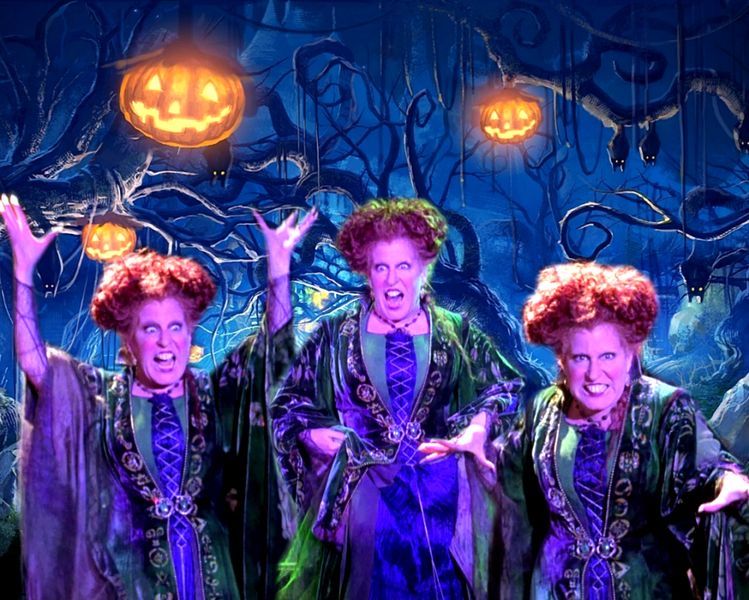
In Hocus Pocus, teen Max Dennison (Omri Katz) accidentally resurrects three wicked witch sisters who were executed during the Salem Witch Trials in the 1600s. Now it’s up to him, his sister, his crush, and an immortal talking cat to stop the trio from stealing children’s souls to keep themselves young.Bette Midler
Hocus Pocus didn’t create much buzz when it was released, but it became a sleeper hit, partly because of the annual airings on Disney Channel and Freeform. It has since spawned a franchise. The film is visually stylish and has numerous comical moments. However, Roger Ebert found nothing to smile about. Like the Salem Witch Trials judges, he was mean, describing the picture as “a confusing cauldron in which there is great activity but little progress, and a lot of hysterical shrieking.” He also complained that the three witches had no personalities at all, only behavior patterns and volume.
‘Armageddon’ (1998) Ebert’s score: 1/4 stars
The late 1990s were packed with rumors that the world would end, so Armageddon came at just the right time and became one of Michael Bay’s highest-grossing movies. In the movie, a team heads to space to drill a hole in an asteroid that’s about to hit Earth. They plan to plant a bomb inside it and blow it up. But it won’t be as easy as they believe.
Michael Bay’s tension-packed, provocative allegory on human fears is undeniably long at 151 minutes, but it is still fascinating to watch. The fun comes from the will-they-won’t-they narrative. And… explosions? Bay is the master of that. Despite Armageddon’s awesomeness, Roger Ebert named it the worst movie of 1998, calling it “an assault on the eyes, the ears, the brain, common sense, and the human desire to be entertained.” He hated how noisy it was, and the fact that it lacked a solid plot. Interestingly, his sparring partner Gene Siskel gave the film a thumbs up.
‘The Waterboy’ (1998) Ebert’s score: 1/4 stars
The Waterboy starts as a sad tale about weakness and oppression, then morphs into something closer to a full-blown sports comedy, while still examining, via the main character, how this brutal, cynical world treats the kind among us. The story is about Bobby Boucher (Adam Sandler), a socially awkward 31-year-old waterboy who gets fired by a championship football team. When he talks his way onto a team of perennial losers, he discovers his talent for tackling and goes on to become a star.
A broad, loud sports comedy built on one extremely committed bit, The Waterboy has become a genre staple, with Bobby’s woes framed by relentless background silliness. Most people were impressed, except Ebert. “Do I have something visceral against Adam Sandler?” he asked himself in his review, insisting that he walks into every movie with high hopes and that liking Sandler in something would be a genuine relief. But this one? He just didn’t like it.
‘Spice World’ (1997) Ebert’s score: 1.5/4 stars
British music group the Spice Girls lean into their own images with fun, perfectly calibrated moments in Spice World. The pop stars play themselves in a series of fictional moments leading up to a concert at London’s Royal Albert Hall. One of their major quagmires comes in the form of an overzealous tabloid newspaper editor eager to destroy their reputation.
Roger Ebert tore into the pop stars for their poor acting, claiming that they “occupy Spice World as if they were watching it,” and that they were too detached to even lip-synch their own songs convincingly. Later on, on Siskel & Ebert, he called the movie “an entertainment-free dead zone.” Sure, the film is poorly acted and is the kind that is more suited to hardcore fans than casual ones. Still, costume and set designers can learn a thing or two from the film.
‘Fight Club’ (1999) Ebert’s score: 2/4 stars
David Fincher’s Fight Club concerns the friendship between an unnamed insomniac office worker (Edward Norton) and a soap salesman (Brad Pitt). The two decide to start an underground fight club to break free from their mundane existence. But things are hardly as straightforward as they might appear. The film has a psychological element that reveals itself later on.
Fight Club is loved for the fight scenes, and because of how sufficiently it explores themes like nihilism and emasculation. It has been praised by many parties, including Guy Ritchie, but not Ebert. The critic acknowledged this years later, writing that the film was “beloved by most, not by me.” In his initial review, he dismissed it as macho porn and a thrill ride dressed up as philosophy.
Verbal Kint (Kevin Spacey) from The Usual Suspects is a hoodlum trying to convince the authorities that the mythical criminal Keyser Söze is real. He says the man roped him and his four buddies into a multi-million-dollar heist that culminated in an explosion. The feds are skeptical, but a few future events will make them see things differently.
Melding kitchen-sink realism with gripping sequences that dramatize Kint’s reveries, the film put actor Kevin Spacey and screenwriter Christopher McQuarrie on the map. The latter won an Oscar for Best Original Screenplay while the former got Best Supporting Actor. The Writers Guild of America ranked The Usual Suspects as having the 35th-greatest screenplay of all time. Ebert hated the lack of straightforwardness, claiming the crime thriller was confusing “to the degree that I do understand, I don’t care.”
‘Batman & Robin’ (1997) Ebert’s score: 2/4 stars
Batman & Robin finds Batman (George Clooney) and Robin (Chris O’Donnell) fighting Mr. Freeze (Arnold Schwarzenegger), who wants to turn Gotham into an arctic zone, and Poison Ivy (Uma Thurman), who is using toxins to manipulate others. Aiding the heroes is Batgirl (Alicia Silverstone), a new, driven member of the Bat-family.
Roger Ebert noted that the Joel Schumacher film was wonderful to look at but felt that it had “nothing authentic at its core.” Batman & Robin is generally considered one of the worst superhero movies, so Ebert wasn’t off in his assessment. However, it has its glittering elements. One of them is Alicia Silverstone, whose easy charm is among the film’s few genuine pleasures.
‘North’ (1994) Ebert’s score: 0/4 stars
In North, the titular character (portrayed by Elijah Wood) is sad because he is constantly ignored by his busy parents. A mysterious man (Bruce Willis), who appears in his life occasionally, advises him to emancipate himself and search the world for a perfect mother and father. Unfortunately, most of the people he meets aren’t any better.
This odd family comedy tackles parenting questions head-on, but with a pronounced undercurrent of controversy. How ethical is it for a stranger to influence a child against their parents? Ebert famously ranted, “I hated this movie. Hated hated hated hated hated this movie,” going on to call the film unpleasant, contrived, and artificial, giving it a rare 0-star review. That line later gave him the title of his 2000 book, I Hated, Hated, Hated This Movie. Other critics also considered North a surprise low point for director Rob Reiner, who had just come off hits like A Few Good Men and Misery.
‘Tommy Boy’ (1995) Ebert’s score: 1/4 stars
Tommy Boy follows the dimwitted Tommy Callahan (Chris Farley), who inherits his recently deceased father’s near-bankrupt automobile parts factory and fights to turn it profitable. But a clash looms with his new stepmother, Beverly (Bo Derek), who keeps insisting on cashing out.
Roger Ebert was brutal in his assessment, writing that the film “plays like an explosion down at the screenplay factory,” then extending the gag into a picture of a soot-covered office boy salvaging pages at random from the wreckage. But don’t be discouraged. The buddy comedy, featuring a few SNL cast members, overflows with fun moments, and is now considered a cult classic.
The Beverly Hillbillies is about the Clampetts, who move to Beverly Hills after striking oil on their rural land. They struggle to adjust to their new surroundings and are also pitted against a nefarious banker who intends to swindle them. Luckily, the banker’s assistant has a soft spot for the Clampetts.
This resplendently goofy, intermittently intriguing romp is carried along by a lively country soundtrack. The kind of humor used here isn’t for everyone, but it works more often than not. Ebert was one of the people who weren’t impressed. He expressed his disappointment at how director Penelope Spheeris followed up the brilliant Wayne’s World with this low-quality film. He further claimed that he “watched in mounting gloom, feeling as if stones were being piled on my chest.”
Let us know in the comments below whether or not you agree with Roger Ebert’s critiques of these films.