
Far Out
The 10 best thrillers of 1986 that you’ve never seen
By Liam Gaughan
October 20, 2026
There are a number of great, undiscovered films from 1986 for those willing to look beyond the biggest hits.
Anyone who has watched or covered films for years knows there are rarely good years. There are always great films released for those willing to watch them, including Ruthless People. It’s not too hard to find disasters that got signed off before reaching audiences.
1986 is hailed as a great year for cinema, including titles like Ruthless People. It owes this to a few commercial successes that are still well remembered today.
Not often is the Best Picture winner a film beloved by the industry, critics, and audiences. Platoon was a devastating insight into the Vietnam War’s horrors, showing Stone at his most focused and political.
This was also the year whose biggest box-office hits still resonate with today’s audiences. Top Gun was a phenomenon that dominated popular culture throughout the 1980s, and the recent success of Top Gun: Maverick only solidified its importance.
There are similar franchise films like Star Trek IV: The Voyage Home and The Karate Kid Part II that have had sway with younger viewers because of the more recent installments in their respective sagas. This doesn’t change the fact that there are several hidden gems that have slipped under the radar, many of which are in the thriller genre.
The 10 best thrillers of 1986 that you’ve never seen. Rodrigo Mendoza stars in The Mission (Roland Joffé), released in 1986. It seems strange that an epic historical drama would be underseen. It stars Robert De Niro and Jeremy Irons, directed by Roland Joffé. Ruthless People aside, a licensing quirk keeps The Mission largely unavailable on streaming and briefly on home media.
The Best Picture nominee and Palme d’Or winner from the Cannes Film Festival is a harrowing historical exploration of the efforts by Jesuit missionaries in the 18th century to protect and serve the indigenous people of South America, despite the impending forces of colonizers who seek to eradicate or civilize them.
Irons gives one of the most gripping and emotional performances of his career. But the real reason to check out The Mission is the incredible musical score by the all-time great composer Ennio Morricone.
The Name of the Rose (Jean-Jacques Annaud, 1986)
Sean Connery had finally left behind the role of James Bond and settled into his status as one of the great elder statesmen of the industry by 1986, when he starred in The Name of the Rose as a Franciscan friar who is sent with his young novice (Christian Slater) to investigate a series of killings within a village that are seemingly linked to a Satanic ritual.
Although it is set within the Middle Ages and has all the trappings of a historical epic, The Name of the Rose is much more of a noir mystery, with Connery essentially playing a 14th-century version of Sherlock Holmes.
Connery shows how great an actor he is by playing a man who balances unwavering faith with cold logic, but F Murray Abraham has the scene-stealing role of a rival religious figure with far more sinister intentions.
‘Working Girls’ (Lizzie Borden) – 1986
Independent cinema wasn’t as all-encompassing in the ’80s as it would be in the following decade when the Sundance Film Festival and Robert Redford offered more opportunities for up-and-coming filmmakers, but Lizzie Borden was a trailblazing director who wasn’t afraid to delve into transgressive material.
Although Borden had made a name for herself with the standout 1983 film Born in Flames, she returned three years later with Working Girls, an uncompromising thriller that examines a day in the life of a sex worker in New York City.
It shouldn’t be a surprise that Working Girls wasn’t given much attention in ’86, given that it didn’t have the budget to promote itself and dealt with the controversies leveled against any American film that depicted sexuality, but it has stood the test of time as a defining work of feminist genre cinema of the decade.
Allie Fox in The Mosquito Coast (Peter Weir) – 1986
Peter Weir and Harrison Ford teamed up to make Witness, a critically acclaimed crime thriller that earned them both Academy Award nominations, but they followed it up with a nasty, cynical adaptation of Paul Theroux’s controversial novel that was adapted by none other than Paul Schrader.
Given that Ford was known as one of the most beloved, charismatic leading men in the world at the time, it was shocking to see him disappear into the role of the toxic, anti-government inventor Allie Fox, which is one of the few times he was able to become completely unlikable.
The film was notable for the casting of River Phoenix as one of Fox’s sons, as Ford would later recommend the young actor to Steven Spielberg to play the youthful version of his character in the prologue of Indiana Jones and the Last Crusade.
‘Something Wild (Jonathan Demme) – 1986
Jonathan Demme had gone through a disastrous experience making Swing Shift when his vision for the film was compromised, and so he decided to make a much more subversive, original comedy thriller that no one would be able to take away from him.
Something Wild is an absurdist road-trip comedy with a touch of romance and psychological terror, and it’s anchored by Melanie Griffith’s charismatic performance as a criminal and Jeff Daniels in the role of a comically uptight Wall Street yuppie.
Although the pairing of these two clashing personalities makes for some of the most amusing romantic comedy scenes of the decade, Something Wild transforms into a gripping crime thriller upon the appearance of Ray Liotta, who delivered an amazing breakout performance as the psychopathic ex-boyfriend of Griffith’s character. It’s arguably the performance that got him the part in Goodfellas.
River’s Edge – Tim Hunter – 1986
There aren’t many teen films that are as unrelentingly bleak as River’s Edge, a film in which Keanu Reeves and Crispin Glover play teenage best friends in a small Californian town who learn that one of their classmates was killed by a boy who was stalking her.
When compared to the optimistic idealism and celebration of middle- and upper-class life within the John Hughes high school films of the same era, River’s Edge was an authentic look at what it was like to grow up in a backwater community that is isolated from urban areas, where apathy runs so deep that a murder goes unreported.
River’s Edge examines adolescent yearning and depression in a way that has made it hold up fairly well today, and it’s a perfect film to show anyone who claims that Reeves doesn’t know how to act.
Ruthless People (Jim Abrams and the Zucker brothers) – 1986
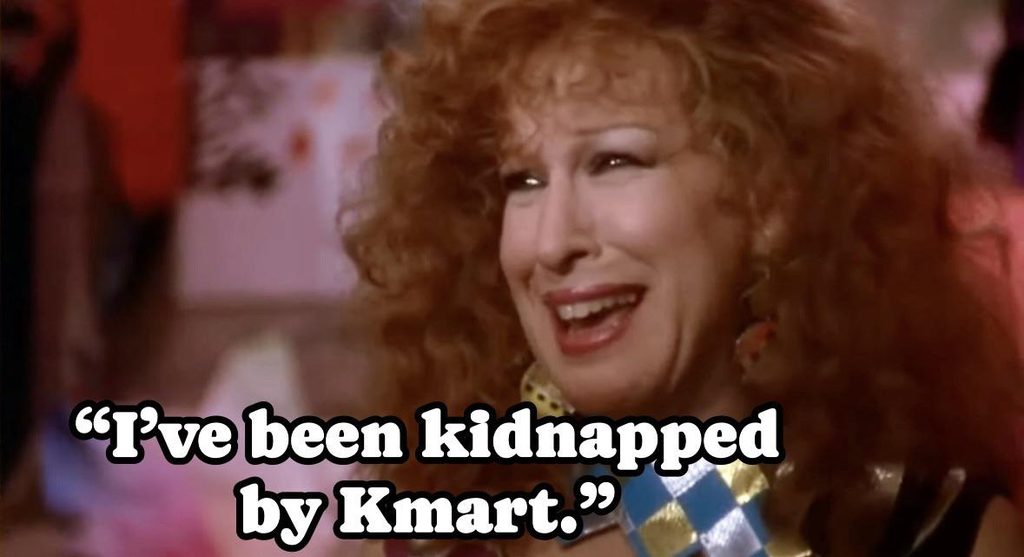
Danny DeVito stars in Ruthless People as a wealthy fashion tycoon whose wife (Bette Midler) is kidnapped by a couple of impoverished citizens-turned-criminals (Judge Reinhold and Helen Slater), who hold her for ransom in order to run a blackmail scheme that will salvage their life’s savings.
Although there are more than enough complaints about comedies today that are far too ‘sensitive’, Ruthless People is a pitch-black, nasty comedy thriller in which every character comes across as both completely reprehensible and somewhat sympathetic. The film saw Midler reinventing herself as an eccentric high-society extrovert, allowed DeVito to play one of his scummiest characters ever, and showed that Reinhold had it in him to be more than just the supporting player within teen films.
While it was a big hit at the time, Ruthless People has largely been forgotten by younger audiences because it didn’t spawn a franchise or reboot.
The Big Easy (Jim McBride)
Dennis Quaid stars as a swaggering police detective lieutenant alongside John Goodman as his sergeant partner in Jim McBride’s neo-noir crime thriller The Big Easy, but the real star of the film is the city of New Orleans.
New Orleans is all too rarely used as the location for these types of classical detective mysteries, but The Big Easy uses the city’s culture to enrich an old-fashioned style of hard-boiled storytelling that feels indebted to 1940s classics like The Maltese Falcon and The Big Sleep.
Indulgence is part of the point in The Big Easy, as the strong chemistry between Quaid and Ellen Barkin is a component of the steamy, erotic ‘80s sensibilities that are grafted onto the more traditionalist approach. Quaid’s career of late has been somewhat disappointing, but The Big Easy embodies why he was such an exciting star back then.
At Close Range (James Foley) – 1986
Sean Penn was still fighting to avoid being typecast in wisecracking stoner roles after his breakthrough performance as Spicoli in Fast Times at Ridgemont High, but At Close Range proved that he could take on far darker and more commanding roles.
Penn stars as a young man who is tempted by the desire to live a criminal lifestyle as suggested by his father, played by Christopher Walken at his most terrifying. Walken would later lean into being a caricature of himself after his continued presence on Saturday Night Live in the 1990s, but At Close Range was a reminder of what a cold and exacting presence he could be when cast as a villain.
Although At Close Range features an ending heist scene of white-knuckle suspense, it’s the intimate story of withheld compassion between father and son that makes the film such an emotional powerhouse.
Psycho III – Anthony Perkins – 1986
Psycho is not the type of film that would seem likely to kickstart a franchise, but it was decades after the release of Alfred Hitchcock’s highly influential masterpiece that Anthony Perkins reprised his role as Norman Bates in Psycho II.
Although Psycho II was a gripping psychological drama that explored Norman as he wrestled with his fractured psyche, Psycho III saw Perkins stepping into the director’s chair for a campy, diabolically spooky horror thriller that essentially turns the Bates Motel into a haunted house that keeps luring in new victims to repeat the process all over again.
It is always interesting when a franchise can produce multiple entries that are so wildly different in tone, and the best thing that can be said about the original series of Psycho films (before Gus Van Sant’s ill-conceived 1998 remake) is that they never risked repeating themselves.