Village Preservation
Bette Midler: From the East Village to Greenwich Village, the Making of the Divine Miss
By Lanny Stephens
November 17, 2026
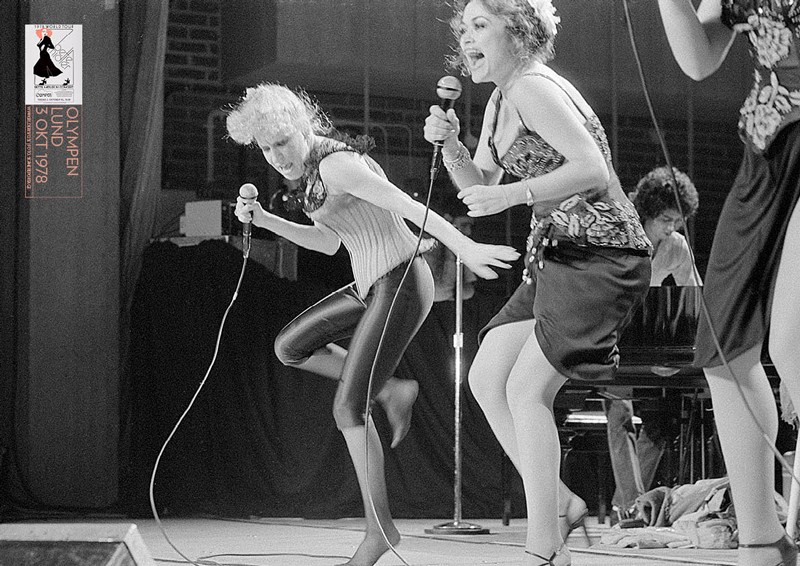
Long before she became an award-winning actress, Bette Midler started as a young performer in New York City.
Additionally, in the mid-1960s and early 1970s, East Village and Greenwich Village energized her story.
Moreover, alive with experimental theater, music, cabaret, and unconventional expression, these neighborhoods offered her creative freedom and audiences.
Born in Honolulu, Hawaii, in 1945, Midler arrived in New York in 1965, determined to become an actress. Additionally, there she appeared in Tom Eyen’s Miss Nefertiti Regrets. One of her first professional opportunities came at La MaMa Experimental Theatre Club on Second Avenue in the East Village. The production introduced her to the adventurous Off-Off-Broadway world. In that scene, playwrights and performers challenged conventional theater and explored new forms of expression. It was an unconventional beginning for a young woman who would eventually become one of America’s most recognizable entertainers.
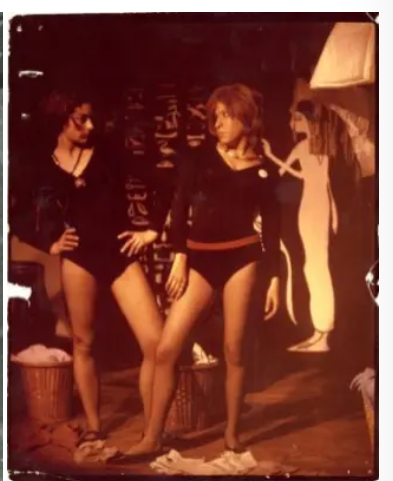
Bette Midler in Miss Nefertiti Regrets at La Mama
The East Village of that era was a remarkable gathering place for artists, actors, playwrights, musicians, and performers. La MaMa, founded by Ellen Stewart, sat at the center of this creative ferment, giving emerging artists opportunities whose work might not have found a home on the commercial stage. Midler’s early experience there placed her among a generation of performers who were redefining what theater could be.
She found her way to Broadway in 1966, joining the Fiddler on the Roof company and later playing Tzeitel, the eldest daughter. The traditional Broadway stage was only one part of her education. Downtown, she was developing a very different kind of performance persona, one that brought together music, comedy, theatricality, and a healthy disregard for convention.
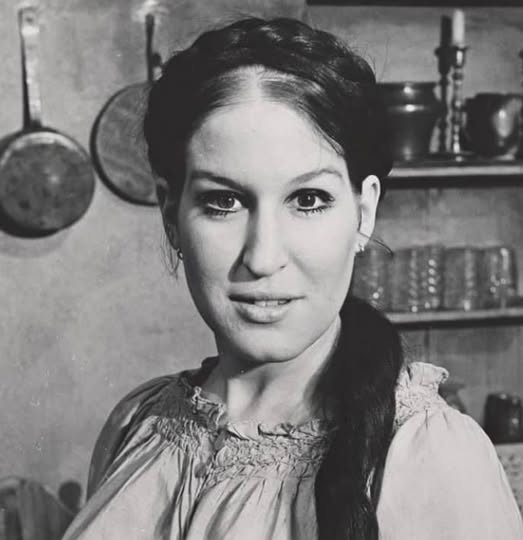
Bette Midler starred in Fiddler on the Roof.
As her career began to take shape, Greenwich Village became a key part of her New York story.
Midler lived at 36 Barrow Street, in the heart of the Village, in the early 1970s.
A 1975 photograph shows her stepping out of the apartment.
Moreover, she steps into a waiting limousine.
It is an evocative image of a downtown performer whose career was beginning to reach far beyond the neighborhood.
Even as national attention found her, the Village remained home.
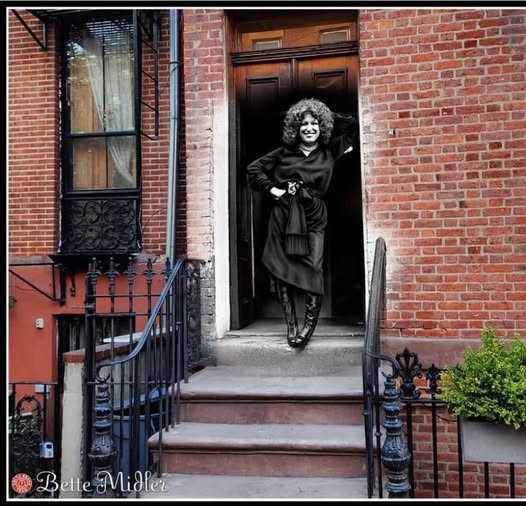
Interestingly, Bette at 36 Barrow Street marked an early moment.
By then, Midler was developing the nightclub act that would make her famous.
Later, a pivotal chapter unfolded not in the Village.
It unfolded at the Continental Baths, a bathhouse in the Ansonia Hotel on Manhattan’s Upper West Side.
Beginning in 1970, she performed there for enthusiastic audiences, accompanied by pianist Barry Manilow.
She improvised and cultivated the distinctive mix of torch singing, comic timing, glamour, and irreverent humor that became her trademark.
It was here that the Divine Miss M truly emerged.
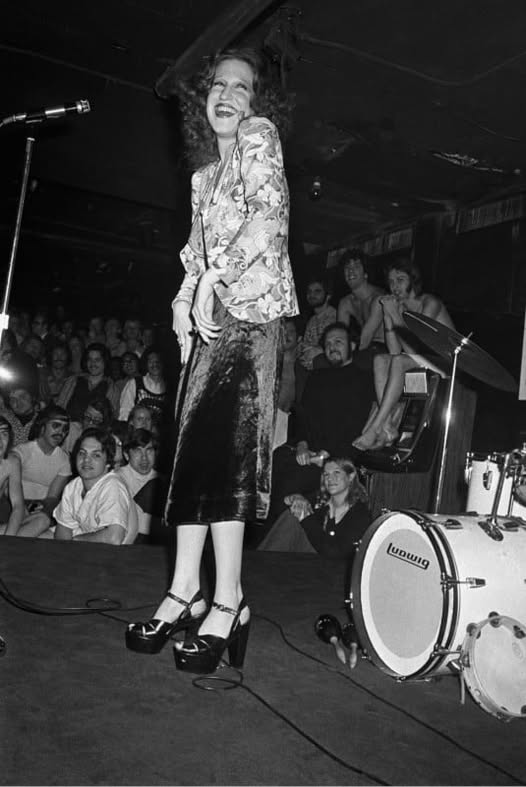
Bette at the Continental Baths.
Moreover, the downtown theater and performance communities had helped prepare her for this moment.
Additionally, the freedom at La MaMa influenced her.
Together, the artistic spirit of the Village neighborhoods contributed to a culture.
Boundaries between theater, music, comedy, and performance were constantly tested.
Ultimately, Midler absorbed that spirit and made it unmistakably her own.
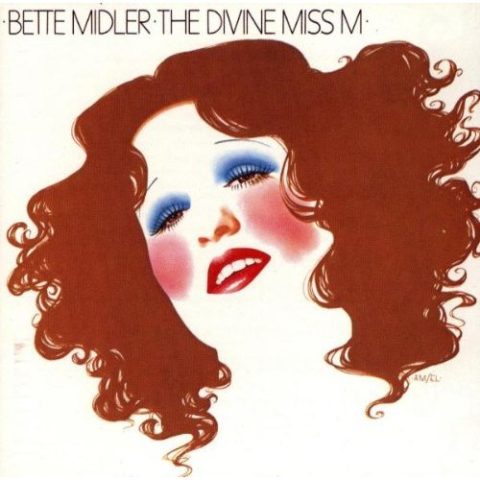
Her first album, The Divine Miss M, released in 1972, brought her talent to a national audience.
It earned her a Grammy Award for Best New Artist in 1973.
Consequently, it launched a career that would encompass hit records, films, television, and Broadway.
Yet the qualities that made her distinctive had been cultivated in downtown theaters and unconventional spaces.
They thrived in lively artistic communities there.
Midler’s story is part of a larger history of the East Village and Greenwich Village.
Moreover, these neighborhoods were places where creativity could flourish beyond established institutions.
They gave emerging artists room to experiment, take chances, and find their voices.
As a result, their cultural influence reaches audiences around the world.
Bette Midler is among the women celebrated in WE STAND.
Moreover, WE STAND is Village Preservation’s public art and history installation in Washington Square Park.
Furthermore, her inclusion recognizes not only achievements, but also originality, independence, humor, and creative fearlessness.
These qualities have made her an enduring cultural force.
Her story reminds us that neighborhood history is found not only in buildings and streets.
It also lives in artists who passed through them and shaped culture locally and globally.
A Passion for New York’s Parks and Green Spaces
Indeed, Midler’s influence extends well beyond the stage and screen.
She is also a leading advocate for New York City’s parks, community gardens, and public green spaces.
In 1995, she founded the New York Restoration Project (NYRP).
It began after concerns about neglected parks and open spaces throughout the city.
What began with hands-on cleanup in northern Manhattan grew into a citywide organization.
It is dedicated to restoring neglected public spaces and preserving community gardens.
It also plants trees and makes nature accessible to New Yorkers in all five boroughs.
Through NYRP, Midler has helped transform once-neglected landscapes into valued community resources.
Additionally, she champions the idea that every neighborhood deserves beautiful, well-maintained green space.
Her work has included the restoration of parks and gardens.
It also covers the MillionTreesNYC initiative and the revitalization of waterfront spaces.
Her commitment to improving urban life was recognized in 2013.
She received the Rockefeller Foundation’s Jane Jacobs Medal for Lifetime Leadership.
It is a legacy that makes her inclusion in WE STAND especially fitting. Moreover, her contributions to New York extend beyond entertainment and popular culture to public spaces. In a city where parks are essential gathering places, her work reflects appreciation for preserving and improving shared spaces.
Join us Tuesday, November 17 at 3 PM for a ribbon-cutting. The event honors Village Preservation’s WE STAND. It will be in the oval plaza near the park’s entrance at Washington Square East and Washington Place.